





 Portuguese
  English
  Spanish
  5 min of reading
  28 comments


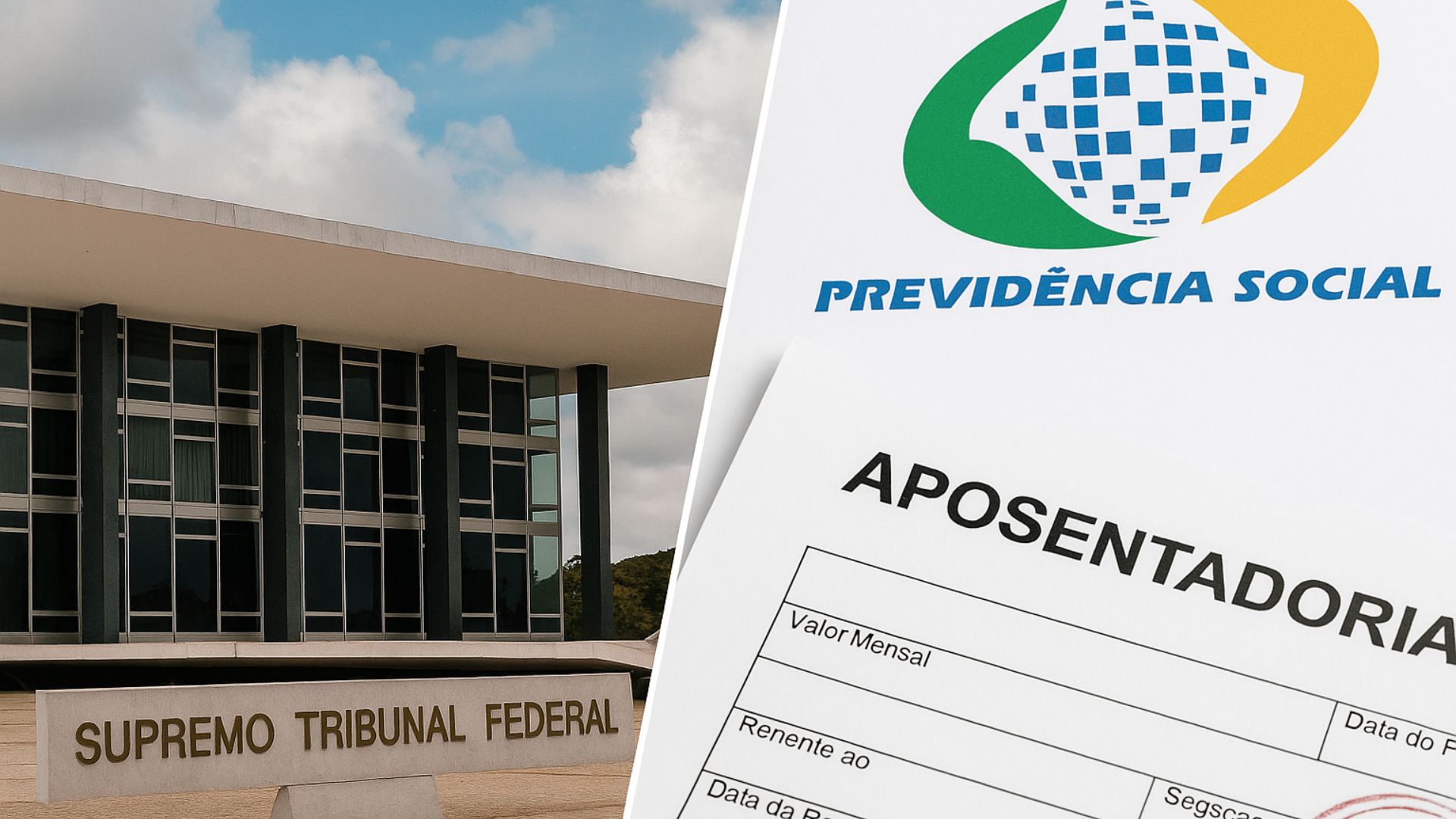


Judgment In The STF About Public Servants’ Pension Reform Brings Actions Against The Reform, Involves Extraordinary Contributions And Deductions In Pensions, Had Partial Majority Formed And Remains Unresolved, With Potential National Impact On RPPS Rules And Public Sector Payrolls.
The net amount that arrives in the account does not always correspond to what the public servant expects when looking at the pay stub.
For those dependent on salary, retirement, or pension in the public service, changes in pension rules often have a direct impact on the monthly budget.
In times of fiscal constraint, this type of debate tends to gain traction in public administrations and among organized groups.
-
The institute that trained the greatest aerospace engineers in Brazil has just opened its first campus outside São Paulo after 75 years: ITA Ceará will have R$ 445 million, new courses in energy and systems, and classes are expected to start in 2027.

-
Luciano Hang, owner of Havan, goes to Juiz de Fora after the tragedy in February, brings R$ 1 million, hands out R$ 2,000 cards, and donates up to R$ 15,000 to victims in the region.

-
The Brazilian passport allows legal residence in dozens of countries without the need for a prior visa, and most Brazilians are unaware that they can apply for residency directly upon arriving in nations in South America, Africa, and even Europe.

-
Petrobras sends a message to Brazilian truck drivers after fuel collapse and reveals plan to have 100% domestic diesel.


At the center of this discussion is an inconclusive judgment in the Supreme Federal Court that analyzes the constitutional limits of pension charges in the own social security system (RPPS).
The decision may affect active public servants, retirees, and pensioners of different federative entities by defining which funding mechanisms are compatible with the Constitution.
Judgment In The STF Involves 13 ADIs Against The Pension Reform
The STF is jointly analyzing 13 direct actions of unconstitutionality that question provisions of Constitutional Amendment 103, responsible for reformulating pension rules in public service.
Among these actions is ADI 6254, judged alongside other processes that deal with similar themes.
The focus of the court is not to discuss the convenience of pension policy, but to verify whether certain provisions of the amendment respect constitutional principles and limits.
For this reason, the judgment concentrates on the legal validity of the norms and the effects they may produce on benefits already granted or on contributions required from public servants and beneficiaries.
During the analysis, the Plenary reached partial majorities on points considered sensitive, which increased the attention of representative entities and public managers towards the case’s outcome.
Extraordinary Contribution Is One Of The Central Points Of The Dispute
One of the most debated issues is the extraordinary pension contribution, provided in the reform as an additional financing instrument in situations of actuarial deficit in the RPPS.
The mechanism allows the creation of a temporary charge beyond the ordinary contribution, potentially affecting active public servants and, depending on the adopted model, also retirees and pensioners.
In the actions brought to the STF, entities argue that this type of contribution would exceed constitutional limits by imposing additional burdens on certain groups.
Proponents of the rule argue that the measure broadens alternatives for the financial rebalancing of the own systems.
In the partial judgment, according to public records and monitoring by public service entities, there was majority to reject aspects of the design of the extraordinary contribution as provided in the amendment.
The Court, however, has not yet announced the final result, which keeps the rule formally in effect until the conclusion of the judgment.
Deductions On Retirement And Pensions Are Also Under Review
In addition to the extraordinary contribution, the STF is examining provisions that expanded the calculation base of contributions from retirees and pensioners.
The reform altered constitutional parameters and opened space for the incidence to reach larger portions of benefits under certain circumstances, such as the existence of actuarial deficit.
Therefore, the topic often appears associated with the expression “deduction in the pay stub”.
It is not just about the applied rate, but about the amount on which the contribution applies.
In votes already presented, ministers have directly discussed the constitutionality of these expansions, with potential repercussions on benefits paid by the RPPS.
Request For A Stay Suspended Judgment Still In A Decisive Phase
The analysis was suspended on June 19, 2024, when Minister Gilmar Mendes made a request for a stay.
The procedural instrument interrupts the judgment for a more in-depth examination of the case.
At that moment, the session was nearing the end of the voting round, with the only pending expression being from the minister who requested the stay.
Since then, the judgment has not resumed in the Plenary.
There is public record that the case files were returned after the stay period, but without immediate inclusion in the STF agenda.
Entities monitoring the issue reported that the case returned to the Court in October 2024, remaining, since then, awaiting a new date for conclusion.
Meanwhile, the court’s rules allow ministers to review positions until the formal conclusion of the judgment.
STF Kept The Pension Debate On Other Fronts In 2025
Even without the conclusion of these 13 ADIs, the STF continued analyzing other issues related to pensions throughout 2025.
Among them are discussions about criteria for calculating benefits and exemptions provided by law.
The resumption of these processes, however, did not automatically imply the return of the specific judgment on the extraordinary contribution.
The institutional context also underwent changes.
On September 29, 2025, Minister Edson Fachin assumed the presidency of the STF for the 2025–2027 term, with Alexandre de Moraes as vice-president.
The presidency influences the organization of the Plenary agenda, although the inclusion of processes depends on procedural factors and the stage of each action.
There was public expectation, noted by associations and specialized media, that the judgment of the ADIs would be resumed in certain sessions.
As of the time of this report, however, there is no confirmation of a conclusion or proclamation of a definitive result.
STF Decision May Have National Effect On The RPPS
The outcome of the judgment is considered relevant because decisions in direct actions of unconstitutionality produce general effect, guiding the application of the norms throughout the country.
This means that states and municipalities that structured their own systems based on the reform may need to revise rules and procedures, according to the STF’s final understanding.
If the Court confirms the unconstitutionality of the extraordinary contribution and imposes limits on the incidence on benefits and pensions, public administrations may be required to adjust local legislation and deduction routines.
If, on the other hand, the court validates these mechanisms, it will solidify the constitutional margin for their adoption in the RPPS.
Until the judgment is concluded, the norms currently applied by each federative entity remain valid.
This scenario keeps the issue under constant monitoring by public servants, retirees, managers, and specialists in public pensions.
When the STF resumes the analysis, attention will be focused on the confirmation or revision of the majorities already formed and on defining the constitutional limits for new charges.
When this process returns to the Plenary and the result is proclaimed, how should the Supreme Court’s decision resonate in the financial balance of the own systems and in the predictability of deductions for public servants and retirees?









Quando e para ajudar o cidadão pobre,eles ficam enrolando.
Estou aposentado há 10 anos sem aumento e pagando o IPERGS previdência. Um roubo.
O RS é com certeza o estado que mais penaliza os aposentados e pensionistas do estado principalmente os de baixo escalão, o governador Eduardo leite é cruel os índices chegam a maldade de 22% .