Portuguese
  Spanish


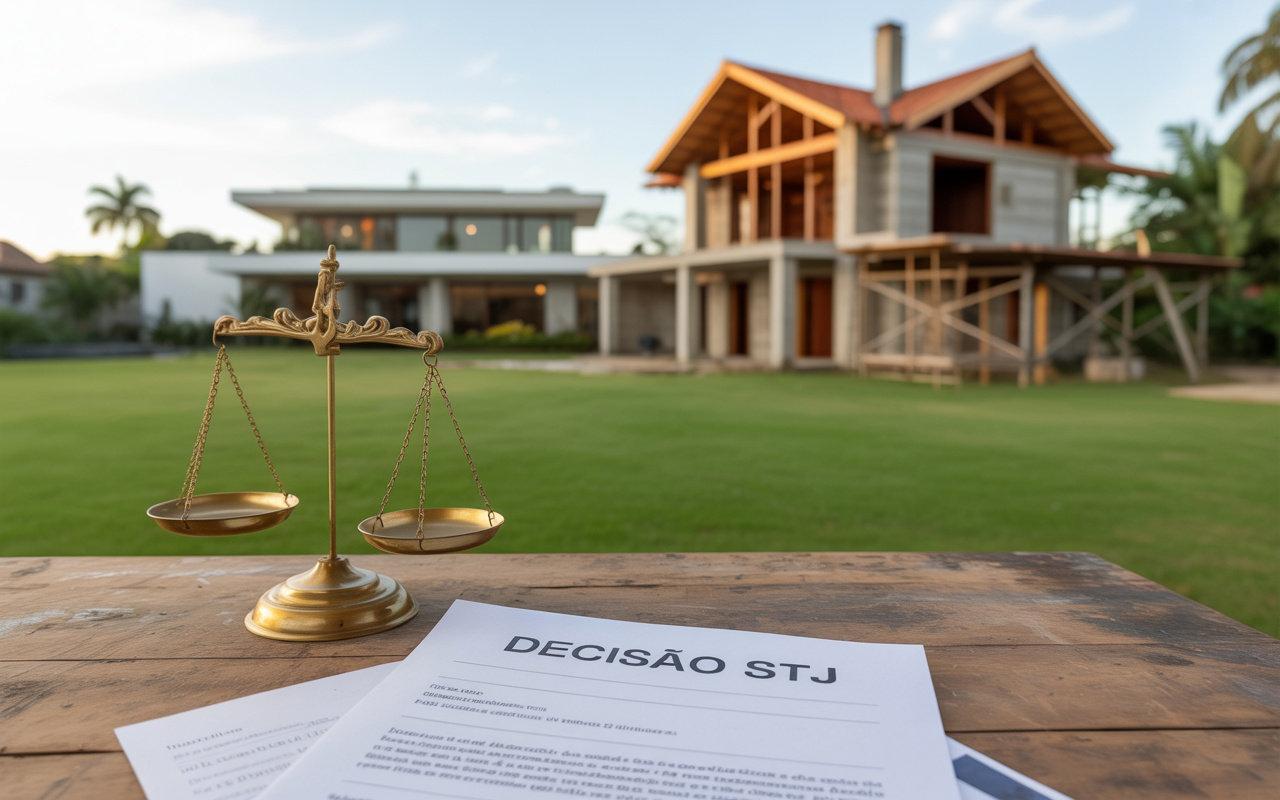


STJ Decides That Those Who Build A House On The Father-In-Law’s Land Can Be Indemnified After The End Of The Marriage, As Long As They Prove They Contributed Financially To The Work.
A recent decision by the Superior Court of Justice (STJ) has rekindled a debate affecting thousands of Brazilian couples: what happens when someone builds a house on land not owned by them — especially when the land belongs to the father-in-law or mother-in-law?
In the Special Appeal nº 1.327.652/RS, the 4th Panel of the STJ ruled that in these cases, those who can prove they have effectively contributed to the construction of the property are entitled to compensation, even if the property is in someone else’s name.
The decision does not transfer ownership of the property, but it recognizes the right to financial compensation for the value of the construction, which can represent relief for those who invested time and money in an asset that technically does not belong to them.
-
U.S. House Approves Bill to Protect Children on Social Media, Limit Addictive Features, and Demand New Measures from Platforms, But Senate Differences Could Stall Progress

-
78-Year-Old Brazilian Farmer Wins Legal Battle for Ownership of 108,000 m² of Land After Decades of Dispute with Federal Government

-
Brazilian Supreme Court Pauses Fines for Workplace Regulation Violations for 90 Days, but Companies Must Still Address Harassment and Overwork
-
Seniors Over 60 Can Travel for Free Across Brazil: Elderly Statute Ensures Two Free Bus Seats and 50% Discount When Full for Low-Income Passengers



Understand The Case Ruled By The STJ
The case analyzed involved a couple in a stable union who built a house on land belonging to the woman’s father — the father-in-law of the plaintiff. After the relationship ended, the man turned to the courts claiming that he had invested a significant part of his resources in the construction and, therefore, should receive part of the property’s value.


The local Court of Justice denied the request, on the grounds that the land belonged to third parties and, therefore, there could be no possible division.
The case reached the STJ, which partially reformed the decision: the ministers understood that, although the property belongs to the landowner, the construction represents unjust enrichment for the owner since it was built with resources from another person.
Thus, the plaintiff did not win the house, but obtained the right to be indemnified for the amount corresponding to his proven contribution to the work.
What The STJ Decided
According to the vote of the rapporteur, Minister Luis Felipe Salomão, it is possible to recognize the credit right of those who, even without being the owner, financially contribute to the construction of a property on someone else’s land.
The minister highlighted Article 884 of the Civil Code, which prohibits unjust enrichment, and Articles 1.253 and 1.255, which address the right to compensation for those who carry out improvements on third-party properties.
“It is unreasonable that someone who invests in construction on a third-party asset bears the loss while the owner unduly benefits from the appreciation of the property,” stated the rapporteur.
When There Is Right To Indemnification
The STJ’s decision sets an important precedent but makes it clear that the right to indemnification depends on concrete proof of financial contribution to the construction. This includes receipts for purchase of materials, labor payment receipts, bank transfers, and other documents demonstrating direct investment in the work.
It is also essential that the investor did not act in bad faith — that is, that they built with the consent of the landowner and within a legitimate relationship, such as marriage, stable union, or verbal contract.
The amount of indemnification in these cases is calculated based on the cost of construction or the increase in asset value generated to the land, taking into account technical expertise.
The Property Remains With The Owner
The STJ emphasized that the decision does not transfer ownership of the property to the ex-partner or spouse who financed the construction. The asset remains belonging to the landowner, but the builder has the right to recover the invested amount, updated according to market price.
In practice, the ruling prevents frequent injustices, where one party, after the end of the relationship, ends up without the property and without money. Now, based on this understanding, judges can establish indemnifications proportionate to the proven investment, ensuring balance between the parties.
Similar Cases And Legal Basis
This type of situation is more common than one might think — especially in informal relationships where the couple decides to build a house on one of their family’s land, believing that the emotional bond will be permanent. With the end of the relationship, conflicts arise that end up in court.
In addition to the STJ precedent, Article 884 of the Civil Code is frequently applied in similar cases, precisely to prevent unjust enrichment. Article 1.255 reinforces that those who build in good faith on another’s land are entitled to compensation for the value of the construction, unless there is a different agreement.
A Warning For Couples And Families
Family lawyers warn that construction on third-party land should always be formalized by contract. One alternative is to establish a lending agreement, specifying that the construction will be owned by whoever pays for it, or even register the building separately at the land registry office.
Without these precautions, any investment can turn into a loss — and what seemed like a dream of owning a home can end up becoming a lengthy and costly legal process.