





 Portuguese
  English
  Spanish
  5 min of reading
  1 comment





Judge Recognizes That FGTS Accumulated During Marriage Must Be Divided in the Division of Assets. Understand the Rules, Limits, and Impacts of This Decision.
The Severance Indemnity Fund (FGTS), created by Law No. 8,036/1990, has always been treated as an individual labor reserve, linked to the employee and controlled by the Caixa Econômica Federal. However, when there is a marriage or stable union, a question arises: can these amounts be shared in case of divorce? Brazilian jurisprudence has consolidated a surprising answer: yes, the deposits made during the marital period are part of the common property and must be divided between the ex-spouses, depending on the property regime.
This interpretation gained strength in decisions from the Superior Court of Justice (STJ), which established the understanding that, in marriages under the partial or universal community of property, the balance of FGTS constituted during the union belongs to the couple. In other words, it is not merely an individual inheritance of the worker, but a shareable asset, just like real estate or financial investments acquired during the marriage.
Judicial Decisions That Consolidated the Right
The issue was not peaceful for a long time. Many courts understood that FGTS could only be shared when withdrawn, as the account is linked and has strict movement rules. However, STJ changed the paradigm in landmark decisions.
-
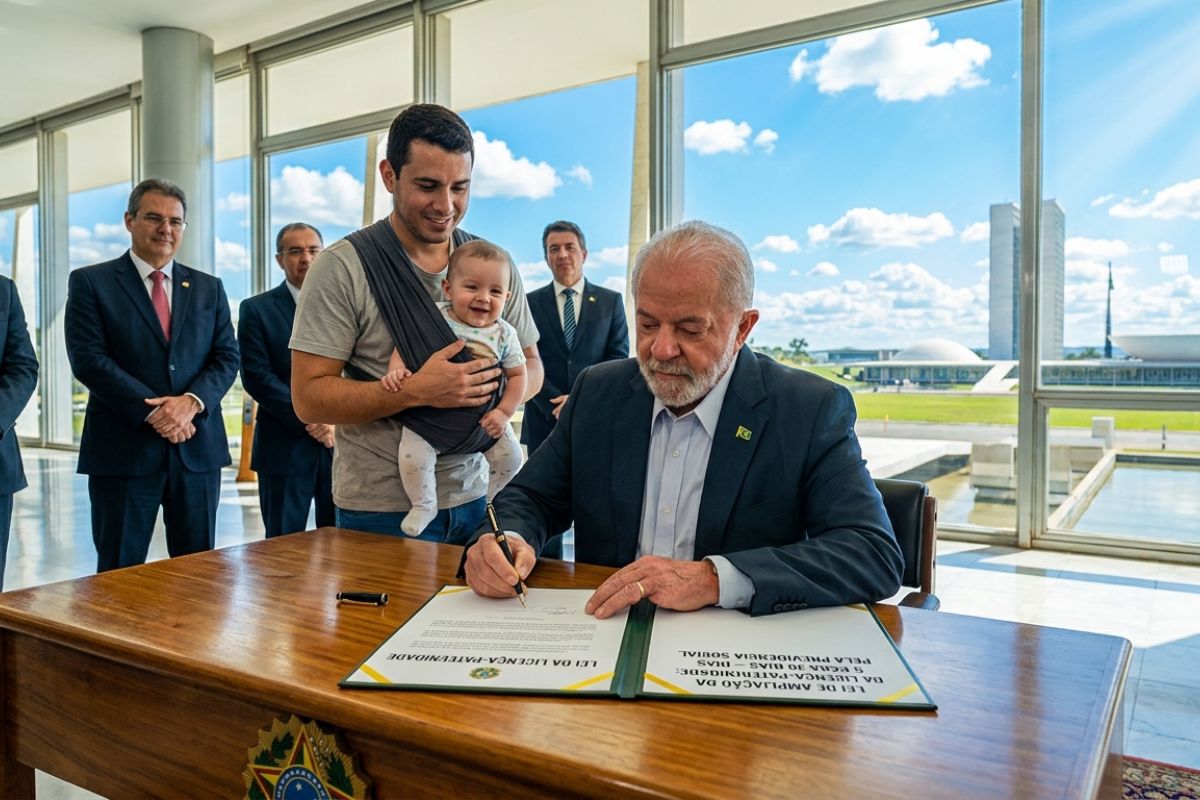
Government enacts new law: paternity leave increases from 5 to 20 days with gradual increases until 2029, and Social Security pays the paternity salary; companies no longer bear the absence cost, estimated at R$ 5.4 billion.
-
End of the 1-hour lunch break in the CLT? Current labor law maintains the break, allows for negotiated reductions, and defines rules for working hours and home office in Brazil.

-
Employee Fired After Accumulating 114 Days of Medical Leave in One Year, Labor Court Upholds Company’s Decision

-
Employee Fired While Treating Depression Wins in Court and Vale Is Required to Rehire Him Following Decision Based on the CLT and INSS Benefits




In 2016, for example, the Court recognized that the amounts deposited during the marriage are part of the community and can be subject to division, even if they have not yet been withdrawn.
State courts such as those in the Federal District (TJDFT) and São Paulo (TJSP) also began to apply the understanding, determining that the Caixa Econômica Federal be notified after the divorce ruling, reserving half of the balance in favor of the ex-spouse. The logic is simple: the still unavailable money is considered property in formation, resulting from work during the marriage, and therefore must be divided.
The Temporal Limit: What Enters and What Is Excluded
The right is not unlimited. Only deposits made during the marriage or stable union enter the division account.
Amounts deposited before the union or after the separation in fact are not communicable. Therefore, the judge needs to analyze the statements of the linked account to identify which periods had contributions and apply the division only over that fraction.
Another important point is the use of FGTS already withdrawn. If the money has been applied for the common benefit of the family, such as in the purchase of a residential property, the acquired asset becomes part of the division.
If, on the contrary, withdrawals were made for individual purposes before separation, there may be a judicial dispute to determine whether there was harm to the couple’s assets.
The Relation with the Property Regime
The property regime defined in marriage or stable union is determining. In the partial community of property, the general rule in Brazil, all amounts acquired after marriage are common, including FGTS.
In the universal community, there is no doubt: all assets, present and future, are shared, except for clauses in a prenuptial agreement. In the total separation, each spouse keeps what is theirs, and FGTS is not communicable.
The Civil Code, in its articles 1,658 to 1,660, makes it clear that assets acquired onerously during the marriage period are part of the community, except for express exceptions.
Paid work and its fruits — salary, bonuses, and social contributions such as FGTS — are included in this category, which legally grounds the judicial decisions of division.
Practical Impacts for Workers and Families
This understanding has direct repercussions in thousands of divorces in Brazil. For the worker, the FGTS balance ceases to be considered an exclusive reserve and becomes part of the family assets.
For the ex-spouse, it means economic protection, since they can access half of an amount accumulated over years of joint effort.
Family lawyers highlight that the decision also brings balance and fairness to the separation process. After all, FGTS is the result of work performed during the marriage, a period when, often, the other spouse contributed indirectly to maintaining the household, raising children, or supporting the professional career.
The Criticisms and Challenges of the Understanding
Despite the consolidation, the topic still generates debates. Critics point out that FGTS is linked to specific purposes like acquiring homeownership, retirement, or dismissal without just cause — and that its division could compromise the social purpose of the fund. Additionally, some argue that early withdrawal due to division may create bureaucracy and overload the Caixa Econômica Federal.
On the other hand, family law specialists argue that it is not about violating FGTS legislation, but rather acknowledging the division at the appropriate moment.
The amount will only be released under legal withdrawal circumstances, but the property division will already be recognized in the ruling, ensuring future rights.
The Future of Jurisprudence on FGTS in Divorces
The trend is for jurisprudence to remain firm in favor of division, especially after reiterated decisions from the STJ. Family law practitioners are already organizing to automatically include FGTS in division requests in divorce proceedings, and first-instance judges continue to follow this understanding.
In the future, there may be clearer regulation by the National Justice Council (CNJ) or even legislative adjustments, to standardize how Caixa should proceed in these cases and avoid prolonged disputes.
In the meantime, each divorce that reaches the courts reinforces the consolidation that FGTS is not an isolated benefit but a jointly built asset.
A Right That Changes Divorce in Brazil
The court decision that recognizes the ex-spouse’s right to half of the FGTS deposited during the marriage marks a turning point in the property understanding of marriage in Brazil. More than a labor issue, it is a legal recognition that common effort builds not only homes and families but also financial reserves, even if invisible in daily life.
At a time when divorces are becoming increasingly frequent, this jurisprudence brings predictability and justice, balancing the rights and duties of those who once shared the same life. And it raises an alert: family assets go beyond what is in the bank or in property deeds.
Even the fund created to protect the worker can ultimately become a couple’s asset.










Vão acabar com os casamentos. Kkkkkkk