






 Portuguese
  Spanish


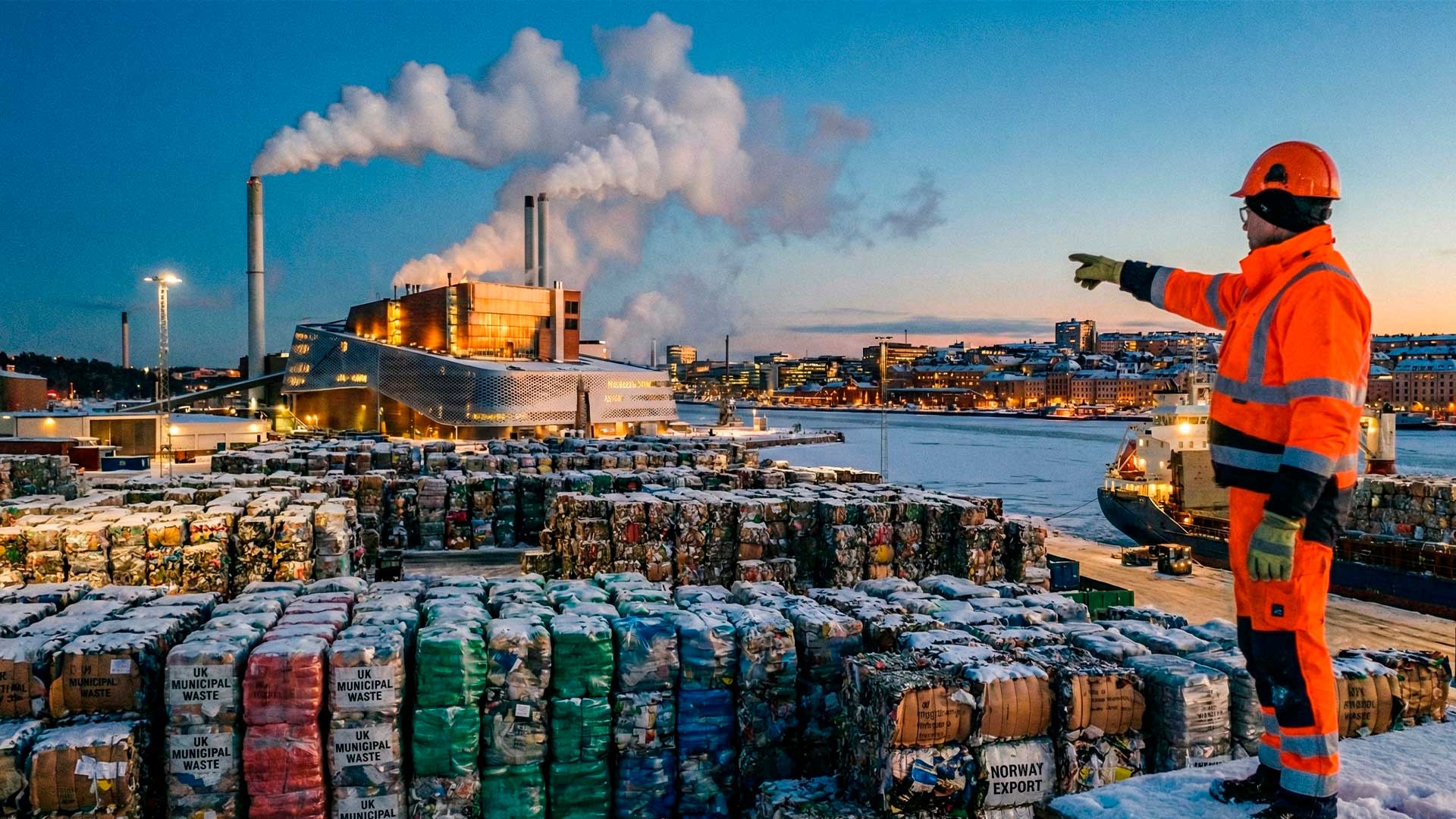


The Country That Turned Waste Into Energy Began Seeking Fuel From Abroad To Keep Its Plants And District Heating Running. Imports Help Reduce Landfills Elsewhere, But Raises Questions About Dependency And Climate.
Sweden is often cited as an example of waste management, with strong recycling and a robust incineration system with energy recovery linked to district heating. However, this efficiency has created an unexpected side effect: the country has less combustible waste than the installed capacity of its plants.
With less domestic waste, plants that generate heat and electricity from waste need a steady flow to operate efficiently. In practice, this has opened the door for the import of waste from other European countries, which pay to send part of the material that was not recycled.
According to Avfall Sverige, the waste sector organization in Sweden, Swedish plants received 6.6 million tons of waste for energy recovery in 2023. This volume includes household waste as well as waste from businesses and industries.
-
$7,999 Isaac 1 Robot Aims to Tackle Household Chaos: Folds Clothes, Makes Beds, and Organizes, but Raises Privacy and Cost Concerns with Camera Reliance and Remote Human Assistance

-
Mobile Electron Accelerator Units Enable Safe Testing of Water, Materials, and Industrial Waste Treatment in Countries Without Permanent Labs

-
Brazil Invests $12 Million in Biodiversity to Develop Drug Molecules, but When Will It Reduce Dependence on Imported Pharmaceutical Ingredients?
-
3D Printing: From 1945 Sci-Fi Concept to Modern-Day Prosthetics, Homes, and Industrial Parts



The debate is that, while the arrangement may prevent landfills in exporting countries, it can also create a dependency on fuel and a growing discussion about emissions related to plastics that still appear in the waste.
Why Sweden Began Bringing Waste From Abroad
The engine of this model is heating. District heating networks serve entire cities and neighborhoods, and in many places, energy recovery plants are part of the mix of fuels that keeps the heat supply during winter.


According to Avfall Sverige, energy recovery from waste in Sweden generated 19.5 TWh in 2023, with 17.3 TWh for heating and 2.2 TWh for electricity. The organization claims this system meets the heating needs of over 1.47 million apartments and electricity for over 940,000 apartments.
The central point is the capacity exceeding the available domestic waste. Avfall Sverige reports that the Swedish energy recovery capacity is greater than the domestic availability of combustible waste, which opens the door for material coming from abroad.
The Size Of The Imported Waste Market And Who Sends It
The numbers help to size the phenomenon. According to Avfall Sverige, in 2023, Swedish plants processed 2.2 million tons of pre-sorted waste from other European countries, of which 716,540 tons were municipal waste.

Regionally, a report from the Nordic Council indicates that the main countries of origin for the waste exported for incineration in Sweden include Norway and Great Britain.
The same document cites import need projections between 1 and 1.9 million tons in 2027, depending on the level of sorting and how capacity evolves.
What Sweden Gains From This And What The Rest Of Europe Tries To Avoid
For the plants and heating systems, the benefit is predictability. An incineration plant with energy recovery operates better when it has a constant feed and long-term contracts that provide operational security.
Imports also become a service. The exporting country pays to treat a waste that, in many cases, would go to landfills, and Sweden transforms this material into heat and electricity within existing infrastructure.
The environmental discussion is more complex and depends on what would be done with that waste in the country of origin. Avfall Sverige argues that this flow can help solve waste management issues in exporting countries and mentions that there is still a lot of waste going to landfills in the European Union, which generates methane emissions.
The EU, in turn, seeks to reduce landfill dependence and has goals to decrease the sending of municipal waste for this destination over time. This context pressures cities to find routes for waste that is not recycled, which includes incineration with energy recovery in some markets.
The sensitive point is the balance. The more a country advances in prevention and recycling, the lower the volume of combustible waste tends to be, and this may clash with existing contracts and plant capacity.
The Growing Criticisms About Incineration And The Hurdle To The Circular Economy
The main criticism is the risk of creating a kind of fuel dependency. If plants need volume to operate, some fear this reduces the incentive to cut waste at the source and increase recycling.
Another target is carbon. Even when the goal is to treat what cannot be recycled, the waste often contains fossil-based plastics, and burning releases CO2. The Swedish Environmental Protection Agency states that in 2023, waste incineration accounted for a large part of emissions in the electricity and district heating sector, with around 3 million tons of CO2 equivalent linked to this segment.
Avfall Sverige also acknowledges the problem of the fossil component in waste and sets goals to reduce fossil emissions associated with energy recovery over the coming decades.
Where The Model May Go In The Coming Years
One trend is to tighten sorting and push more materials for recycling, leaving incineration only for what really has no better route. This tends to reduce the available volume and increase the competition for fuel in systems with significant installed capacity.
Another front is technology and regulation to reduce emissions, whether with less plastic in waste or with carbon capture projects in energy and heating plants. The outcome may be a more expensive model, but with a smaller climate footprint and less dependent on imported waste.
In the end, the question remains whether importing waste is a smart shortcut to avoid landfills or a bad incentive that prolongs the era of burning. Do you think Sweden is being pragmatic by using waste from other countries or is it just delaying the transition to a truly circular economy? Share your opinion in the comments and say which side you are on.


The USA has so much trash that they can have. Plus it will make Trump happy because he can say look the EU is buying more form the USA.
Inceneration or Pyrolysis?
“Sweden excels at Waste-to-Energy (WtE), using advanced incineration for heat/electricity, but this is incineration, not true “mass thermal depolymerization,” which usually implies breaking polymers into monomers for chemical recycling; Sweden primarily uses WtE for energy recovery (50% of waste) and exports waste for this, with high recycling rates (nearly 50%), but faces pressure to reduce fossil plastic incineration for climate goals, as much plastic goes to WtE rather than true recycling. 
Sweden’s Waste Management (WtE Focus)
High WtE Usage: Around 50% of household waste is incinerated for energy (electricity and district heating).
Landfill Reduction: Less than 1% of waste goes to landfills.
Waste Import: Sweden imports waste from other countries (like the UK, Norway) to fuel its WtE plants.
Advanced Facilities: Plants like SYSAV in Malmö use advanced filtration to minimize pollution. 
“Mass Thermal Depolymerization” vs. Incineration
Incineration (WtE): Burns waste at high temperatures to release energy, often with recycling/sorting first.
Depolymerization: A chemical process (like pyrolysis) that breaks polymers (like plastics) back into their original building blocks (monomers) for new materials, which is different from simple energy recovery.
Sweden’s Reality: While Sweden uses thermal processes for energy (WtE), research shows much fossil plastic still ends up in these plants, hindering circularity. 
Key Takeaway
Sweden’s success is in efficient Waste-to-Energy (WtE) and recycling, a model many nations follow, but the term “mass thermal depolymerization” usually describes a more advanced chemical recycling technology not yet scaled in the same way as their current WtE infrastructure, with Sweden needing to shift more plastic from energy recovery to chemical recycling to meet climate goals. “
Both!