





 Portuguese
  English
  Spanish
 5 min of reading
  0 comments



The Municipality of Sumaré Approves New Law That Incentivizes Renewable Sources in Public Service, Prioritizing Solar Energy in Schools, Health Units, and Municipal Buildings, with Focus on Economy and Sustainability
In 2025, the Municipality of Sumaré enacted the new law that authorizes the creation of the energy sustainability program in the municipal public service, highlighting the adoption of solar energy in schools, health units, and administrative buildings. The initiative establishes an important landmark in local public policy by uniting energy efficiency, cost reduction, and long-term environmental commitment.
New Law Establishes Bases of the Energy Sustainability Program in Sumaré
The measure aims to reduce conventional electricity consumption, lower recurring expenses from the municipal budget, and promote positive environmental impacts without compromising the quality of services provided to the population. By structuring a gradual and planned policy, Sumaré moves forward in the energy transition with fiscal responsibility and strategic vision.
The Law No. 7,567/2025 officially establishes the energy sustainability program in the public service of Sumaré. The text authorizes the Executive Power to progressively adopt renewable energy sources in public properties, prioritizing photovoltaic solar energy as the main technology.
-
A Canadian retiree creates a hydroelectric system on a real river, generating energy continuously throughout the day and demonstrating how the power of water can supply a house with stability even in a simple structure.

-
Petrobras reaffirms its commitment to the market and ensures that it will carry out the energy transition safely to maintain national sovereignty.

-
Researchers discover a possible hydrogen deposit of up to 46 million tons beneath an ancient coal basin, and the volume could exceed half of the entire global production.

-
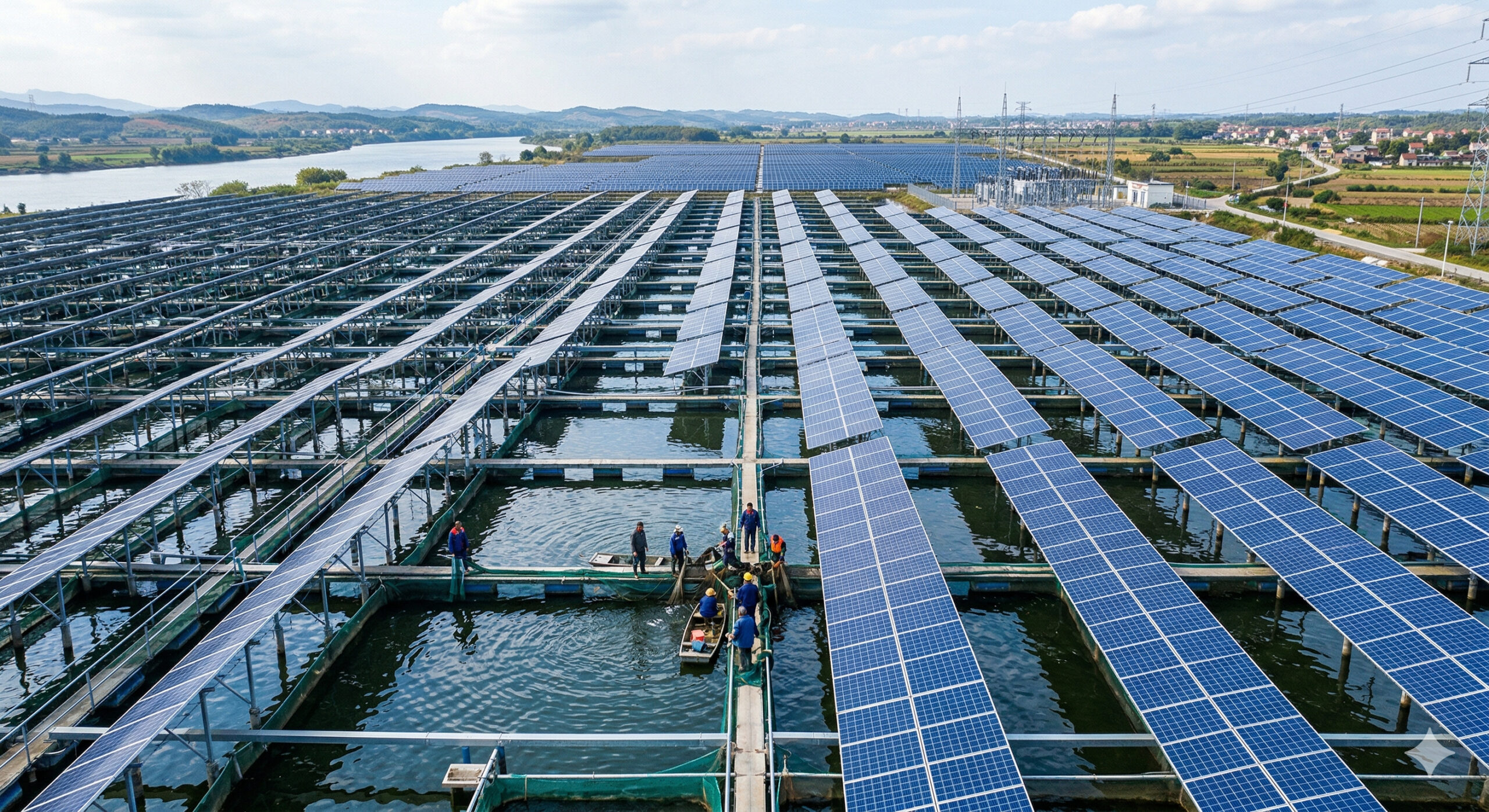
China bets on the Fishery-PV model and transforms fish farms into giant solar plants, covering ponds with panels that generate energy while utilizing the same space for large-scale aquaculture production.

The new law sets clear guidelines for the implementation of the program, respecting the municipality’s budget availability and ensuring legal security for future investments. Thus, the public administration can plan the expansion of clean energy use without generating abrupt impacts on municipal finances.
Additionally, the legislation reinforces Sumaré’s alignment with sustainable practices already adopted by other Brazilian municipalities, especially in the context of energy efficiency and the reduction of emissions associated with electricity consumption.
Solar Energy as a Strategic Axis of Municipal Public Service
Within the energy sustainability program, solar energy assumes a central role in the public policy of Sumaré. The choice of photovoltaic technology is due to its maturity in the Brazilian market, the gradual reduction of deployment costs, and the high potential for distributed generation in public buildings.
Solar energy allows local electricity generation, decreasing dependence on the conventional grid and providing greater predictability of expenses in the public service. This factor is especially relevant for schools, health units, and administrative buildings, which have high and continuous energy consumption.
Beyond the economic aspect, the use of solar energy contributes to the reduction of greenhouse gas emissions, strengthening the municipality’s environmental commitment and amplifying the collective benefits of the energy policy.
Priorities Defined by the New Law for Implementation in Sumaré
The new law that creates the energy sustainability program in Sumaré establishes a priority order for the implementation of solar energy systems in the public service. This definition seeks to maximize the social and economic impact of the municipal energy policy.
Municipal schools are the initial priority, allowing the savings generated from reduced energy bills to be reinvested directly in education. Next, health units are included, ensuring continuous operation, operational stability, and lower costs for serving the population.
The administrative buildings of the Municipality are also part of the strategy, promoting efficiency in public management and institutional example. Finally, the policy is gradually extended to other municipal public agencies, broadening the reach of the energy sustainability program in Sumaré.
Cost Reduction in Public Service and Social Reinvestment
One of the pillars of the energy sustainability program created by the new law is the reduction of electricity expenses in the public service of Sumaré. With lower and more predictable expenses, the municipality gains financial planning capacity in the medium and long term.
The savings obtained from solar energy can be redirected to essential areas, such as health, education, social assistance, and urban maintenance. This multiplier effect reinforces the strategic nature of the energy policy, which goes beyond environmental issues and directly impacts the quality of life of the population.
Moreover, the reduction of recurring costs strengthens the municipality’s fiscal sustainability, creating conditions for new investments without increasing pressure on the public budget.
Partnerships Strengthening the Energy Sustainability Program
The new law authorizes the Executive of Sumaré to establish partnerships with private companies, educational institutions, and state and federal agencies to enable the energy sustainability program in the public service. These partnerships broaden access to technologies, technical knowledge, and financing models.
The legal text also provides for the possibility of tax incentives for companies participating in the implementation of solar energy systems, as per future regulation. This strategy stimulates investments, innovation, and the generation of opportunities in the clean energy sector, strengthening the local and regional economy.
By integrating the public sector, private initiative, and research institutions, Sumaré creates a favorable environment for sustainable development and the modernization of municipal energy management.
Transparency and Monitoring of Results in Sumaré
Another relevant point of the new law is the requirement for an annual monitoring report of the energy sustainability program in the public service of Sumaré. The document must detail the program’s costs, the savings generated for public coffers, and the positive environmental impacts, such as emissions reduction.
The requirement enhances transparency and strengthens social control, allowing the population to monitor the results of public policy. This mechanism also enables technical and administrative adjustments, ensuring the continuous evolution of the use of solar energy in public buildings.
Periodic accountability contributes to the credibility of the program and to the consolidation of the energy policy as a permanent action of the municipal administration.
Authorship of the New Law and Regulation Deadline
The new law establishing the energy sustainability program in Sumaré is authored by councilors Ney do Gás and Raí do Paraíso. The text stipulates that the Executive Power shall regulate the norm within 180 days, establishing technical, administrative, and fiscal criteria for its execution in the public service.
The regulation will be decisive for transforming the legal directive into practical actions, defining contracting models, efficiency parameters, and rules for partnerships and incentives related to solar energy.
Institutional Advances That Strengthen Sumaré’s Sustainable Agenda
The creation of the energy sustainability program in the public service represents a significant advance in the environmental and administrative agenda of Sumaré. By investing in solar energy, the municipality reduces costs, improves the efficiency of public services, and contributes to environmental preservation.
The initiative demonstrates planning, fiscal responsibility, and commitment to the future, consolidating Sumaré as a municipality attentive to contemporary demands for sustainability and good management. With gradual implementation, transparency, and strategic partnerships, the new law is set to generate lasting benefits for the population and for sustainable urban development.







Seja o primeiro a reagir!