





 Portuguese
  English
  Spanish
  3 min of reading
  0 comments


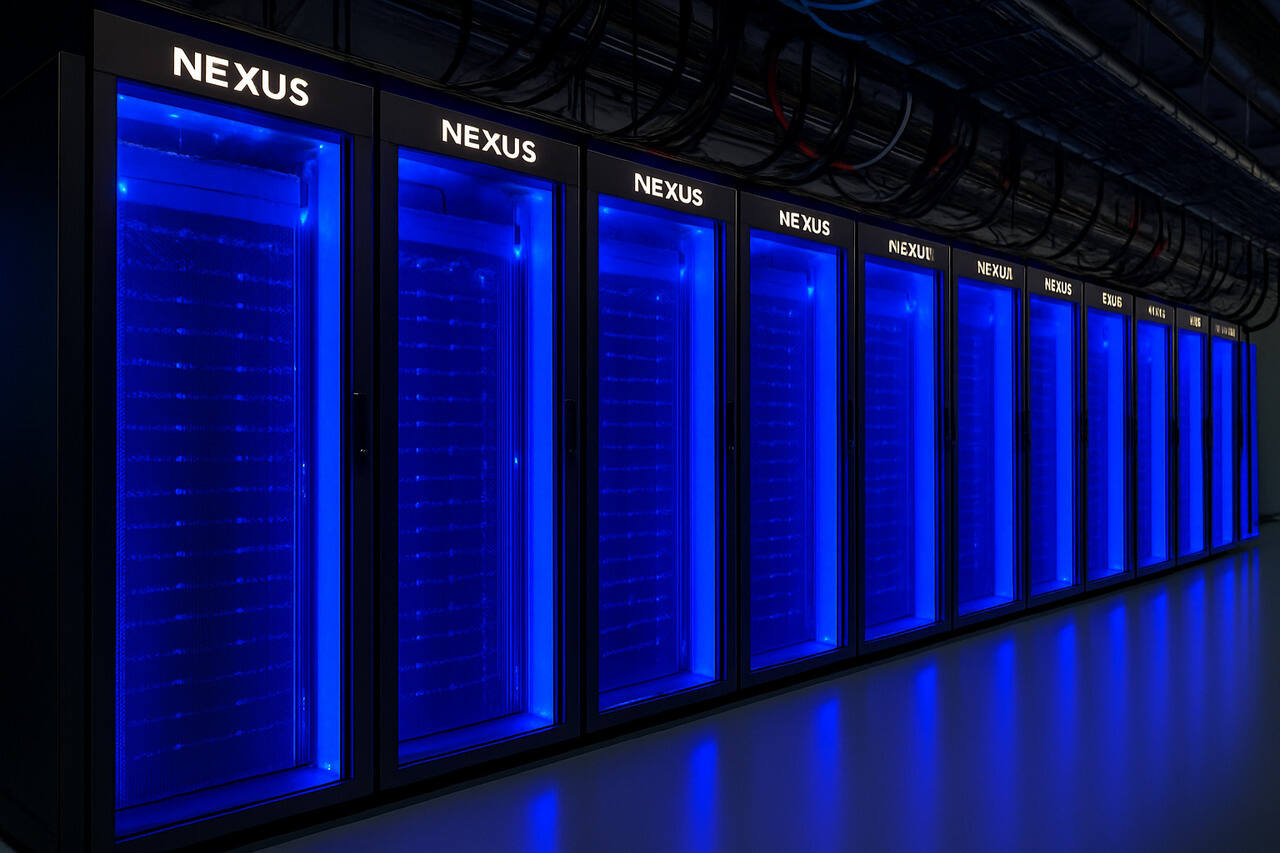
With Support of US$ 20 Million from the NSF, Nexus Promises 400 Quadrillion Operations per Second and Easier Access for American Scientists
Georgia Tech and partners will build one of the fastest supercomputers in the United States. Named Nexus, the system is funded with US$ 20 million by the National Science Foundation (NSF). It is expected to be ready in spring 2026 and capable of performing over 400 quadrillion operations per second.
This power is equivalent to all the inhabitants of Earth performing 50 million calculations per second, simultaneously, non-stop. The goal is clear: to accelerate scientific discoveries with the help of artificial intelligence.
Focus on AI and Accessibility
The Nexus in the United States was specifically designed to handle workloads geared towards artificial intelligence and high-performance computing (HPC).
-
Marine fossils found at over 8,800 meters altitude on Everest and in large mountain ranges have proven that entire continents move, oceans disappear, and tectonic plates collide over millions of years, revolutionizing science in the 20th century.

-
What if the Sun disappeared suddenly? Simulation shows Earth in darkness within minutes, extreme cold, and rapid collapse of life on the planet.

-
A 2,400-year-old iron foundry has been discovered in Senegal with 100 tons of slag, 35 furnace bases, and signs of nearly eight centuries of continuous metallurgical activity.

-
Four humans are flying towards the Moon inside the Orion capsule launched by the SLS rocket, and on April 6, Artemis II will disappear behind the far side of the Moon without communication with Earth for nearly an hour.


This includes challenges in areas such as drug discovery, clean energy, climate modeling, and innovation in robotics.
Unlike many traditional supercomputers, Nexus will focus on accessibility.
Researchers from any institution in the U.S. will be able to request access through the NSF, not just those from large tech centers.
Moreover, the system will feature easy-to-use interfaces. The idea is to facilitate the use of advanced AI tools by scientists from various fields.
A National Boost for Science
According to Ángel Cabrera, president of Georgia Tech, the institution is proud to be one of the leading centers for AI talent and technologies in the country.
He stated that the selection of Georgia Tech to host Nexus is justified, and the university is excited to start the project.
Katie Antypas, director of the NSF’s Advanced Cyberinfrastructure Office, emphasized that Nexus will bring a new approach by combining persistent scientific services with traditional computing.
For her, this will enable new workflows that will reduce the time between research and discovery.
Georgia Tech is building Nexus in partnership with the National Center for Supercomputing Applications (NCSA) at the University of Illinois at Urbana-Champaign.
The systems will be connected by a new high-speed network, creating a shared national infrastructure.
Nexus Supercomputer: Impressive Capacity
Nexus will have a system with enormous processing power and advanced memory and storage resources.
It will feature 330 trillion bytes of memory and 10 quadrillion bytes of flash storage. This is equivalent to about 10 billion reams of paper.
If stacked, these reams would form a column 500,000 km tall. That would be enough to go from Earth to the Moon and return one-third of the way.
This scale will allow the supercomputer to handle extremely complex problems and large volumes of data.
The infrastructure will also have ultra-fast data transfer systems. The goal is to ensure that researchers spend less time waiting for data to move and more time focused on discoveries.
Democratization of AI Tools
For Suresh Marru, principal investigator of the project and director of the new AI in Science and Engineering Center (ARTISAN) at Georgia Tech, Nexus will help to “level the playing field.
He states that the supercomputer is designed to make AI tools easier to use and more accessible.
The system will also reserve up to 10% of its capacity for internal research at Georgia Tech’s campus.
The remainder will be managed through an NSF review process, which will evaluate access requests from other institutions.
Acquired Experience
The Nexus project builds on Georgia Tech’s previous experience with the HIVE supercomputer and the university’s CODA data center.
According to Srinivas Aluru, professor at the Regents’ School and associate dean of the College of Computing, the launch of Nexus represents the culmination of years of planning.
Once operational, Nexus is expected to accelerate research in the toughest areas of current science. However, the expectation is that it will also open pathways for discoveries that have not yet been imagined by researchers.
Construction will begin later this year. When completed, Nexus will put Georgia Tech among the leading academic supercomputing centers in the United States.
With information from Interesting Engineering.








-

Uma pessoa reagiu a isso.