





 Portuguese
  English
  Spanish
 5 min of reading
  13 comments





State Regulation Changes Routine of Large Supermarkets, Expands Accessibility Rules, and Establishes Penalties for Stores That Do Not Provide Adapted Carts for People with Disabilities or Reduced Mobility in Mato Grosso do Sul, Affecting Large Chains and Hypermarkets.
Supermarkets and hypermarkets in Mato Grosso do Sul with sales areas over 1,500 square meters are now required to provide at least two adapted shopping carts to assist people with physical disabilities or reduced mobility.
The rule is outlined in State Law No. 6,437, published in the Official State Gazette on June 25, 2025, and makes the operation of these establishments conditional on compliance with the requirement, under penalty of sanctions.
The regulation stipulates that the adapted carts must allow for safe use and provide conditions for the customer to shop more independently within the store.
-
This is the weaponry that the smallest army in the world uses on a daily basis.

-
World’s largest floating library: at 132.5 meters long, Logos Hope is the largest floating book fair in the world, welcoming thousands of visitors each day and bringing over 5,000 titles to ports across various continents.

-
China has designed its first tourist submarine to take 3 passengers to a depth of 1,000 meters.

-
With up to 130 km in length, the Etosha Pan in Namibia remains almost the entire year as a white, cracked basin in the desert, but when the rare rains arrive, it transforms into a lake visible from space that reappears in the midst of one of the driest regions on the planet.

The text also specifies that the equipment must have wheel traction, can be manual or automated, and must have adequate space for accommodating products during the journey.
What the Law Requires for Supermarkets and Hypermarkets in MS
The central point of the law is the mandatory provision of at least two adapted carts per unit, aimed at consumers with physical disabilities or reduced mobility.
The requirement applies to establishments defined as supermarkets and hypermarkets under the legislation itself, focusing on large stores.

In practice, the classification does not depend on the name of the chain, but on the characteristics of the establishment.
The law considers supermarkets and hypermarkets those that primarily sell a variety of food products, also sell other goods, and have sales areas exceeding 1,500 square meters.
Thus, the obligation tends to affect large networks with larger units, such as wholesalers and hypermarkets, while generally not applying to neighborhood markets or stores that do not meet the size criteria.
The proposal is associated in institutional dissemination with the expansion of accessibility and the guarantee of more equitable conditions for using the shopping space.
In material published by the Legislative Assembly of Mato Grosso do Sul, the law is attributed to state representative Lia Nogueira of PSDB.
Requirements for Adapted Carts Required by the Law
The legal text does not define a single model of adapted cart but establishes minimum mandatory characteristics that supermarkets must observe.

Among the requirements are wheel traction and the possibility for the equipment to be manual or automated, always with sufficient space to accommodate purchases.
The purpose is for the cart to serve as a support resource throughout the customer’s journey, from navigating the aisles to paying at the checkout.
However, the law does not detail technical specifications such as dimensions, weight capacity, or adaptation standards for different types of disabilities in the most widely disseminated public texts.
Nonetheless, by linking the obligation to serving people with physical disabilities or reduced mobility, the regulation reinforces the accessibility aspect and allows for oversight based on the effective use of the equipment.
Deadline for Supermarket Adaptation
The law established a period of 90 days after publication in the Official State Gazette for it to come into effect.
During this time, the affected establishments had the opportunity to adjust and provide the adapted carts before penalties were enforced.
This interval is typically used by companies for acquiring the equipment and making internal operational adjustments, such as space organization and team training.

Although these procedures are not detailed as a formal obligation in the published text, the effective period was presented as a period for adaptation.
Fines and Penalties for Non-Compliance with the Regulation
Non-compliance with the law can result in fines and other sanctions outlined in state legislation, as reported by the Legislative Assembly.
The available public materials do not standardly present specific fine amounts or detailed calculations of penalties.
Local journalistic coverage suggests that offenders may be subject to penalties under the Consumer Defense Code, with the funds being directed to the State Fund for the Defense of Consumer Rights.
This linkage reinforces the understanding that the rule is associated with consumer rights protection and the actions of oversight bodies.
Impact of the Law on Retail Chains and Consumers
By mandating the presence of adapted carts in large supermarkets and hypermarkets, the law creates a permanent operational requirement for these stores in Mato Grosso do Sul.
The impact is likely to be reflected in daily service, with the need to keep the equipment available and in adequate condition for use.
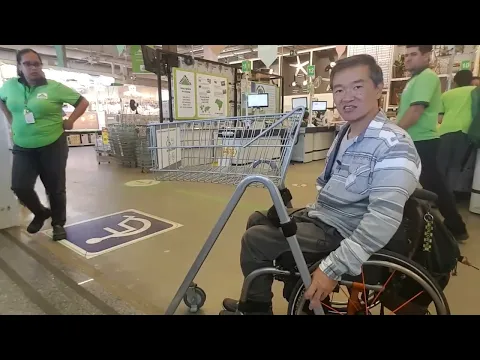

For consumers with physical disabilities or reduced mobility, the measure seeks to reduce practical barriers and enhance autonomy during shopping.
The regulation also clearly delineates its scope by the size of the stores, concentrating the obligation on larger establishments, where circulation is more extensive and the physical effort required tends to be greater.
With the end of the adaptation period, compliance with the rule now directly depends on oversight and any complaints from consumers.
The requirement for a minimum quantity per unit may also raise questions about availability during peak hours and the internal organization of stores.
In this context, the practical application of the law is likely to be measured by a central aspect: upon entering a large supermarket, does the consumer easily find an adapted cart and can they complete their entire shopping independently?







É só isto que nossos políticos sabem fazer, criar imposto burocracia e despesas para os empresários que já estão com falta de mão de obra por causa de tantos auxílios deixando o povo cada dia mais preguiçoso
Desculpa mas so 2 carrinhos por mercado, é pouco, pq se o terceiro deficiente chegar e não tiver carrinho terá que esperar até um desocupar? O que é ter pelo menos 5 por mercado, eu estou cansada de ver 5 à 8 pessoas deficientes , e nem todos cadeirantes,em um só mercado e tendo que se virar para carregar seus carrinhos, eu sou uma, não sou cadeirante mas tenho dificuldade de empurrar o carrinho, pq sou obrigada a deixar as muletas no carrinho para fazer minhas compras e com isso me desequilibrei e acabei caindo, e isso não aconteceu apenas uma vez! Infelizmente não tenho alguém a minha disposição toda vez que preciso. Então pensem nisso melhor e nos modelos dos carrinhos. Peçam um ortopedista para uma ideia de modelos que atendam a todos os deficientes. E que essa lei chegue em todo o Brasil. Por favor! Levem essa ideia aos deputados federais tbm! Obrigada pela atenção @ e que isso se torne realidade no país todo!
Realmente políticos quando não fazem nada para melhorar alguma coisa. eles vem com ideias de 💩 🤦🏾♂️