





 Portuguese
  English
  Spanish
  5 min of reading
  0 comments


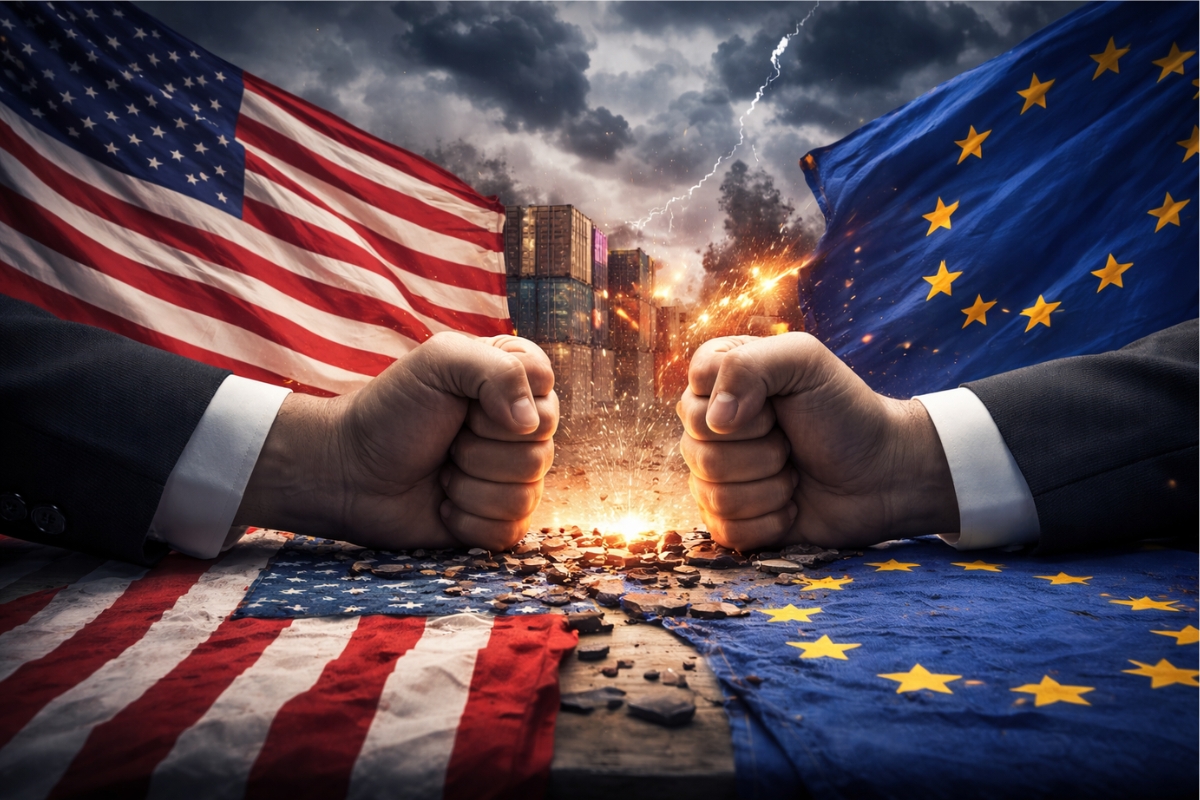
In Strasbourg, The European Parliament Suspended The Approval Of The Agreement With The United States With A 15 Percent Tariff To Push For Cooperation, Elevating The Tension Over Greenland And Drawing The Attention Of Leaders In Davos
This Wednesday, in Strasbourg, France, a decision announced in the heart of the European Union coincided almost at the same moment that Donald Trump was speaking at the World Economic Forum in Davos, Switzerland.
The move stalled the final stage of a trade agreement reached in July, in Turnberry, Scotland, and put the relationship between the United States and the European Union back in a scenario of pressure, threat, and possible retaliation.
The detail that attracted the most attention was the direct connection to Greenland, a territory of Denmark: according to the text, Trump’s demand to take control of the island was the trigger for the suspension.
-
“No one will make us change the Pix,” says Lula after the US report.

-
Lula responds directly to Trump and says that Pix is from Brazil and will not change under pressure from anyone, after a report from the United States pointed out the Brazilian payment system as an American trade barrier.

-
Amazon has just announced a new fee on all deliveries, and your online purchases will become more expensive starting April 17, including for those buying from the United States here in Brazil.

-
He sold his share for R$ 4 thousand, saw the company become a giant worth R$ 19 trillion, and missed the opportunity of a lifetime.


While Trump claimed he would not use military force, the shock had already hit financial markets and reignited discussions about trade war and European response.
What Happened In Strasbourg And Why The Decision Became International Headlines
The European Parliament suspended the approval of the trade agreement with the United States, which still needed to go through a vote to become official.
The measure was announced in Strasbourg, France, and came as a protest against the threats associated with the Greenland issue, which belongs to the Kingdom of Denmark, a member state of the European Union.
The suspension elevated the level of tension between Washington and European capitals because the impasse involves territorial sovereignty, a sensitive point for the bloc.
The repercussions were immediate because the announcement coincided with Trump’s presence in Davos, a global stage where statements often have a direct effect on markets.
The Turnberry Agreement From July, What Changed And Why It Got Stalled
Tensions had decreased since July of last year when the parties reached an agreement at Trump’s golf course in Turnberry, Scotland.
This agreement defined that the tariffs from the United States on most European products would remain at 15 percent, well below the 30 percent that Trump had initially threatened during the wave of tariffs known as Liberation Day in April.
In exchange, Europe agreed to invest in the United States and make changes on the continent that were expected to boost American exports.
Even with the political agreement, the text depended on approval from the European Parliament to be official, and this stage has now been put on hold.

Bernd Lange Raises The Tone, Cites Sovereignty And Opens Space For The Trade Bazooka
Days after Trump threatened to impose tariffs on Greenland, Bernd Lange, president of the International Trade Committee of the European Parliament, stated that there was no alternative but to suspend work on the two legislative proposals linked to Turnberry.
He said the implementation of the trade plans would remain suspended until the United States returns to the path of cooperation instead of confrontation, and before new measures are taken.
Lange also declared that Trump’s actions threatened the territorial integrity and sovereignty of a member state of the European Union, and affirmed commitment to the sovereignty and territorial integrity of Denmark and Greenland.
In an interview after the announcement, Lange indicated that there would be no possibility of compromise while the threats continued and raised the possibility of using the Economic Coercion Instrument, known as the trade bazooka, to respond.
The coverage was detailed by BBC News, an international news outlet, and also included a statement from Manfred Weber, an influential German parliamentarian, saying that the approval of the agreement is not possible at this stage.
Markets React, Trump Speaks In Davos And Reinforces Interest In Greenland Without Military Force
Stock markets on both sides of the Atlantic fell on Tuesday, but the losses were reversed on Wednesday after Trump promised not to use military force to take Greenland.
In Davos, Trump reiterated his interest in the United States acquiring Greenland and said he does not need to use force, does not want to use force, and will not use force.
Even so, he called for immediate negotiations with Denmark on how he could take control of the island, stating that this is crucial for the security of the United States and the world.
The combination of economic threat and military retreat was enough to keep the issue at the center of attention because the risk of a trade escalation did not disappear.
Dates, Values And Deadlines, What The Numbers Reveal About The Trade Dispute
The suspension of the agreement reopens the question of European retaliations against the United States.
The bloc had already announced that it could tax American products worth US$ 109 billion in response to the Liberation Day tariffs, but had suspended the plan while the details of the trade agreement were finalized.
This respite ends on February 6, which means that European tariffs will come into effect on February 7, unless the European Union approves an extension or a new agreement.
French President Emmanuel Macron is cited as one of the leaders pushing the European Union to consider retaliation options, including the trade bazooka, and Lange said he supports the measure, with a decision expected on Monday.

Trade Of US$ 1.9 Trillion And What May Happen Now With The European Union And The United States
The United States and the European Union, with 27 countries, are the world’s largest trading partners, with over US$ 1.9 trillion in goods and services in 2024, according to European figures, representing almost a third of global trade.
In the same Davos environment, U.S. Treasury Secretary Scott Bessent urged European leaders not to retaliate and told them to sit down, take a deep breath, and keep an open mind.
The text also points out that only China and Canada have maintained threats to impose tariffs on American products, although Canada discreetly withdrew most measures in September, concerned about damages to its economy.
Still in Davos, Canadian Prime Minister Mark Carney advocated for middle powers to unite in the face of a world of rivalry among great powers, warning that negotiating bilaterally with a hegemonic power leads to accepting what is offered and competing to be more complacent.
Behind it all, there is still a pending decision from the U.S. Supreme Court regarding the legality of many tariffs announced by Trump last year, a factor that could influence the next steps.
In the end, what seemed like a settled agreement turned into a strategic pause: the European Union stalled the approval, placed deadlines on the table, and made it clear that the dispute over Greenland could be costly in global trade.









Seja o primeiro a reagir!