





 Portuguese
  English
  Spanish
  4 min of reading
  0 comments


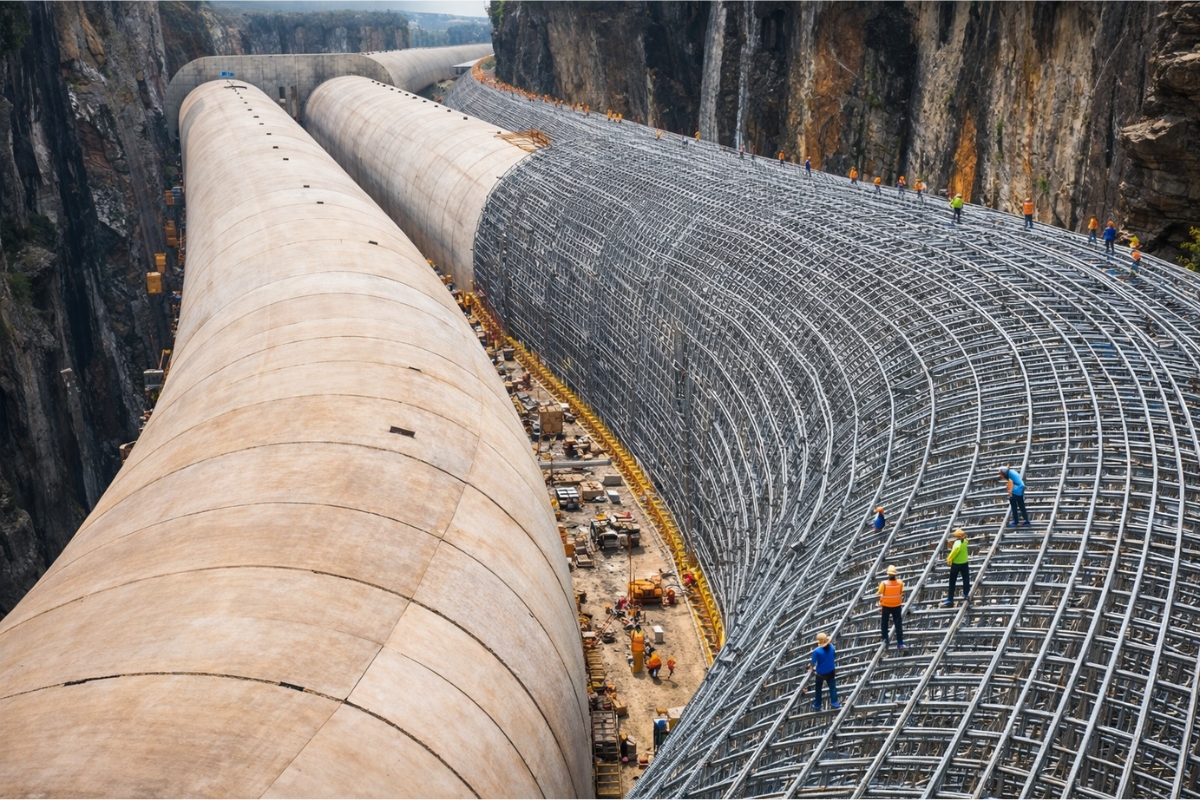
Costed more than US$ 2.3 billion, took almost 8 years and required cable cars, helicopters, and controlled explosions to create in the Alps a natural battery that repositions Europe in the energy game
Switzerland has put into operation one of the most impressive energy storage structures on the planet by transforming a mountain in the Alps into a large-scale natural battery. The system uses water, altitude, and tunnels dug into solid rock to store electricity and return it to the grid during peak demand.
The impact is direct on supply. Instead of just generating energy, the facility was designed to absorb excess and release electricity almost instantly when consumption rises, helping to reduce fluctuations and sustain large-scale supply.
630-meter elevation allows energy storage with water between two reservoirs
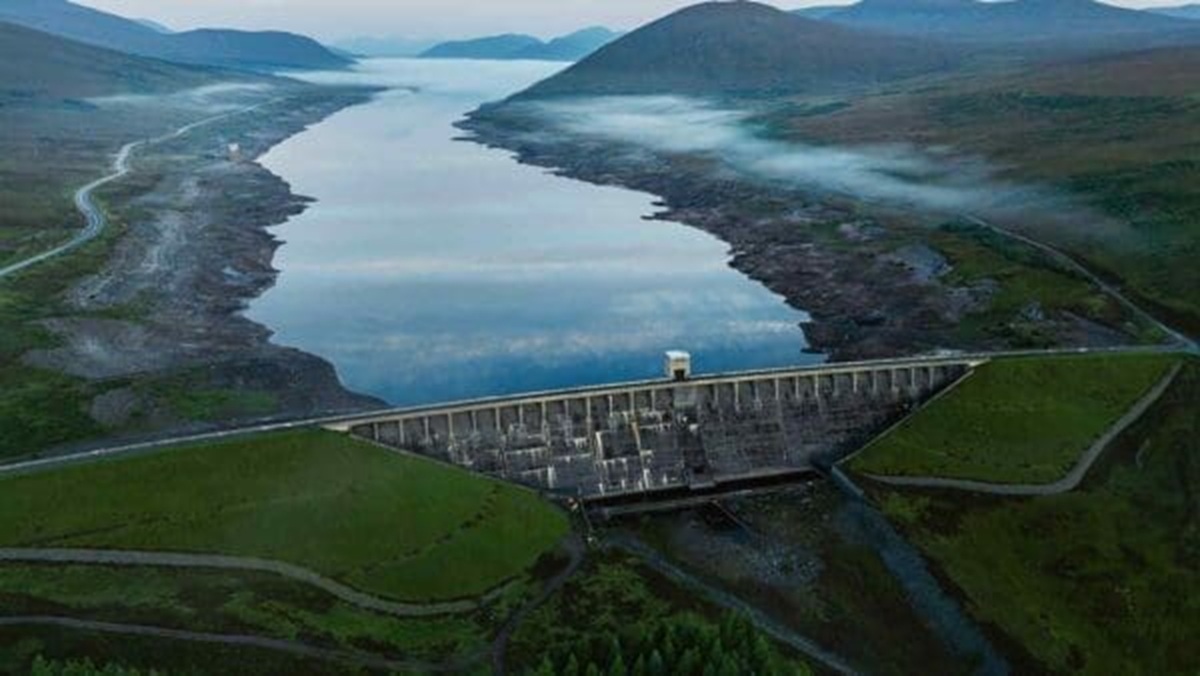
The operation of the system depends on the height difference between two reservoirs. When there is excess electricity on the grid, water is pumped from the lower reservoir to the upper lake, located more than 2,400 meters above sea level.
-
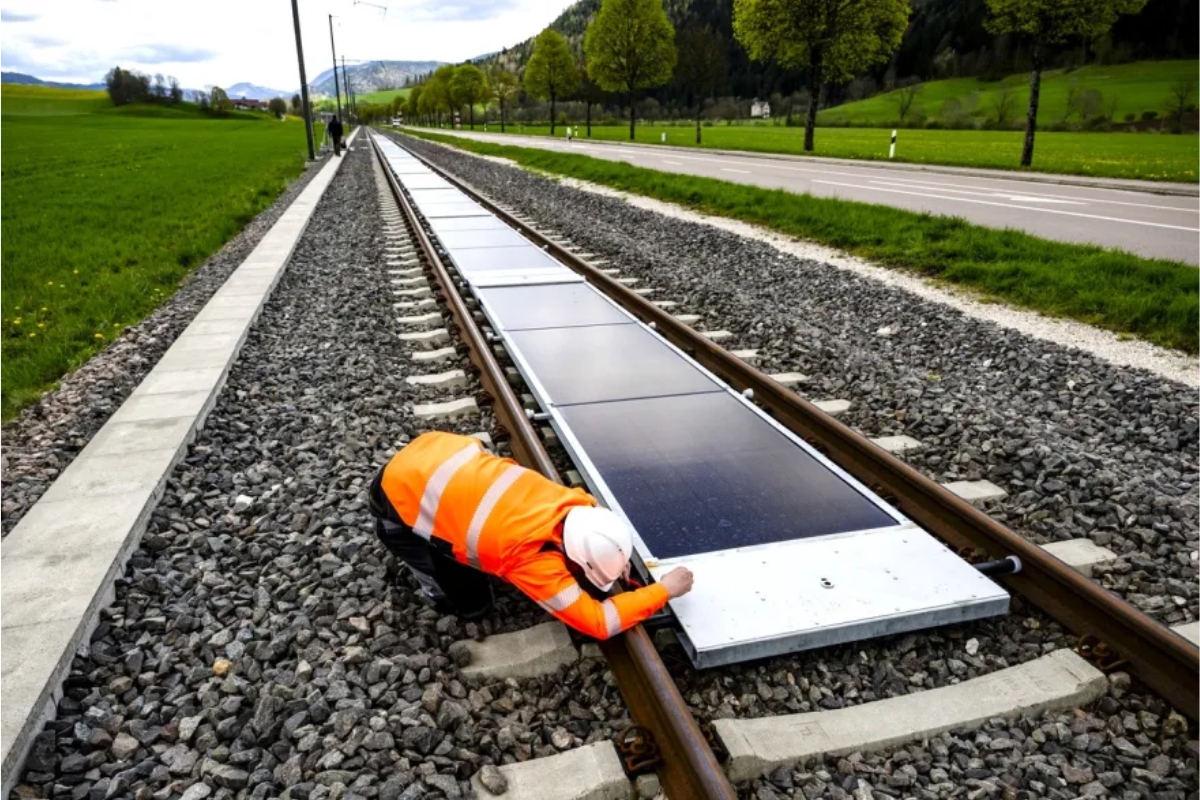
In Switzerland, tracks that previously only accommodated trains are beginning to generate electricity with removable solar panels installed on active railways, paving the way to transform the railway network into a new front for clean energy.
-
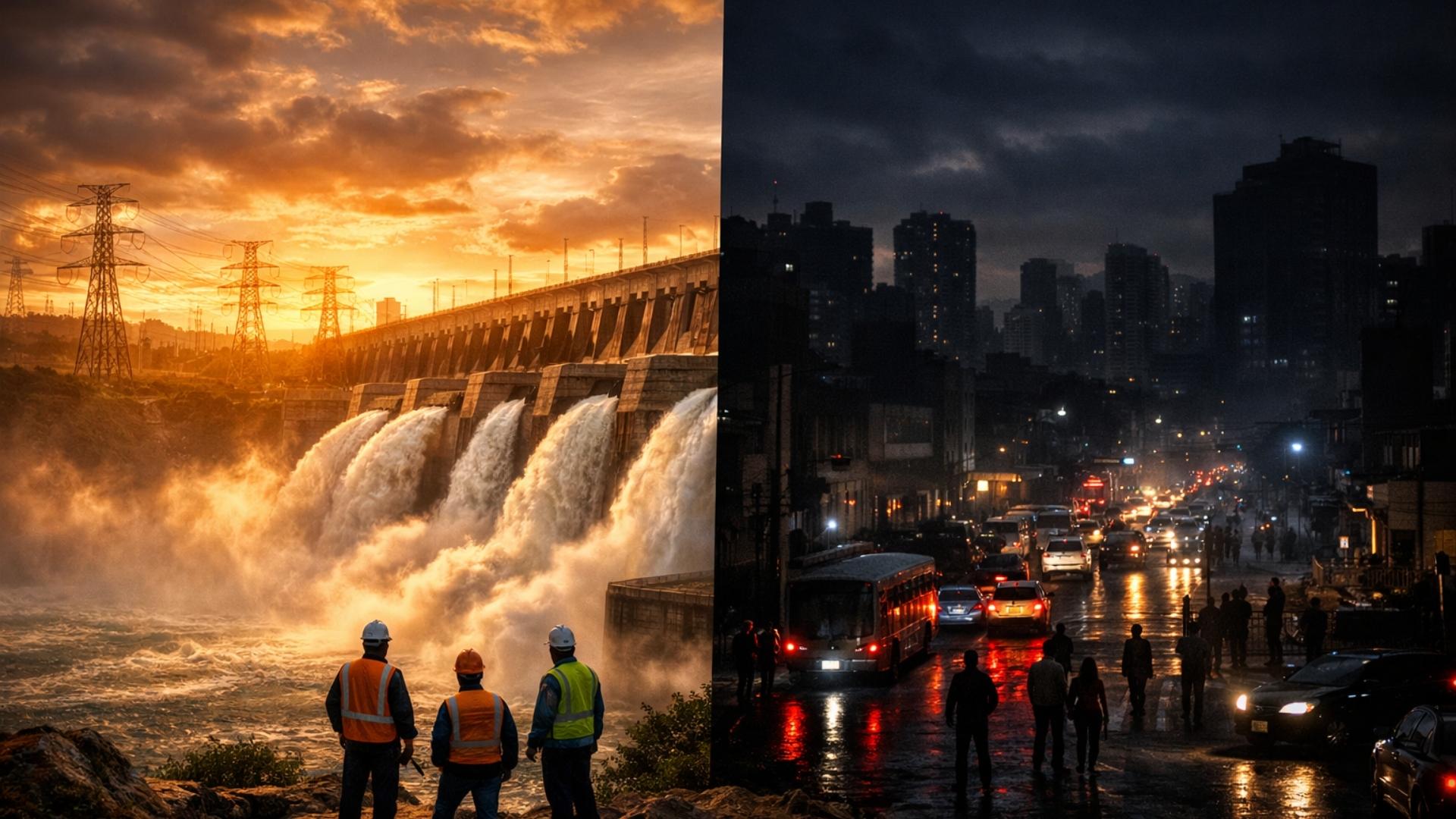
Brazil raises alarm to avoid blackout: the country may need 3 Itaipus and is already wasting up to 5,135 MW of energy on days of excess solar.
-
Renewable energy advances over protected areas in Brazil, and a survey by the Energy Transition Observatory reveals silent impacts that challenge environmental conservation and pressure sensitive traditional territories.

-
Rio Grande do Sul accelerates energy transition: State invests in renewable technologies and consolidates decarbonization strategies and pathways to attract billions in new industrial investments.


When consumption increases, this water returns at high speed through the turbines and generates energy almost immediately. Thus, the mountain functions as a strategic reserve, with an estimated efficiency between 75% and 80%.

Extreme altitude construction required industrial cable car and hundreds of flights
The construction site was set up above 2,000 meters, in an area of difficult access in the Alps. Without a conventional road to transport heavy equipment, logistics became one of the biggest challenges of the entire construction.
To enable the operation, an industrial cable car system was installed with almost 4 kilometers in length. In more complex sections, helicopters made hundreds of flights to transport materials, machines, and workers to isolated points on the slope.
Excavation opened more than 20 kilometers of tunnels inside the mountain
The interior of the mountain needed to be drilled through an extremely resistant layer of granite. To advance, the teams used deep drilling and controlled explosions with millimeter precision, repeated over many cycles.
The result was the opening of more than 20 kilometers of tunnels, in addition to large underground chambers for equipment circulation, cable installation, water passage, and technical operation of the entire structure.

Underground turbine hall received equipment weighing up to 300 tons
At the center of the complex is the large cavern where the turbines and generators were installed. This space is about 120 to 125 meters long, 25 meters wide, and reaches 50 meters in height.
To create this area, approximately 315,000 tons of rock were removed. After that, the structure received concrete bases, metal reinforcements, and systems capable of moving equipment weighing between 200 and 300 tons.
Line of 380 kilovolts connects the plant to the European electricity grid
After the installation of the turbines, the energy produced inside the mountain began to depend on a robust connection to the external system. This connection was made by a transmission line of 380 kilovolts with about 17 kilometers in length.
The structure allows the plant to deliver up to 1,000 megawatts to the electricity grid with a quick response. This enhances the capacity to compensate for consumption fluctuations and reinforces the project’s role within the European system.
2-kilometer pipes operate under intense pressure and high speed
Water circulates through a system of conduits about 2 kilometers long and up to 4.5 meters in diameter. These pipes were installed inside the mountain with thick steel plates and internal treatment to withstand continuous operation.
In sections of greater stress, the walls reach between 30 and 60 millimeters in thickness. The structure was designed to handle high pressures and flow rates between 20 and 30 meters per second, which keeps the system active with high responsiveness.
The project shows how storage can gain prominence in the energy transition. In a scenario of growing renewable sources, the ability to store electricity and return it at the right moment becomes crucial to avoid waste and sustain grid stability.
Near the end of the implementation, according to Expo, the energy company responsible for the operation of the system, the structure was designed to act as a large electrical regulator, capable of absorbing excess and responding quickly to demand variations. The investment exceeds US$ 2.3 billion and the construction took almost 8 years.
The scope of the work goes beyond heavy engineering. By combining altitude, water, and underground infrastructure on a rare scale, Switzerland reinforces its role in balancing the European electrical system and enhances responsiveness to fluctuations in renewables.
In practice, this repositions storage as a central piece of modern supply. When the grid needs immediate energy, the response comes from within the mountain and changes the strategic reading.







Seja o primeiro a reagir!