





 Portuguese
  English
  Spanish
  4 min of reading
  2 comments


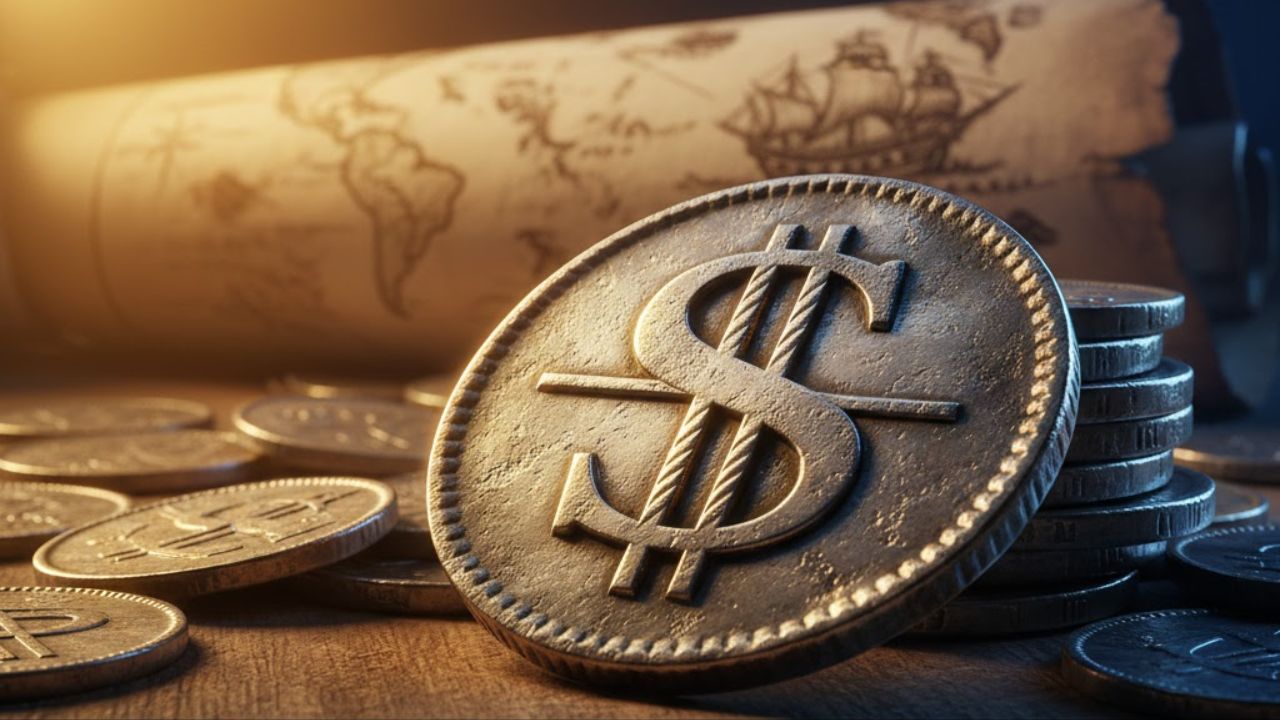


The Origin of the Dollar Sign ($) Is Linked to Empires, Silver Mountains, and a Fascinating Graphic Simplification That Transformed the Abbreviation of a Currency Into the Most Recognized Financial Icon on the Planet.
The familiar money symbol, known as the dollar sign ($), has a surprising origin directly linked to the history of exploration in the Americas. Although there are various theories, one of the most accepted, as detailed by the Manual do Mundo channel, points to the evolution of an abbreviation used for the powerful currency of the Spanish Empire: the “peso”.
This coin, minted with the vast silver extracted from territories like Bolivia, became the first global currency, functioning similarly to the US dollar today. Understanding its history is to dive into a period of achievements and economic transformations that defined global trade for centuries and left a lasting mark that we use daily, often without knowing its past.
The Silver Route and the Domination of the Spanish Peso
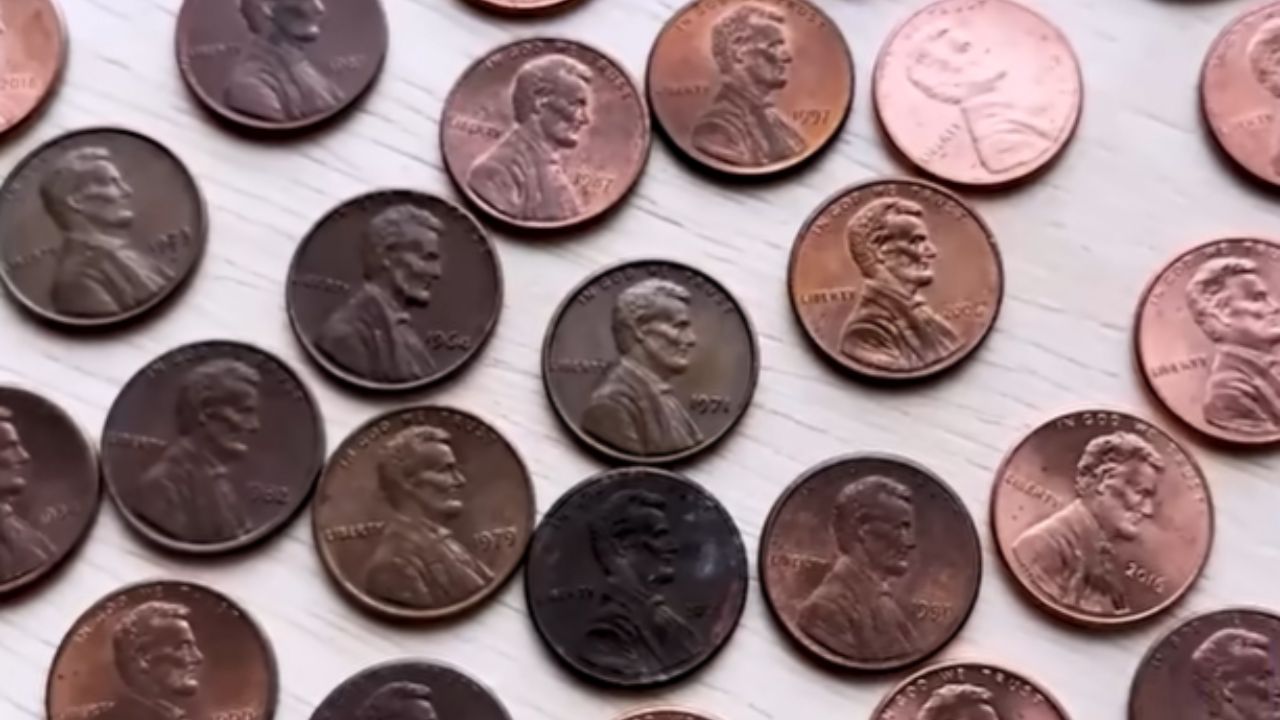
During the peak of the Spanish Empire, the exploration of minerals in the Americas generated unprecedented wealth. One of the most impactful discoveries was a true mountain of silver in Potosí, present-day Bolivia. From this wealth, the Spaniards began minting silver coins on a large scale, which quickly spread around the world through trade routes, as highlighted by the Manual do Mundo.
-
Hidden marks on the walls of the site associated with the Last Supper of Jesus for centuries have been deciphered in Jerusalem, revealing medieval inscriptions left by pilgrims, European nobles, and travelers from the Middle East.
-
One of the most important lakes in the United States for birds, the balance of nature, and the climate has dried to historic levels, leaving boats stranded, revealing salt flats, and showing how the lack of water can transform an entire landscape.

-
It’s not Cristiano Ronaldo or Messi: the richest football player in the world is only 27 years old, has a fortune of 100 billion reais, and is the nephew of a sultan from an Asian country that few people know about.

-
At 77, the king of one of the most famous and powerful crowns on the planet is said to be under pressure to leave the throne, while behind the scenes there are already talks of a new coronation that could cost R$ 260 million.
This robust and reliable currency was known by several names, including “Real de a Ocho”, “Spanish dollar”, and more popularly, “peso”. Its acceptance was so widespread that it became the main international currency for centuries, influencing the financial systems of various countries. The dominance of the peso was so great that the need to record it in accounting books and trade documents quickly and efficiently became crucial.
From Abbreviation to Icon: The Graphic Evolution of the Dollar Sign
To expedite commercial records, accountants and merchants of the time needed an abbreviated form for the word “peso”. The solution found was to write the letters “P” and “S” (initials of “pesos”, in plural) one over the other. With the urgency of manual writing, this overlap began to be simplified. The upper curve of the “P” gradually merged with its vertical stroke, until, finally, it disappeared.
What remained of this simplification was the letter “S” with the vertical stroke of the “P” cutting it in half, exactly the money symbol we know today. This transition, as noted in the analysis by the Manual do Mundo, was not a planned event, but a natural evolution to optimize writing. That’s why, in some representations, the dollar sign appears with two vertical strokes, a possible inheritance of a more complete spelling of the “P” over the “S”.
A Global Symbol, but Not Universal


Although the dollar sign ($) is the most widely spread money symbol globally, adopted by numerous currencies beyond the US dollar, it is not the only one. Each economic power has developed its own graphic representation to facilitate trade and reinforce its financial identity. The euro, for example, is represented by a “€”, which refers to the Greek letter epsilon and symbolizes the cradle of European civilization, with two strokes indicating stability.
Similarly, the Japanese yen uses the “¥”, a letter “Y” with two horizontal strokes, and the British pound sterling is represented by the “£”, an ornate variation of the letter “L”, derived from the Latin word libra. These symbols, like the dollar sign, were born from the need to create a unique and unmistakable visual identity for currencies, streamlining transactions and consolidating a nation’s economic power on the world stage.
The history of the dollar sign shows how a daily act, the simplification of an abbreviation to save time, can give rise to one of the most powerful icons of our civilization. What began as a “PS” overlaid in the records of the Spanish Empire became the money symbol that defines entire economies.
Now, we want to know your opinion. Did you already know this historical origin of the dollar sign? What other symbol from our daily lives do you believe has a fascinating story behind it? Share your ideas and curiosities in the comments!









I must say this article is extremely well written, insightful, and packed with valuable knowledge that shows the author’s deep expertise on the subject, and I truly appreciate the time and effort that has gone into creating such high-quality content because it is not only helpful but also inspiring for readers like me who are always looking for trustworthy resources online. Keep up the good work and write more. i am a follower.
Great article, thank you for sharing these insights! I’ve tested many methods for building backlinks, and what really worked for me was using AI-powered automation. With us, we can scale link building in a safe and efficient way. It’s amazing to see how much time this saves compared to manual outreach.