





 Portuguese
  English
  Spanish
  4 min of reading
  0 comments


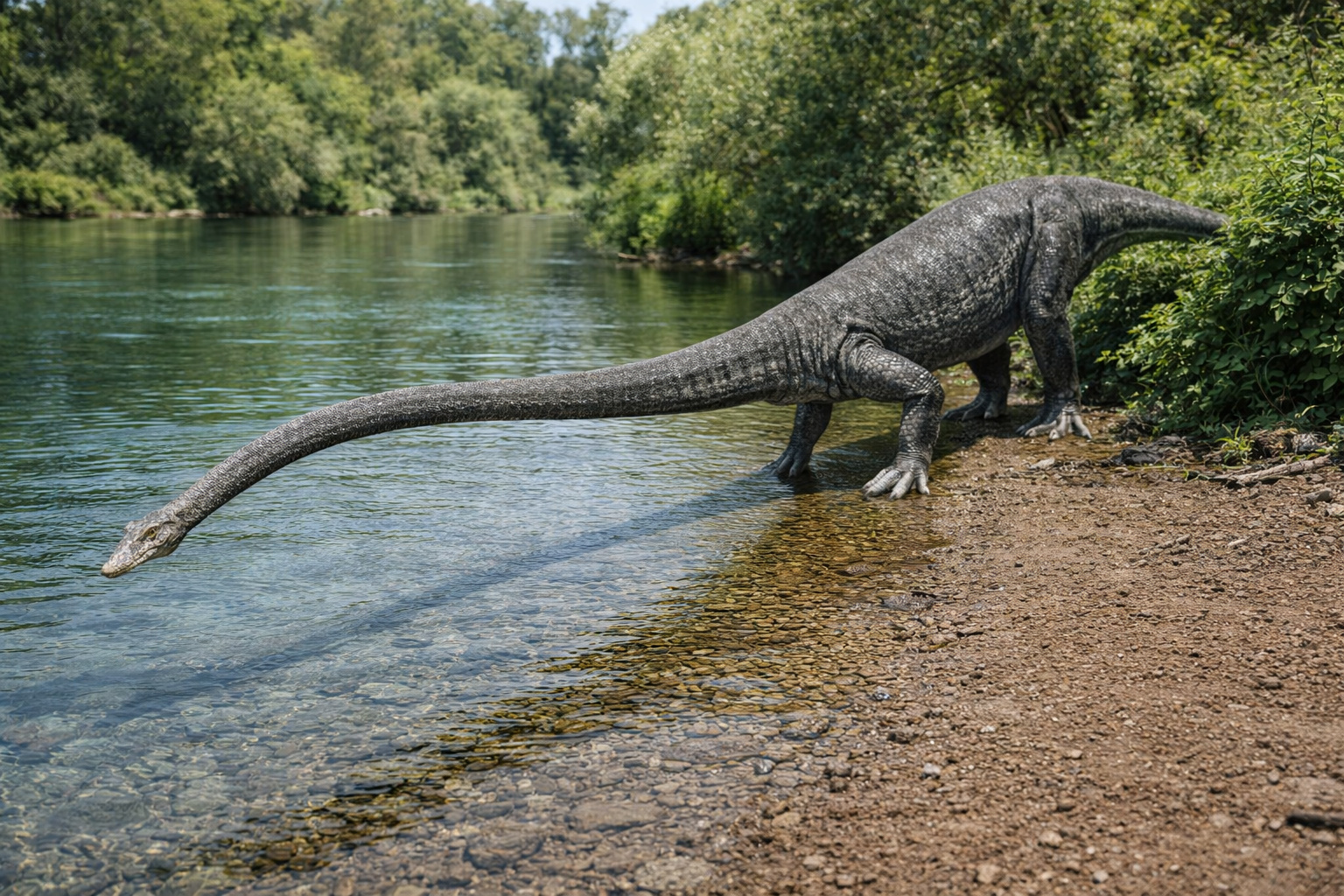
Reptile From The Sea With Neck Longer Than 3 Meters, The Tanystropheus Hydroides Surprised Scientists By Revealing Ambush Hunting And Unique Anatomy In The Seas Of The Triassic.
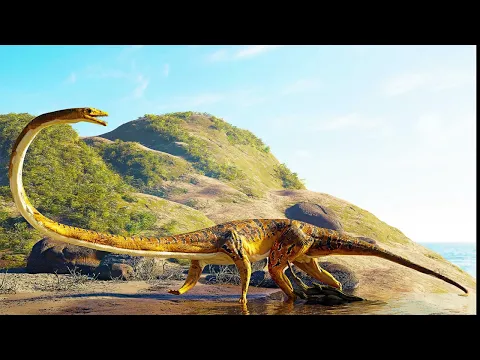
Among the strangest and least known animals from prehistory, the Tanystropheus hydroides holds a special place. At first glance, it seems like a poorly assembled creature: a relatively small body, short limbs, and an absurdly long neck, which accounts for more than half of the animal’s total length. For decades, paleontologists debated whether that extreme anatomy actually made sense from a functional perspective.
Today, with more complete fossils and modern analyses, it is known that the Tanystropheus hydroides was not an evolutionary mistake but rather a highly specialized predator, perfectly adapted to a very specific hunting style in the coastal environments of the Triassic period, around 242 million years ago.
Who Was The Tanystropheus Hydroides
The Tanystropheus belongs to a group of archosaurian reptiles that lived shortly after the largest mass extinction in Earth’s history, the Permian-Triassic event. The Tanystropheus hydroides, in particular, is considered the largest and most specialized species of the genus. The technical data is impressive:
-
A robot with a silicone face and 26 facial motors learns to move its lips accurately by observing its own reflection like a child, then analyzes hours of videos on YouTube to reproduce how humans speak and sing, now articulating words in several languages, has already recorded a music album generated by AI, and is beginning to cross the uncanny valley that causes people to reject almost human robots.

-
Iron foundry in Senegal reveals a pile of 100 tons of slag, 35 furnace bases, and a rare technique that has remained stable for centuries.

-
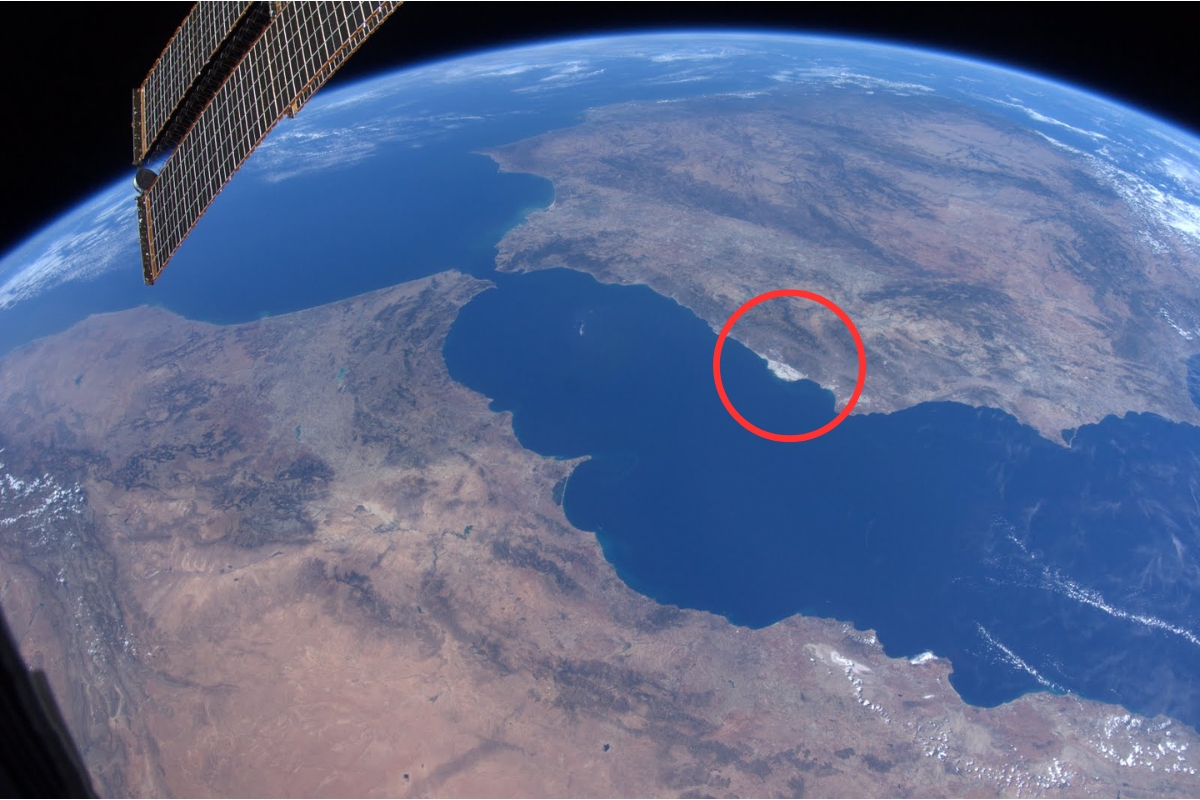
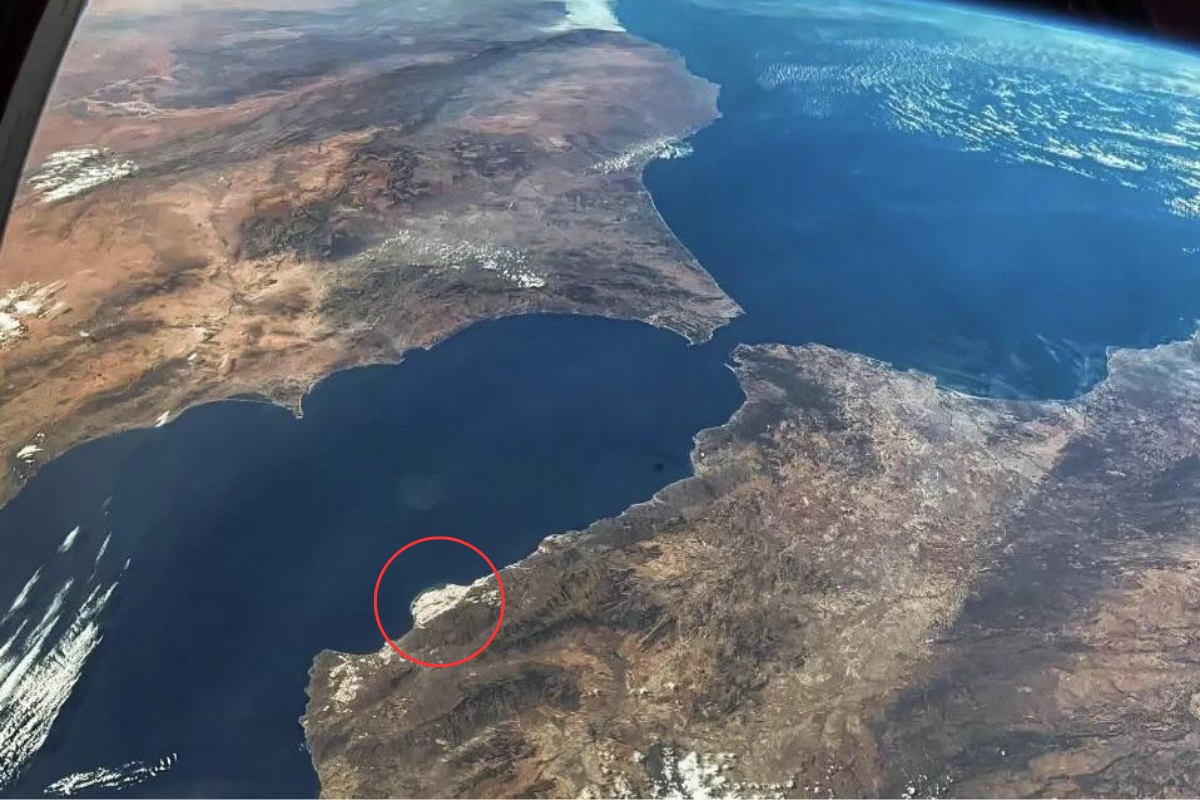
The only man-made structure in the world that can be clearly seen from space is not the pyramids of Egypt nor the Great Wall of China.
-
An analysis by NASA highlighted that the Great Wall of China and the Pyramids of Egypt are not visible to the naked eye from the International Space Station, and only one man-made structure is visible in this way.

- The total length of the animal could exceed 6 meters;
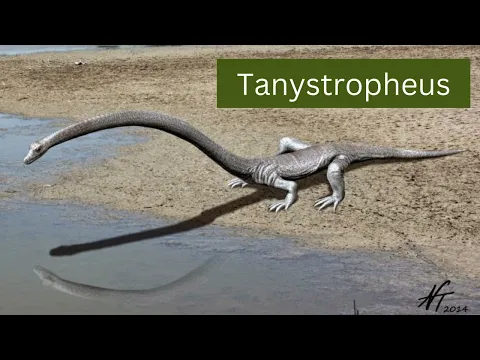
- The neck alone was over 3 meters long, formed by only 13 extremely elongated vertebrae;
- The trunk was short and stiff, with underdeveloped limbs for prolonged terrestrial locomotion.
This combination indicates that it was neither a runner nor a fast swimmer for long distances, but rather an ambush predator, reliant on surprise and precision.

A Giant Neck That Was Not Fragile
For a long time, the neck of the Tanystropheus was interpreted as a disadvantage. The logic seemed simple: such a long neck should be fragile, slow, and vulnerable to fractures. Recent studies, however, show the opposite.
The cervical vertebrae were reinforced with dense bony structures, with joints that limited exaggerated lateral movements but allowed for quick straight-line movements. This means that the neck functioned like a spear or rigid whip, ideal for sudden strikes.
Instead of extreme flexibility, the Tanystropheus possessed stability and reach. It did not need to approach prey with its whole body; a swift movement of the neck was sufficient to capture fish or cephalopods.
How The Serpent-Like Hunting Worked
The predatory behavior of the Tanystropheus hydroides more closely resembles that of an aquatic snake than a classic marine reptile. Fossil evidence from the skull and teeth indicates a diet based on fish and soft-bodied marine animals.
The most accepted strategy today is as follows: the animal remained almost motionless in shallow waters or near the coastal bottom, with its body partially concealed. The long neck extended forward, minimizing any movement of water that could alert the prey. When the target approached, the attack occurred in fractions of a second, with a quick and direct movement of the neck, similar to a strike.
This technique allowed for efficient captures without the need for chase, something crucial for an animal with a less hydrodynamic body.
Life In The Coastal Environments Of The Triassic
The Tanystropheus hydroides lived in shallow coastal environments, marine lagoons, and areas near primitive reefs. These ecosystems, shortly after the great Permian extinction, were undergoing full reconstruction, experiencing an explosion of new marine life forms.

In these areas, there was an abundance of fish, ammonites, and other invertebrates, along with a lower presence of large marine predators, which favored ambush-based hunting strategies. The Tanystropheus occupied an intermediate niche, acting as a specialized predator but not the absolute dominant creature of the environment.
Marine Or Semi-Aquatic? The Scientific Debate
For many years, there was doubt as to whether the Tanystropheus was fully marine or spent part of its time on land. The hydroides species, in particular, shows strong signs of aquatic adaptation: skull shape, dentition, body proportions, and geological context of the fossils point to a predominantly marine animal.
Still, it is likely that it could move on solid ground for short distances, especially to take refuge or shift environments, but it was not an active terrestrial animal. Its body was not suited for long walks, reinforcing the idea that its life revolved around water.
Why Is The Tanystropheus Hydroides So Little Known
Despite its extreme anatomy, the Tanystropheus hydroides remains relatively unknown to the general public for a few reasons. It does not belong to the more popular groups, such as dinosaurs or large classic marine reptiles like ichthyosaurs and plesiosaurs. Additionally, its complete fossils have only begun to be properly interpreted in recent decades, with advances in tomography techniques and digital reconstruction.
This led to it being viewed for a long time as merely an anatomical curiosity rather than a functional and successful predator.
What The Tanystropheus Reveals About Evolution
The Tanystropheus hydroides is a powerful example of how evolution can take extreme paths when there is ecological opportunity. Instead of speed or brute strength, it relied on reach, surprise, and energy efficiency.
Its existence shows that, after major environmental crises, life not only recovers but experiments with bold solutions, many of which have never been repeated. The gigantic neck of the Tanystropheus was not a random whim but a precise response to the conditions of the Triassic seas.
For science, it is proof that the “strange” is often just the “highly specialized” seen out of context.




-

Uma pessoa reagiu a isso.