





 Portuguese
  English
  Spanish
  3 min of reading
  0 comments


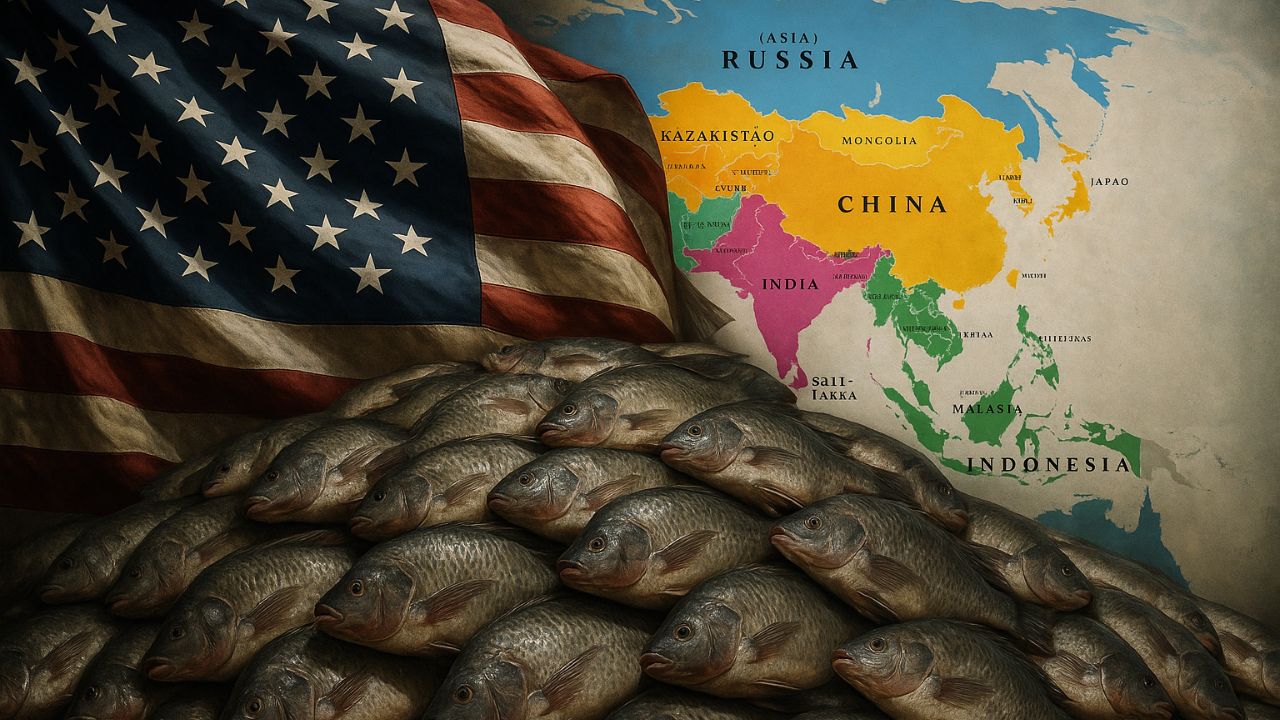
With a 123% Increase in Exports in the First Half of 2025, Sector Seeks New Buyers to Bypass the 50% Surcharge Imposed by the American Market and Finds a Potential Partner in Singapore.
The export of tilapia from Mato Grosso do Sul reached a record of US$ 5.8 million from January to July 2025, a significant growth that now faces a major challenge. A 50% surcharge imposed by the United States, the main destination for the fish, forces the sector to seek new markets, such as Asian countries, to maintain its expansion.
Record Growth in Sul-Mato-Grossense Tilapia Exports
The Mato Grosso do Sul, the fifth largest producer of tilapia in Brazil, recorded a remarkable leap in its exports. From January to July 2025, the state exported 1,190 tons of the fish. This volume represents a 123% increase compared to the 534 tons in the same period of 2024.
In monetary terms, the growth is even more significant. According to data from Famasul, revenue from tilapia exports rose from US$ 1.89 million in the first half of 2024 to US$ 5.83 million in 2025. This progress demonstrates the strength and quality of the product from Mato Grosso do Sul in the international market.
-
China alone accounts for 70% of trade within the BRICS, while Brazil establishes itself as an essential supplier of food and minerals: understand how the group, which already represents nearly 40% of the world’s GDP, is changing the game.
-
Starting in May, those who do not have registered biometrics will not be able to apply for Bolsa Família, sickness benefits, or unemployment insurance: understand the new rule that changes access to benefits for millions of Brazilians.

-
A new law being voted on in Brazil proposes a minimum fare of R$ 10 per trip and R$ 2.50 per kilometer for Uber and 99 drivers, and promises to ensure they earn as well as taxi drivers did during the golden age of taxis in the country.

-
Bauer Group collapses after failed judicial recovery: 25 years, 800 vehicles, and a network of gas stations leave a debt of R$ 50 million and 100 layoffs, exposing costs, tight margins, and expensive credit in Brazil.

Impact of American Tariffs and the Search for Alternatives
The positive scenario, however, was shaken. The government of Donald Trump imposed a 50% tariff on Brazilian products, directly affecting fish farming. The United States was the destination for 99% of all tilapia exports from the state. Famasul believes that the taxation will practically zero out shipments to the country.
Despite the high dependence of the North American market on imports to meet its demand, there is no expectation that the measure will be reversed. In addition to Brazil, countries like China, Colombia, and Honduras are among the main suppliers of tilapia to the U.S.
Potential and Tilapia Production Highlighted in MS
The tilapia production in the state is robust and well-distributed. According to Semadesc, the farming in earthen ponds is concentrated in the southern region, while net cages are used in the lakes of the Paraná River hydroelectric plants, where fish processing also takes place.
Data from Iagro shows that in 2024, the total fish production was 43,071 tons. Tilapia accounted for 89% of this volume, with 38,333 tons. For 2025, the expectation is that total production will reach 55,000 tons, further boosting tilapia exports.
Singapore Emerges as a New Promising Market for the State’s Tilapia
In light of the American blockade, the state government is acting quickly. During a mission in Asia, Governor Eduardo Riedel met with the Meat Traders Association of Singapore. The group expressed great interest in importing tilapia produced in Mato Grosso do Sul.
Singapore is already an important buyer of Brazilian meat, and the opening for fish presents an immediate solution. According to the government, two companies from the state are already facing difficulties in marketing their production, and the Singapore market could be the ideal alternative.
With information from: Correio do Estado.








-

-

-

5 pessoas reagiram a isso.