






 Portuguese
  Spanish
  3 min of reading
  0 comments


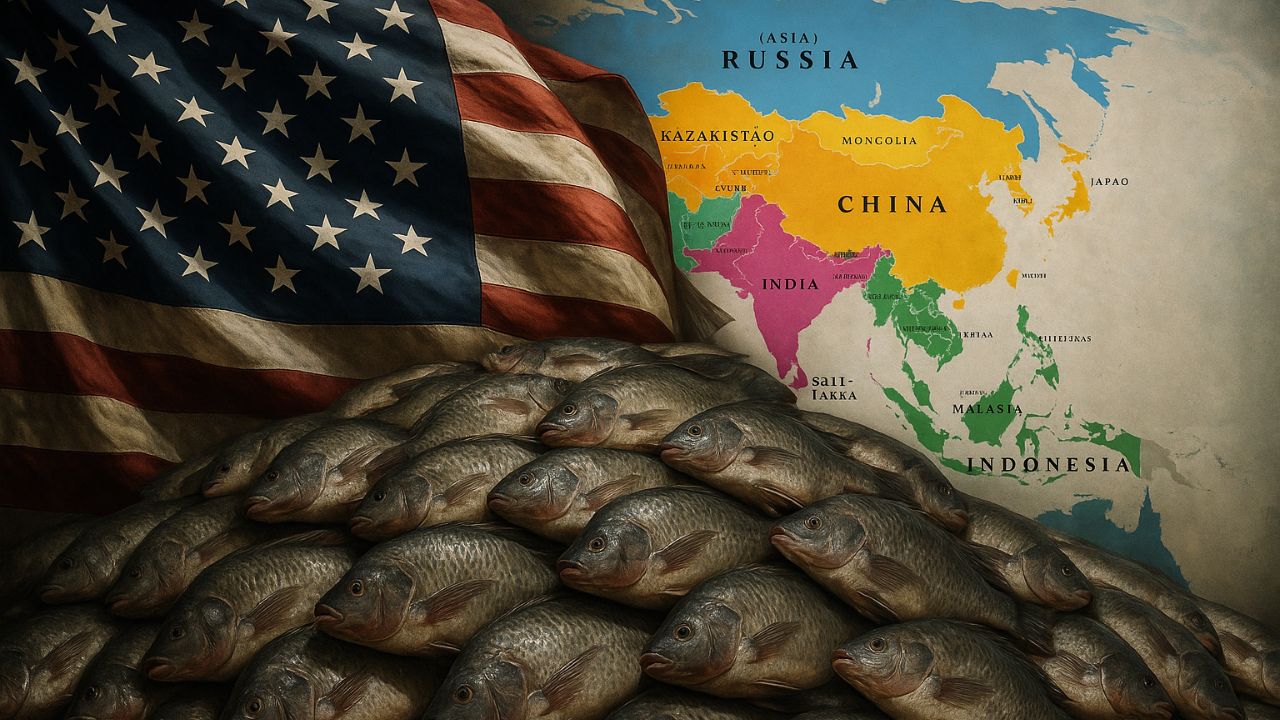
With a 123% Increase in Exports in the First Half of 2025, Sector Seeks New Buyers to Bypass the 50% Surcharge Imposed by the American Market and Finds a Potential Partner in Singapore.
The export of tilapia from Mato Grosso do Sul reached a record of US$ 5.8 million from January to July 2025, a significant growth that now faces a major challenge. A 50% surcharge imposed by the United States, the main destination for the fish, forces the sector to seek new markets, such as Asian countries, to maintain its expansion.
Record Growth in Sul-Mato-Grossense Tilapia Exports
The Mato Grosso do Sul, the fifth largest producer of tilapia in Brazil, recorded a remarkable leap in its exports. From January to July 2025, the state exported 1,190 tons of the fish. This volume represents a 123% increase compared to the 534 tons in the same period of 2024.
In monetary terms, the growth is even more significant. According to data from Famasul, revenue from tilapia exports rose from US$ 1.89 million in the first half of 2024 to US$ 5.83 million in 2025. This progress demonstrates the strength and quality of the product from Mato Grosso do Sul in the international market.
-
Brazilian Joins Homeownership Consortium, Faces Decade of Dual Payments Totaling $141,000, Surpassing Traditional Mortgage

-
Land Rover to Halt Production in July, Putting 371 Jobs at Risk, as Chinese Automaker Negotiates to Convert Factory to 100,000 Vehicles Annually by 2027

-
Mexican Pest Threatens U.S. Cattle Herds at Historic Lows, Potentially Boosting Brazilian Beef Exports as Burger Prices Soar

-
Brazilian Freight Bill Progresses in Congress with $5,000 Minimum Wage, 70% Advance Payment, and Fines Up to $1 Million, as Agriculture and Industry Warn of Rising Costs and Legal Uncertainty


Impact of American Tariffs and the Search for Alternatives
The positive scenario, however, was shaken. The government of Donald Trump imposed a 50% tariff on Brazilian products, directly affecting fish farming. The United States was the destination for 99% of all tilapia exports from the state. Famasul believes that the taxation will practically zero out shipments to the country.
Despite the high dependence of the North American market on imports to meet its demand, there is no expectation that the measure will be reversed. In addition to Brazil, countries like China, Colombia, and Honduras are among the main suppliers of tilapia to the U.S.
Potential and Tilapia Production Highlighted in MS
The tilapia production in the state is robust and well-distributed. According to Semadesc, the farming in earthen ponds is concentrated in the southern region, while net cages are used in the lakes of the Paraná River hydroelectric plants, where fish processing also takes place.
Data from Iagro shows that in 2024, the total fish production was 43,071 tons. Tilapia accounted for 89% of this volume, with 38,333 tons. For 2025, the expectation is that total production will reach 55,000 tons, further boosting tilapia exports.
Singapore Emerges as a New Promising Market for the State’s Tilapia
In light of the American blockade, the state government is acting quickly. During a mission in Asia, Governor Eduardo Riedel met with the Meat Traders Association of Singapore. The group expressed great interest in importing tilapia produced in Mato Grosso do Sul.
Singapore is already an important buyer of Brazilian meat, and the opening for fish presents an immediate solution. According to the government, two companies from the state are already facing difficulties in marketing their production, and the Singapore market could be the ideal alternative.
With information from: Correio do Estado.





-

-

-

5 people reacted to this.