





 Portuguese
  English
  Spanish
  5 min of reading
  0 comments



The Supreme Court Decision On Donald Trump’s Tariffs May Require The US To Refund Billions Of Dollars To Companies, But The Slow And Bureaucratic Process Threatens To Turn Refunds Into A Financial Maze.
The possibility of the Supreme Court overturning the most emblematic trade tariffs of the Donald Trump administration has raised an immediate alarm in Washington and the private sector.
If country-based charges are deemed illegal, the United States could have to refund a large portion of the US$ 165 billion collected in tariffs in the current fiscal year to the companies that paid.
In practice, however, the money may not return anytime soon: the refund system is slow, fragmented, and still primarily relies on paper checks.
-
In Paraná, long-life milk prices rise by 17% and powdered milk by nearly 9%, but producers still receive R$ 2.10 while the market charges R$ 7; middlemen keep the difference and are awaiting a price adjustment.

-
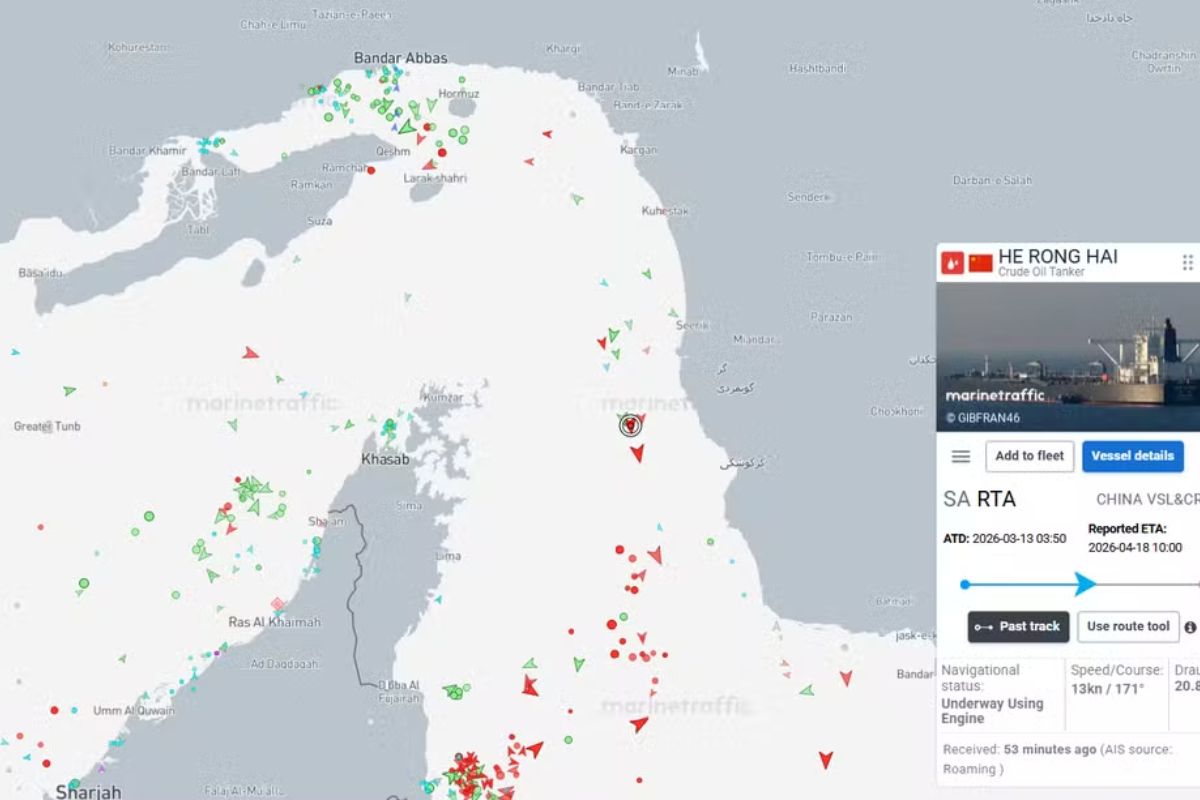
Two Chinese supertankers chartered by Asia’s largest refiner have just crossed the Strait of Hormuz and may be the first to leave the Persian Gulf since the ceasefire between the United States and Iran on a route that still has mines and uncertainties.
-
While Havan earns R$ 50 million per day throughout the year, Cacau Show managed six times more in just 24 hours, totaling half a billion reais in two days of Easter.

-
Weak dollar or strong real? The American currency plummets for the third day, approaching R$ 5 and surprising the market with global inflation and tensions in the Middle East that continue to create global uncertainty.

Hearings In November And Political Impact
The Supreme Court has scheduled the start of hearings in November regarding the legality of the tariffs.
For Trump, a defeat would be a political and fiscal setback.
The president has praised tariff revenues, claiming they have made the country “very rich again,” and has already advocated using these resources for public policy objectives, like reducing debt, funding emergency aid for farmers, and even distributing checks to Americans.
This discourse indicates that the government will not easily forego revenue, and if necessary, will attempt to reestablish tariffs under different legal bases should the current ones be invalidated.
The Cogs Of Refunds
Even with the public machinery partially paralyzed, routines related to tariff collection continue to operate.
The refund, when it occurs, goes through two stages: the Customs and Border Protection (CBP) authorizes it, and the Treasury issues the payment.
None of this, however, is automatic.
Importers — or their brokers — must initiate the process, fit the request into the correct procedure, observe strict deadlines, and attach the appropriate documentation.
“Customs is not just going to hand over a bunch of money to importers,” said Lynlee Brown, a global trade partner at EY.
Although the government has mandated the gradual elimination of checks, the transition is slow.
Most refunds still arrive by mail, which tends to become a bottleneck if the Supreme Court endorses mass refunds.
Without a coordinated strategy to accelerate the process, the CBP and Treasury would hardly manage the demand.
Why The Bill Exploded
The revenue leap occurs mainly after the implementation, in August, of tariffs on imports from dozens of economies.
Analysts estimate that about half of the amount collected this year could be refunded if the Supreme Court upholds the decisions of lower courts that indicated overreach of presidential authority.
The contested tariffs are based on the International Emergency Economic Powers Act (IEEPA), a law that underpinned the government’s package and which, according to judges, would not authorize the extent of the charges adopted.
Companies Give Up Waiting
The uncertainty regarding the process and the timeline for receiving discourages part of the private sector.
Some importers already treat the tariff as a lost cost.
Harley Sitner, owner of Peace Vans, a shop specializing in classic vans in Seattle, reports surprise bills for tariffs ranging from US$ 221 to US$ 17,000, sometimes charged months after receiving the goods.
In light of the instability, he has halted imports.
“Just yesterday we received a small shipment from Germany worth US$ 2,324, and it came with a tariff of US$ 1,164. There is no way to turn back,” he stated.
For Sitner, the unpredictability is worse than the payment itself.
Meanwhile, customs brokers report being approached by financial institutions interested in purchasing refund rights at a discount.
This transfer would provide some immediate cash relief to importers, who would relinquish part of the amount in exchange for liquidity and transfer the legal risk of recovery.
How To Speed Up — And How To Slow Down
Previous experiences show that the government could simplify refunds based on data already existing in the CBP systems.
There are precedents in the Generalized System of Preferences (GSP), a tariff exemption program that has expired and been retroactively renewed multiple times since the 1980s.
At that time, it was enough to identify entries with the pertinent codes for payments to be processed when Congress revalidated the program.
Experts now suggest adopting a similar logic, tracking the tariffs applied under the codes associated with the IEEPA.
Conversely, there are also ways to difficult.
A restrictive design could require that each company file individual lawsuits, submit formal protests, post-summary corrections, and attach proof of all payments, even though such information is already in federal databases.
Given the complexity, consultants recommend that importers save ACE (Automated Commercial Environment) data and monitor deadlines for each entry to preserve the right to any future refunds.
Checks, Logistics, And Fraud Risks
Even if the CBP takes the simplest path, the financial chain adds layers of friction.
When carriers like FedEx and UPS act as registered importers to facilitate the paperwork, the refund is issued to them, not to the owner of the cargo.
This opens the door for contractual conflicts and additional delays until the money reaches the final recipient.
Another sensitive point is security.
Experts report cases of stolen mail involving diverted refund checks that were resold on the dark web before being cashed.
The most obvious solution would be to accelerate the migration to electronic payments and cross-reference ACE data with the banking system, but large-scale implementation would require coordination between CBP and the Treasury, as well as technological and human resources.
What Is At Stake For The Government
Trump and his team highlight the fiscal importance of tariffs and consider legal alternatives to maintain revenue in case they lose on the merits.
Among the possibilities is the use of other trade and economic security legislation that allows for targeted tariffs.
Still, a refund order would place pressure on the federal budget and increase price and timing volatility in the supply chain, with immediate effects on stock and investment decisions.
Outlook For The Coming Months
Until the Supreme Court rules, companies operate in a regulatory limbo.
Some cautiously maintain foreign purchases; others reduce imports to avoid new surprises on the invoice.
The combined scenario of legal proceedings, administrative processes, and operational bottlenecks suggests that, even in the case of a victory for importers, the path of money back will be tortuous.
As customs consultant Tom Gould summarized, depending on the outcome, we could witness the sending of “millions and millions of paper checks,” because each shipment would have its own payment.
If the Court strikes down the tariffs and the refunds really advance, who will be better positioned to receive first: large importers with robust legal teams or small businesses that saw their costs explode overnight?








Seja o primeiro a reagir!