





 Portuguese
  English
  Spanish
  3 min of reading
  0 comments


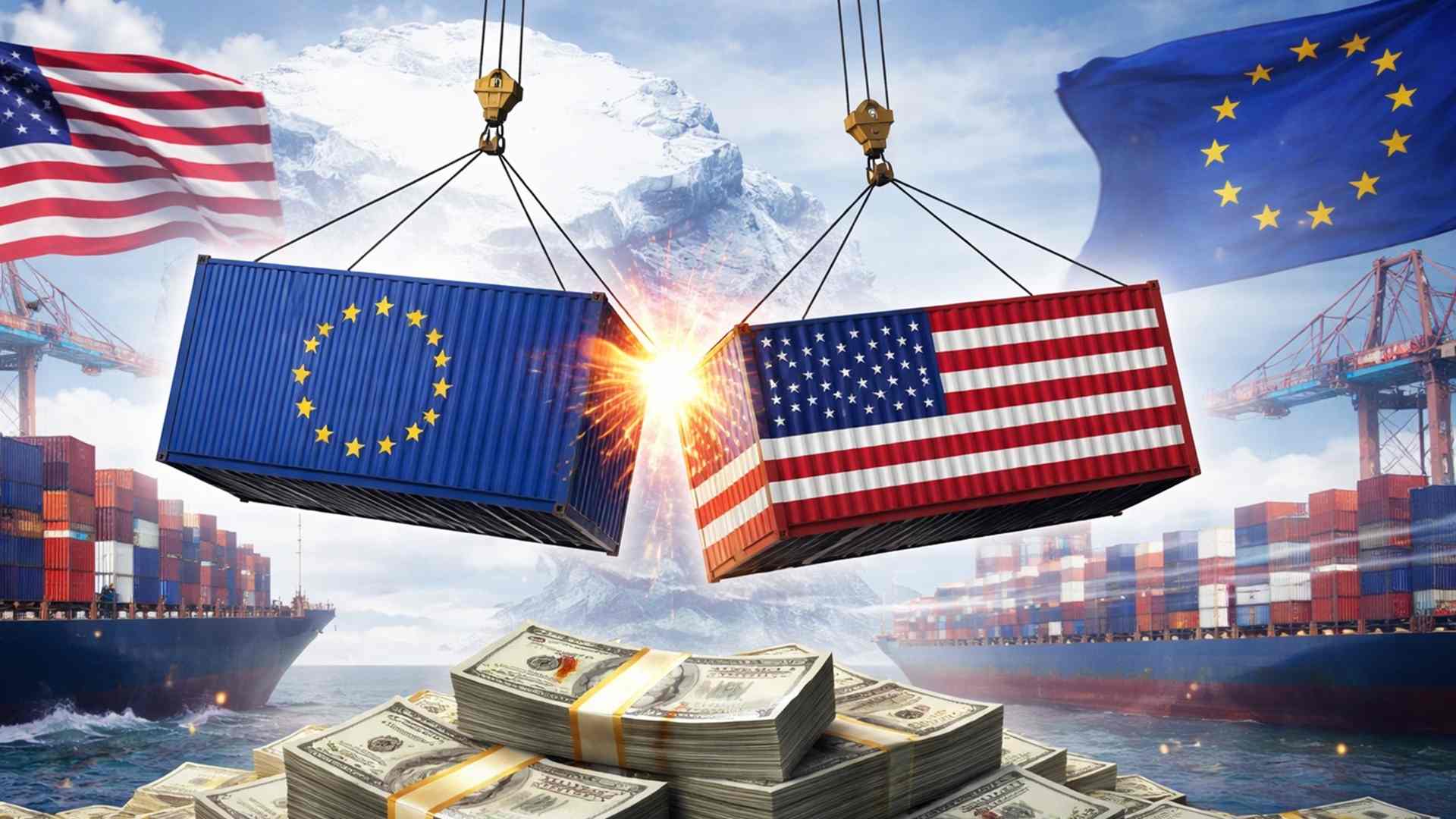
The European Union Prepares Tariffs of € 93 Billion Against US Products as a Direct Response to Threats Announced by Donald Trump Involving Greenland, in a Movement That Expands the Risk of Trade Escalation, Pressures Transatlantic Cohesion and Exposes Internal Divergences on Immediate Retaliation or Negotiation
The European Union is preparing tariffs of € 93 billion, about US$ 100 billion, against US products in response to threats from President Donald Trump to tax European countries supporting Greenland, raising the risk of a transatlantic trade escalation.
Tariff Plan Announced by the US Government
During the weekend, the Trump administration announced plans to impose tariffs on imports from Denmark, Norway, Sweden, France, Germany, the United Kingdom, the Netherlands, and Finland. The justification presented was the support of these countries for Greenland, a territory that the US seeks to annex.
The US tariffs would take effect on February 1, unless progress is made toward an agreement for Greenland’s transfer to US control. The announcement escalated trade and diplomatic tensions between historic North Atlantic partners.
-
“No one will make us change the Pix,” says Lula after the US report.

-
Lula responds directly to Trump and says that Pix is from Brazil and will not change under pressure from anyone, after a report from the United States pointed out the Brazilian payment system as an American trade barrier.

-
Amazon has just announced a new fee on all deliveries, and your online purchases will become more expensive starting April 17, including for those buying from the United States here in Brazil.

-
He sold his share for R$ 4 thousand, saw the company become a giant worth R$ 19 trillion, and missed the opportunity of a lifetime.

According to reports from Western media, the EU has developed response measures to gain leverage ahead of meetings with Trump during the World Economic Forum, which begins on January 19 in Davos.
European Retaliation of € 93 Billion and Possible Expansion
European authorities are planning to impose tariffs amounting to € 93 billion, approximately US$ 100 billion, on American products. The measures are described as a direct response to tariff threats related to Greenland.
There is anticipation that other actions may be announced. Rumors indicate that the EU may invoke the Anti-Coercion Instrument, a mechanism created in 2023 to respond to economic coercion from third countries.
Some governments advocate delaying retaliation to allow for more negotiations, while others press for immediate countermeasures. France is among the countries advocating a quick response should US tariffs be implemented.
Anti-Coercion Instrument and Internal Divergences
The Anti-Coercion Instrument allows the EU to adopt measures such as tariffs, restrictions on public procurement, limits on services and investments, and restrictions on intellectual property rights. The tool broadens the range of responses beyond conventional tariffs.
The internal discussion reveals divergences on the pace of the reaction. While part of the bloc prioritizes negotiations, other governments believe that delays could weaken the European position in the face of threats announced by Washington.
An EU diplomat quoted by the Financial Times stated that the bloc has “clear retaliation instruments available should this continue.” The same diplomat described the threats as “purely mafia-like methods.”
Political and Commercial Impact of the Dispute Over Greenland
A joint statement from the affected countries said that the threat of US tariffs “undermines transatlantic relations and poses the risk of a dangerous downward spiral.” The episode is described as one of the most serious disputes in recent decades.
Trump seeks greater US influence over Greenland, a self-governing territory of Denmark with strategic importance in the Arctic, amid the growing military presence of Russia and the influence of China.
Several European NATO members participated in symbolic missions in Greenland within the framework of Operation Arctic Endurance. The confrontation raises concerns about the future of EU–United States trade relations and the cohesion of the alliance.
The impasse also reignites internal debates on security, trade, and political coordination. European authorities assess that decisions in the coming weeks could determine whether the conflict escalates into a broader tariff escalation or if there will be a negotiated retreat, despite evident tensions and the climate of economic uncertainty.









Seja o primeiro a reagir!