





 Portuguese
  English
  Spanish
  3 min of reading
  0 comments


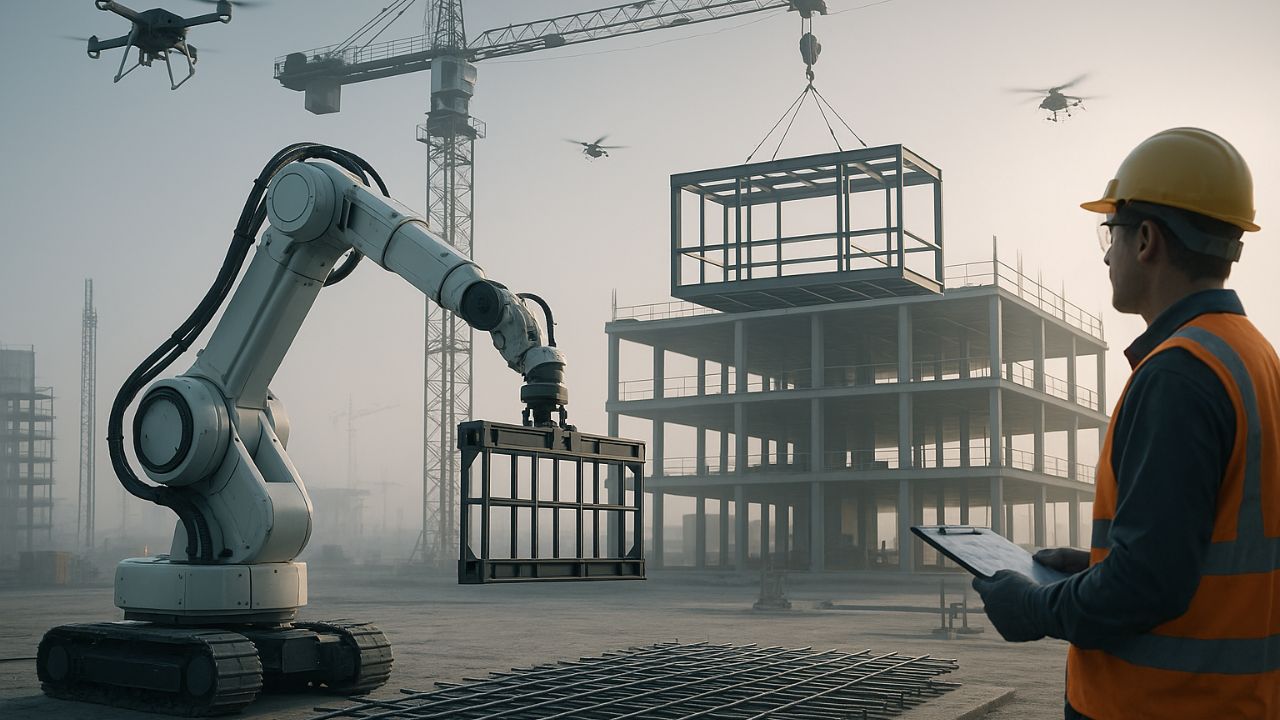
Discover Innovations That Are Transforming Construction, From Permeable Materials and Ultra-Fast Installations to Robots That Optimize Every Stage of Work, Redefining Modern Construction Technologies.
The construction industry is constantly evolving. New construction technologies are continually emerging, aimed at more efficient, sustainable, and agile processes. This article explores some of the most impressive construction technologies that have reached a new level, radically changing how we build.
Innovative and Aesthetic Paving with Vuba Resin Bound
The Vuba Resin Bound coating has multiple advantages. Firstly, it is water-permeable. Its appearance is considerably superior to asphalt and concrete. Additionally, it forms a thin layer, just 15 mm thick. Finally, it is strong enough to withstand the passage of a car. The composition of Vuba Resin Bound includes pebbles and a type of resin. Options like amber, quartz, and granite allow for the creation of true works of art on the ground.
Speed and Sustainability in Installation
In the realm of balconies, Gyon Cassettes are a highlight. These are strong, beautiful, and highly technological balconies. The record for installing a unit is an impressive 1 minute and 34 seconds. The Gyon Cassettes arrive on-site fully assembled, with only special anchors needing installation. Large projects, such as the NE02 building with 474 balconies, become simpler. For the environment, the Gyon Cassette features a structure with a very low carbon footprint, reducing CO2 emissions by 19% in some production stages.
-
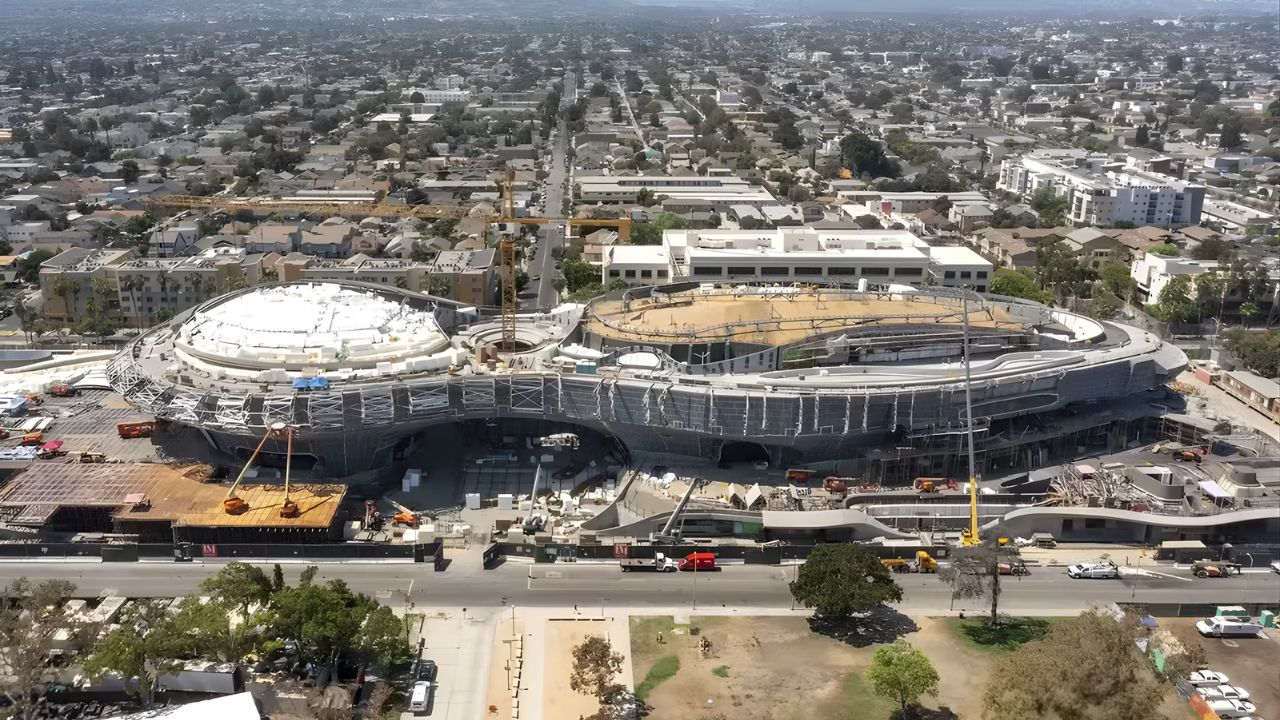
Created by George Lucas with over $1 billion, a futuristic museum in the shape of a spaceship with 1,500 curved panels is about to open in Los Angeles and will house one of the largest private collections of narrative art in the world.
-
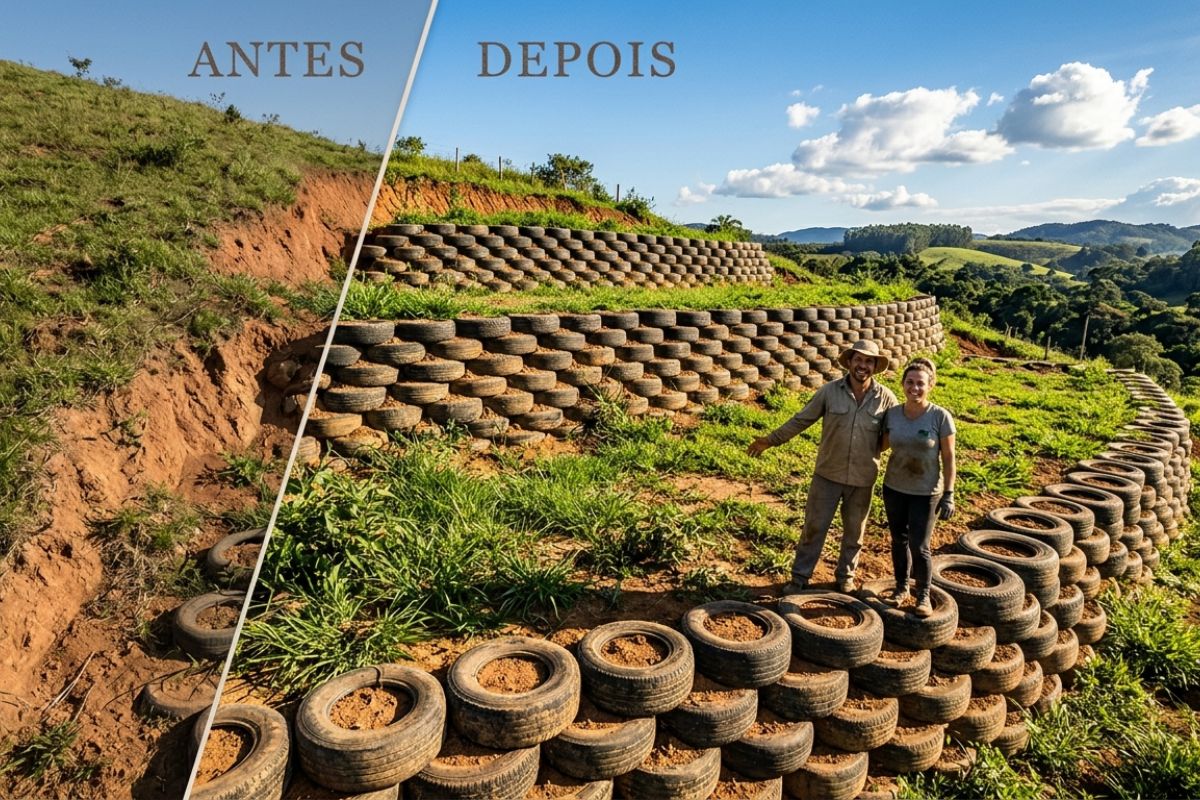
Couple shows how they built a retaining wall on their property using 400 old tires: sloped land turned into plateaus, tires are aligned, filled, and compacted with layers of soil, with grass helping in support and at almost zero cost.
-
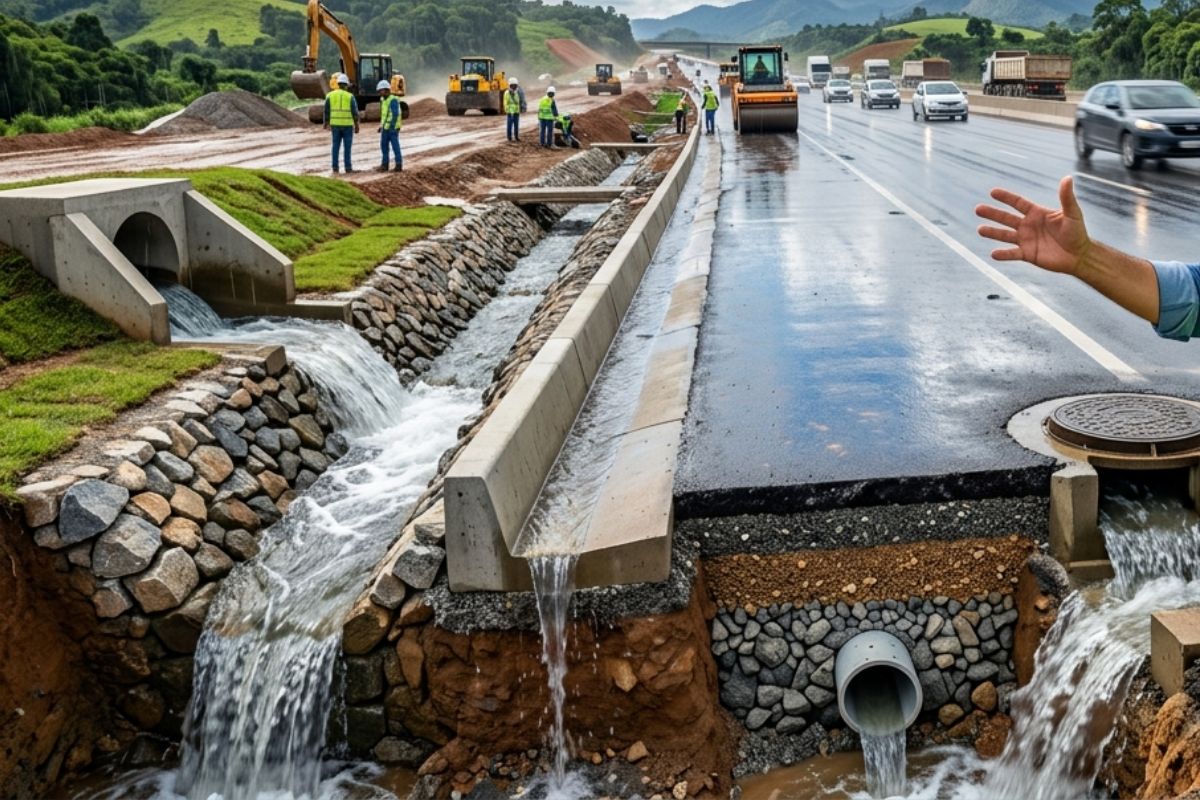
Engineer explains drainage during the rainy season: the difference between surface water and deep water, ditches, gutters, and water outlets on the road, as well as drains and drainage mattresses, to prevent erosion, aquaplaning, and flooding at the construction site today.
-
With 55 floors, 177 meters in height, a 15-meter walkway between the twin towers, ventilated facade, and 6,300 m² of leisure space, Ápice Towers already has one tower completed and another nearly at the top.


Building Homes from the Roof in an Innovative Way
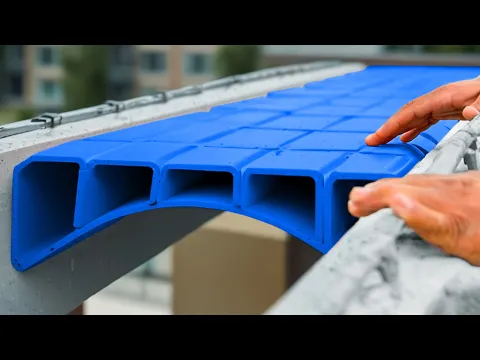

The Henlift method represents an innovation in home construction, starting from the roof. It is assembled on the ground and then lifted with special jacks. These construction technologies are advantageous for builders, who spend less time at height, reducing the risk of falls and injuries. For clients, raising the roof of a 250 m² house takes just one day and usually does not require scaffolding. The cost for a project of the mentioned area is approximately 800 dollars.
Revolutionizing Brick Facades
The Facade Click system democratizes the construction of brick facades. With it, even those with limited experience can build correctly. The process is simple: just insert the bricks into special connectors and secure the last row with screws. It does not use mortar and can be applied in any weather. The compression strength of the resulting facade is more than double that obtained by conventional technology. These construction technologies greatly facilitate the process.
Agile Solution for Concrete Slab Repair
Concrete slab settlement is a common problem on roads, sidewalks, and garages. Polylevel emerges as an effective solution. It is a compound that expands and raises the affected slab in just 15 minutes. Its advanced chemistry allows the adjustment of the action according to temperature, weather, and other conditions. Additionally, the compound does not degrade, does not release harmful substances, and does not react with soil or water.
The Robotic Era in Rebar Tying
Robotics is advancing on construction sites with TyBot, a giant resembling a tipped construction crane. Its function is to tie rebar with diameters of 8 or 9 mm, performing about 100 ties in 60 minutes. TyBot can work for 19 continuous hours, and its width is adjustable up to 30.5 meters. It operates 150% faster than humans and is incredibly precise, thanks to artificial intelligence algorithms and mechanical vision.
3D Printing with Tepetate: Merging Tradition and High Technology
An experiment in Mexico combines 3D printing with construction technologies that are traditional. The focus is on tepetate, a dense soil often cemented, which is a good building material. Now, blocks are printed by a robot. Tepetate, cement, lime, and water are mixed and poured in layers. As part of a local architecture festival, the finished blocks were used on the roof of a small pavilion, showcasing the potential of these new construction technologies.






Seja o primeiro a reagir!