





 Portuguese
  English
  Spanish
  7 min of reading
  0 comments


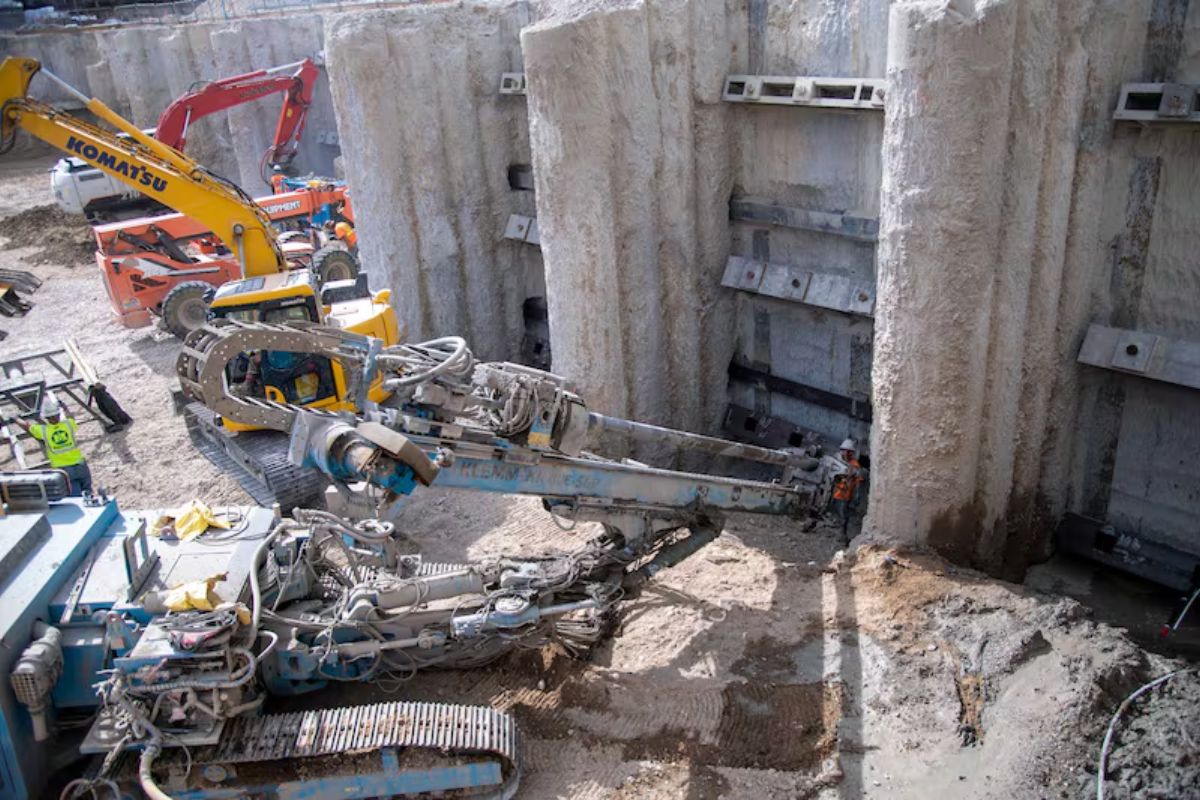
The Most Famous Temple in Salt Lake City Is Being “Dug Up” in the Foundations in an Estimated US$ 2.4 Billion Project to Prevent Collapse in Earthquakes on the Wasatch Fault. The Work Digs Up to 10.6 Meters, Installs 98 Isolators Weighing 8,000 KG and 423 KM of Cables, with Completion in 2026 and Reopening in 2027.
The temple in Salt Lake City, considered the largest Mormon temple in the world, is undergoing an unusual intervention: the foundations are being excavated for the installation of a base isolation system, as part of a project estimated at US$ 2.4 billion to reduce the risk of collapse in the event of an earthquake.
The decision combines heavy engineering and historical preservation. The temple dominates the city skyline, was completed over 130 years ago after a project that took more than 40 years, and now needs to be adapted to a seismic scenario with a significant likelihood of strong tremors in the coming decades, without destroying its stone masonry and its historic interior.
A Historical Giant That Was Not Designed for Earthquakes

The first layer of the problem is structural and historical.
-
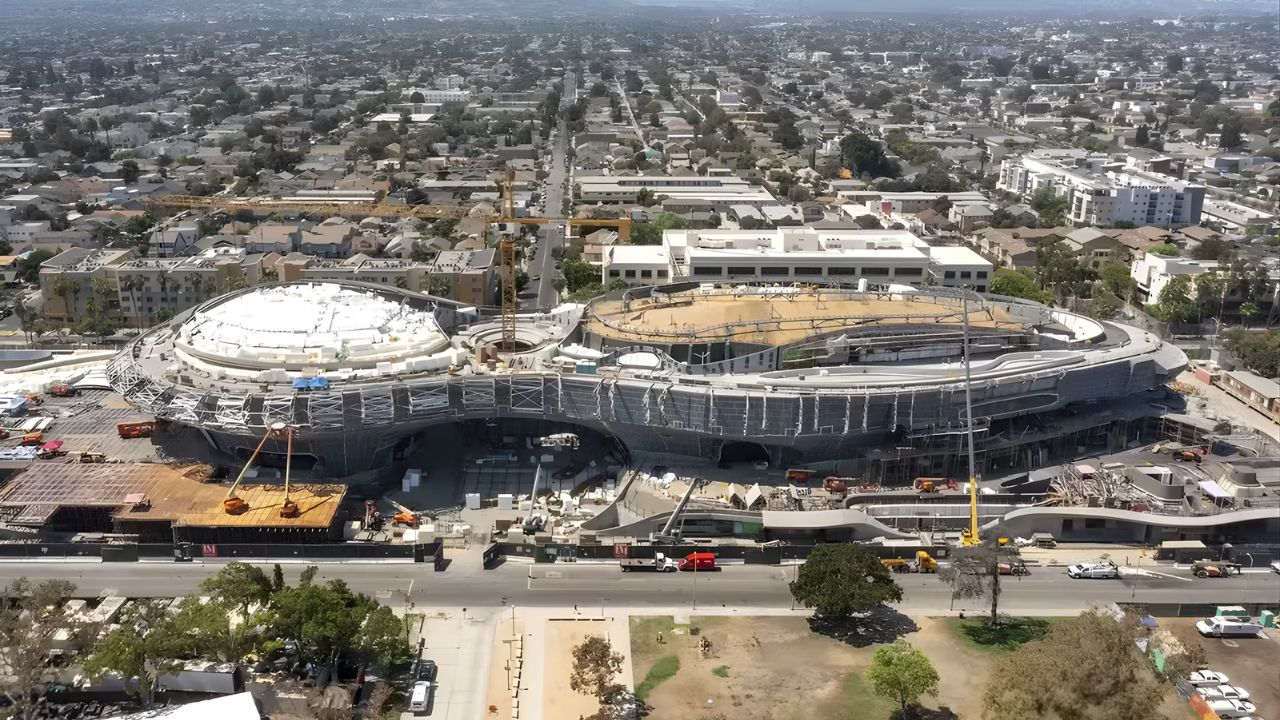
Created by George Lucas with over $1 billion, a futuristic museum in the shape of a spaceship with 1,500 curved panels is about to open in Los Angeles and will house one of the largest private collections of narrative art in the world.
-
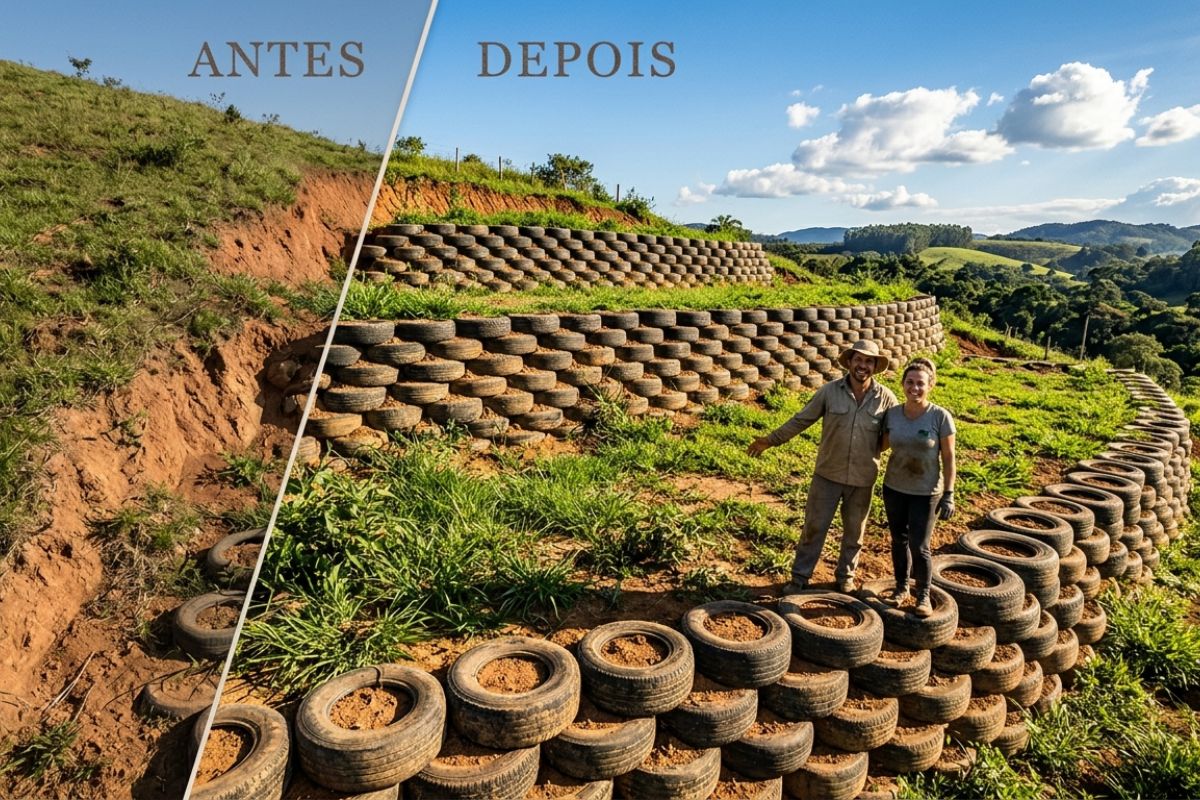
Couple shows how they built a retaining wall on their property using 400 old tires: sloped land turned into plateaus, tires are aligned, filled, and compacted with layers of soil, with grass helping in support and at almost zero cost.
-
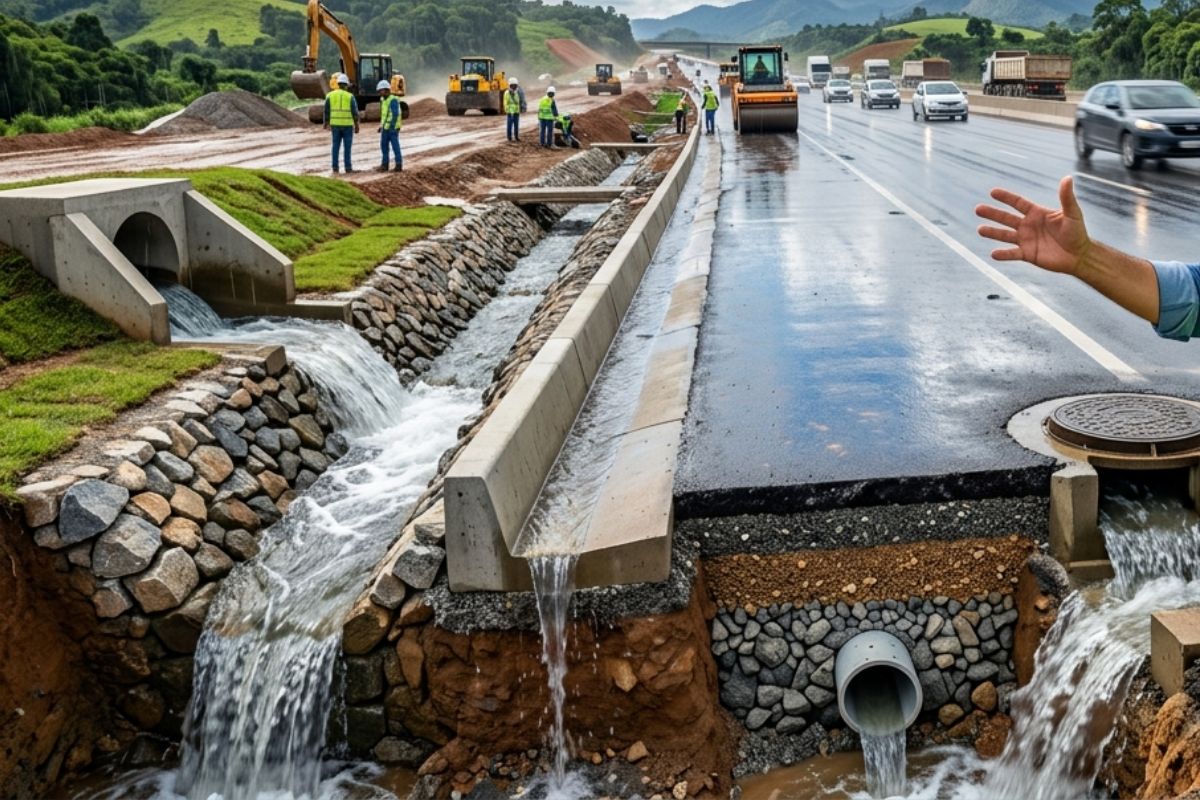
Engineer explains drainage during the rainy season: the difference between surface water and deep water, ditches, gutters, and water outlets on the road, as well as drains and drainage mattresses, to prevent erosion, aquaplaning, and flooding at the construction site today.
-
With 55 floors, 177 meters in height, a 15-meter walkway between the twin towers, ventilated facade, and 6,300 m² of leisure space, Ápice Towers already has one tower completed and another nearly at the top.

The temple was built with granite and quartz monzonite mined from Little Cottonwood Canyon, with walls up to nine feet thick, 170 rooms, and a total area of 11.4 acres.
Despite its monumental scale, the temple was not designed to withstand earthquakes.
This is significant because the Wasatch Fault runs through the Salt Lake Valley, and geologists estimate that a major earthquake, with a magnitude of 7, occurs on average once every millennium.
The Seismic Risk in Numbers and Why It Pressures the Temple

The most critical point is the short and medium-term projection. There is an estimate of a 57% chance of at least one earthquake with a magnitude of 6 or higher occurring in the next 50 years in the region.
Additionally, there is frequent occurrence of smaller, yet relevant events: earthquakes with a magnitude of 4 or higher happen about 4 to 5 times a year within a 300-kilometer radius of Salt Lake City.
A tremor of magnitude 6.0 is considered capable of causing significant damage to the temple, requiring months of recovery and a major stabilization effort.
What It Means to “Dig Up” the Temple: Base Isolation and 1.5 Meters of Movement

The chosen solution is to treat the building as a structure that needs to move in a controlled manner.
The method is base isolation, described as the strategy to “decouple” the temple from the movement of the ground.
The system was designed to allow for up to 1.5 meters of horizontal movement in any direction during a strong earthquake.
The logic is to reduce the transfer of energy to the stone masonry and protect the historic interior, as well as people inside during a seismic event.
Deep Excavation and Reinforcement to Prevent Dangerous Settlement
To install the isolation, the team excavated around the original foundations of the temple to about 10.6 meters deep, creating a new lower level where the isolators will be placed.
During this stage, the priority is to keep the heavy stone walls stable, without displacements or dangerous settlements.
To achieve this, foundation reinforcement and containment techniques were employed, including micropiles, secant piles, anchoring tie rods, tensioned tie rods, hand-built reinforcement pillars, and cement slurry injection for consolidation.
New Concrete Foundation, Transfer Beams, and 423 KM of Post-Tensioned Cables
After the excavation, a new concrete foundation was built to withstand earthquakes.
The design includes transfer beams made of reinforced concrete that surround the perimeter of the temple and also extend into internal areas, distributing the immense weight of the building.
A figure that highlights the intervention is the volume of post-tensioning: over 423 kilometers of post-tensioned cables were installed in the foundation.
These cables physically connect the structure of the temple to the new base and help control the load transfer, especially during movement.
The described arrangement is a layered sequence: the old foundations and the existing weight of the temple press down on the new system, which combines transfer beams, isolators, and, below, the new foundation.
98 Isolators Weighing 8 Tons and the Logic of Seismic “Rolling”
The core of the system includes 98 base isolators installed under the temple. Each isolator weighs about 8,000 kilograms and functions as a type of “rolling” between the new concrete base and the transfer structure.
In the event of an earthquake, the isolators slide and move so that the temple does not absorb the main impact.
An analogy provided is that of a raft made of steel tubes filled with concrete installed under the building.
As soon as the weight is transferred to the isolators, the soil directly beneath them is excavated, allowing the structure to “float” over the system instead of being locked to the ground.
The setup is described as vertically rigid, resisting loads like wind well, and horizontally flexible, exactly the behavior desired for base isolation.
Why the Timeline Changed and What Else Is Being Renovated
The work is described as time-consuming due to the complexity of renovating a stone building from the 19th century.
The church needs to avoid damage to the masonry and any historical components.
The original timeline projected completion by 2025, but the estimate has been pushed to 2026.
The reason pointed out is that the intervention is not limited to the isolators: it also involves reinforcement of walls, towers, and other architectural elements, because the isolation does not guarantee “zero damage” in the worst-case scenario.
In addition to seismic engineering, the renovation includes internal functional changes: creating more space for ritual baptisms, increasing the number of seats in instruction rooms, and constructing a northern annex with a sealing room, where Mormons get married.
The work is expected to be completed in 2026, and the temple doors are set to reopen in 2027.
The Original Construction: 1847, Brigham Young, and a Planned Symbol
The temple has been treated as an urban and political-religious symbol since the beginning. Led by Brigham Young, the future first governor of Utah, 148 Mormons arrived in the Salt Lake Valley in 1847, seeking to establish an isolated city to escape persecution.
Mormonism was seen as new and controversial, and the founder Joseph Smith had been murdered just a few years earlier.
Young anchored the city plan in the temple, understanding the weight of a symbol to consolidate the community.
Formal construction began in 1853 using sandstone. By the end of the 1850s, with American troops marching toward Utah, workers buried the foundation to avoid destruction, and the work was halted.
When the project resumed, granite was chosen. The logistical obstacle was that the nearest usable source was located 32 kilometers away in Little Cottonwood Canyon.
Without heavy machinery, blocks were extracted using dynamite, hand-shaped, and transported in ox-drawn wagons over rugged terrain. A trip could take up to four days.
The precision was extreme, the scale enormous, and the walls reached about 3 meters thick in some places.
The architect Truman O. Angell combined Gothic and Romanesque elements, with symbols like stars, suns, and the statue of the angel Moroni, using architecture as narrative.
How the Temple Shaped Salt Lake City with Giant Blocks and Wide Streets
The temple became the focal point of Salt Lake City’s urban plan. The city was designed with the grid almost perfectly aligned to the cardinal points and with a central block of 4.5 acres reserved for the Salt Lake Temple.
The blocks were planned on an unusual scale: instead of something like 80 by 200 meters typical of New York, the blocks in Salt Lake City were 200 by 200 meters, described as the largest among American cities.
The streets were also much wider: while in New York they varied around 18 meters and up to 30 in some cases, in Salt Lake City they exceeded 40 meters, with space designed for ox teams to maneuver.
Each block had 10 acres, divided into only eight large lots, functioning as micro-farms. This helped the city operate as a rural-urban hybrid, with families growing on the lots and streets serving as irrigation channels in dry seasons.
It also created firebreaks and straight corridors for public services. Later, this urban “DNA” facilitated adaptation to modern infrastructure, including highways and the light rail system TRAX.
Preservation in a City That Lost Part of Its Heritage
The project is also described as a political and urban signal. Salt Lake City faces challenges in preserving historical buildings, with real estate pressure and the destruction of heritage buildings.
Investing over 2 billion dollars in the preservation of the temple is seen as a way to demonstrate, to the rest of the city, the importance of preservation, with an expectation of a multiplier effect.
With the applied engineering, the projection is that the temple will no longer be at risk of collapsing in a major earthquake and will rank among the most earthquake-resistant historic structures.
In your opinion, should this base isolation work on the temple become a standard for other historic buildings in seismic areas, or does the cost make it unfeasible in most cities?









Seja o primeiro a reagir!