





 Portuguese
  English
  Spanish
  4 min of reading
  0 comments


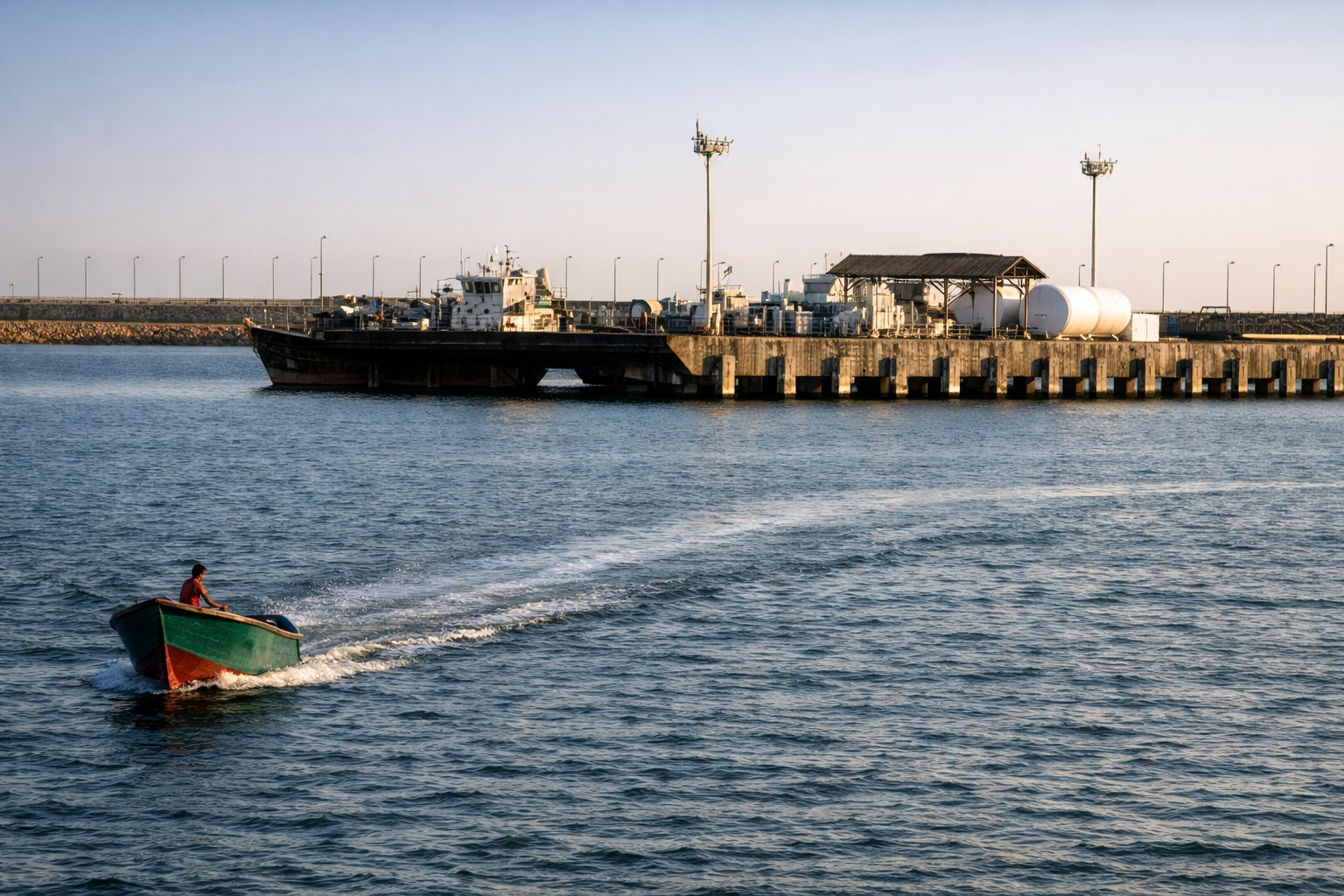
Understand How The Military Escalation In The Middle East Reignited Concerns About The Security Of The Strait Of Hormuz And Mobilized European Governments To Protect Strategic Energy Routes
The security of the Strait of Hormuz, one of the most important maritime routes in the world for the transport of oil and natural gas, has returned to the center of geopolitical tensions this Monday, March 9.
The statement came from the head of Iran’s Supreme National Security Council, Ali Larijani, who criticized Western initiatives aimed at protecting navigation in the area.
According to Larijani, security in the Strait of Hormuz is unlikely while the region is under attacks involving the United States and Israel.
-
Spain challenges the USA and closes its airspace for operations against Iran, raising global tension and provoking the threat of a trade rupture.
-
While no other country manufactures tanks in Latin America, Argentina activates the TAM 2C-A2 and raises a curiosity about the technological lag in the region.
-
A Russian ship with 730,000 barrels of oil has just arrived in Cuba while Mexico negotiates fuel sales through private companies: the communist island is desperately seeking alternatives after losing its supply from Venezuela due to American military action.
-
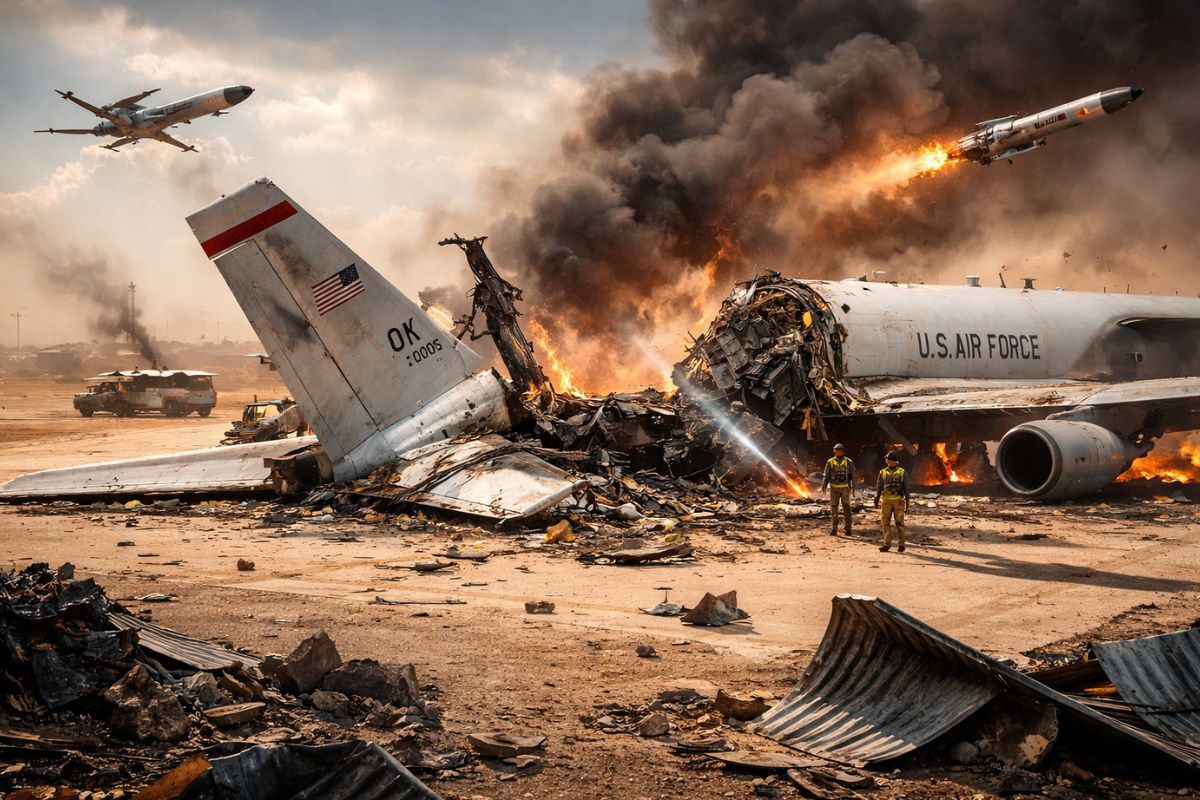
Iranian drones and missiles destroyed a 270 million dollar American spy plane in Saudi Arabia, splitting the E-3 Sentry aircraft in half and injuring 12 military personnel in an attack that exposes the vulnerability of U.S. bases in the Persian Gulf.
The assessment was published on the social media platform X on March 9, amplifying the international alert about the risks to navigation and global energy trade.
Furthermore, the Iranian leader stated that the stability of the maritime route cannot depend on actors who, according to him, have participated in or contributed to fueling the regional conflict.
Thus, Iran reinforces that the security of the maritime passage becomes unlikely if it depends on countries involved in the current military scenario.
Iranian Statement Reignites Debate On Energy Route Security
Meanwhile, the statements from the Iranian government come at a time of increasing international mobilization to protect navigation in the region.
The positioning was made after French President Emmanuel Macron announced military measures aimed at strengthening maritime security.
According to Macron, oil tankers and gas carriers will be able to receive naval escorts in an initiative led by Paris.
The proposal aims to allow the gradual reopening of the Strait of Hormuz after the most intense phase of the military conflict.
Additionally, the French government announced the deployment of warships and other military resources to the Eastern Mediterranean.
This decision was made following a drone attack that hit a British airbase in Cyprus the previous week, raising the alert level in the region.
Thus, the French government claims that the military mobilization seeks to strengthen the protection of European allies in light of the risk of escalation of the conflict involving Iran.
Strategic Importance Of The Strait Of Hormuz For Global Energy
At the same time, experts and governments highlight that the Strait of Hormuz represents one of the most strategic routes on the planet for the transport of energy.
The maritime passage connects the Persian Gulf to the Gulf of Oman, being used by vessels that transport oil and natural gas to international markets.
Consequently, any interruption in navigation usually generates immediate concerns in global energy markets and international trade.
For this reason, governments and institutions continuously monitor the risks of blockades or attacks against vessels in the Gulf region.
European Union Evaluates Reinforcing Naval Protection On Maritime Routes
Meanwhile, the European Union has also signaled new measures to protect international maritime traffic in light of the military escalation.
The position was disclosed in a joint statement released on Monday, March 9, following a videoconference between European leaders and Middle Eastern countries.
Participating in the meeting were António Costa, President of the European Council, and Ursula von der Leyen, President of the European Commission.
In addition to them, representatives from Jordan, Egypt, Bahrain, Lebanon, Syria, Turkey, Armenia, Iraq, Qatar, Kuwait, United Arab Emirates, Saudi Arabia, and Oman were also present.
During the meeting, the leaders highlighted the importance of the maritime operations Áspides and Atalanta, aimed at protecting strategic trade routes.
According to the official statement from the European Union, these operations can be adapted or reinforced to better respond to the current situation.
Global Energy Security Enters The Center Of International Discussions
Furthermore, the leaders discussed the impacts of the military escalation on global energy security.
Among the main risks mentioned are attacks on energy infrastructure and the possibility of closing the Strait of Hormuz.
During the meeting, António Costa and Ursula von der Leyen condemned the attacks attributed to Iran, classifying them as indiscriminate.
At the same time, the European leaders expressed solidarity with the countries affected by the military escalation in the region.
The leaders also thanked the support of Middle Eastern governments in repatriating tens of thousands of European citizens, who were stranded when the conflict began.
Finally, the European Union reiterated that it is ready to contribute to diplomatic initiatives aimed at reducing tensions.
According to the statement released on March 9, dialogue and diplomacy are considered the only viable path to resolve the regional crisis.
In light of this tense scenario and international mobilization, the future of security in the Strait of Hormuz remains uncertain and will continue to be closely monitored by global energy markets.





Seja o primeiro a reagir!