





 Portuguese
  English
  Spanish
  5 min of reading
  0 comments


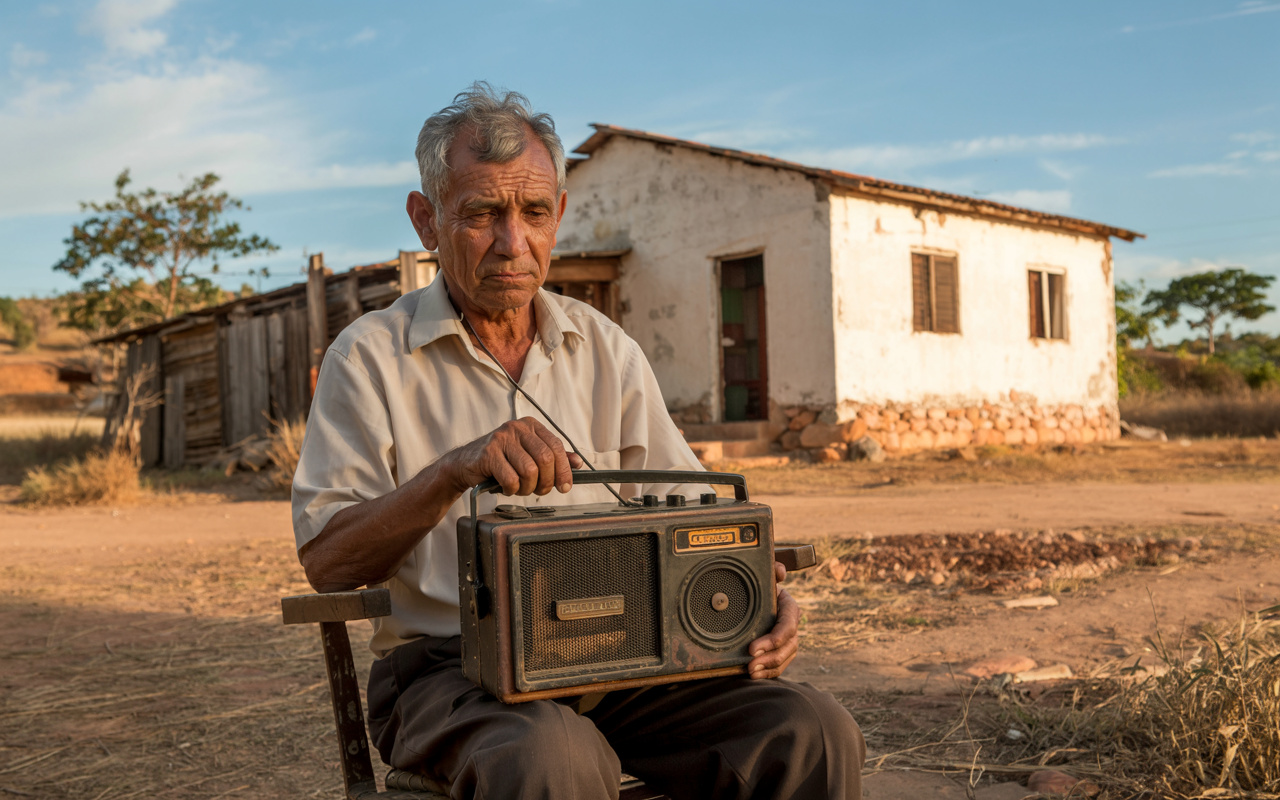
Long Before The Cell Phone, The Battery Radio Already Brought Information And Music Anywhere. Learn How This Technology Shaped Generations, Became A Cultural Symbol, And Anticipated The Era Of Digital Mobility.
Before the internet, there was the radio — and before the plug, there was the battery. In the heart of the countryside, on top of a hill, at the beach tent, or in rural areas without electricity, a small battery-operated device gave voice to the world. And that was enough. The battery radio, for many Brazilians, was the first truly portable device in life. Long before tablets, smartwatches, and notification apps, it was this device that brought information, entertainment, and citizenship to millions, creating an invisible but profound revolution — with Brazilian DNA.
The “Gambiarra” That Became A Symbol Of Accessible Innovation
In the 1950s and 1960s, Brazil was still a country in the process of urbanization, with vast areas lacking access to electricity, telecommunications, or even roads. In this scenario, the conventional radio, which depended on outlets, was an urban luxury. But it was precisely the technical limitation and popular creativity that led to the success of the battery radio.
Initially imported, the portable radio began to be adapted with inexpensive batteries, in wooden or plastic cases, often with improvised antennas. The slang “battery radio” became synonymous with autonomy, mobility, and freedom.
-
At the bottom of the sea, scientists have found a true underwater cathedral measuring 62 meters at the base, 31 meters at the top, and 1,347 square meters of giant coral in the Maug Islands, estimated to be 2,050 years old.

-
Surrounded by the sea, the airport will have a system to prevent airplanes from falling into the water; technology will be installed in Ilhéus (BA), with an investment of R$ 70 million.

-
With a cost per shot close to zero, the DragonFire laser could change naval warfare in 2027 and provide British ships with nearly unlimited defense against drones.

-
A British startup creates tires that generate electricity in electric vehicles when passing over potholes, speed bumps, and cracks.


In a few years, this model became the standard. Moreover, it influenced the international industry itself, which started designing increasingly compact, durable, and popular radios — inspired by the resilience and usage that Brazilians had ingeniously adapted.
How Brazilian Gambiarra Transformed The Battery Radio
Although the battery radio was not invented in Brazil, it was here that it was adapted, repurposed, and reinvented in a brilliant way — hence the affectionate (and critical) nickname of “Brazilian gambiarra.”
Check out how this happened:
- No power? No problem. Brazilians adapted radios to car batteries, reused dead batteries, and even heated them on the stove to extract the last charge.
- Poor signal? Use clothesline wire. Improvised antennas made from copper wire, nails, and even makeshift wires helped capture distant stations.
- Homemade designs. Handcrafted wooden boxes, fabric straps for carrying, and even radios built into furniture were typical creations from the countryside.
- Maintenance without a manual. When they broke, radios were repaired with duct tape, makeshift soldering, and old model parts — often by a relative or neighbor.
This ability to improvise, maintain, and adapt a foreign technology with local resources is a true reflection of Brazilian culture — and it transforms the battery radio into a gambiarra that became the standard.
Digital Mobility Before The Digital: The Radio Was The First Portable “Streaming”
Think about it: the battery radio was the first device that allowed media consumption on the go. It didn’t need cables, a network, or a fixed structure. All it required was a frequency and a battery — and voila: voice, soccer, music, and news wherever you were.


In the riverine communities of the Amazon, in the camps of seasonal workers, in the small rooms of truck drivers, in the shantytowns, and on the benches of fishermen, it was the battery radio that connected deep Brazil to the rest of the world.
Moreover, it shaped consumer behavior. The notion of real-time content consumed in an intimate and continuous way was born with this small device — long before podcasts and YouTube.
Symbol Of Cultural Resistance And Popular Identity
For decades, the battery radio was not just a technology — it was a symbol. It was present in labor strikes, quilombola communities, student protests, and public jails. It was a tool for evangelization in rural areas and for political information in dictatorships.
In the hands of the people, the radio became an ally of democracy and culture. It was with it that crowds followed matches of the Brazilian national team, soap operas from Rádio Nacional, or historic speeches.
In the favelas, it was common to see improvised wire antennas and devices working even with old “heated” batteries on the stove. Brazilians would do anything to keep their radios running — because it represented a link with the country that was outside their window.
Bridge Between Brazilian Inventions And Global Mobility Culture
Although the portable radio was created abroad, its massification and reinvention as an essential product in tropical Brazil made it part of our technological DNA.
It was here that it became “battery-operated.”
It was here that it became a basic necessity.
And it was from here that the concept of simple and efficient mobility began to be exported — directly or indirectly — as a model for other devices. The concept currently seen in smart devices, wearables, and off-grid devices dates back to the practical philosophy of the battery radio: low consumption, high utility, and total freedom.
Legacy: The Radio Is Still Alive — And More Relevant Than One Might Imagine
Even with the explosion of smartphones, the radio did not die. On the contrary: it adapted.
Today, almost every cell phone has a built-in FM radio. Online radio apps have grown in audience. And in many rural areas, the battery radio still reigns supreme.
During blackouts, natural disasters, or lack of signal, it is the only source of emergency communication. In regions without internet, it continues to be the main avenue for information and education. And in Indigenous areas, remote places, or without electricity, it is, literally, a bridge to the world.
Architecture Of Mobility: How The Radio Inspired Modern Technology
The design logic used in the battery radio still inspires today:
- Portability: which later became a central concept in the walkman, discman, iPod, and smartphones
- Energy efficiency: radios operated for days on a single battery; this influenced modern “low power” thinking
- Easy operation: simple buttons, direct tuning — something revived in modern IoT and wearable UX
- Simple connectivity: no setup, no network — it just needed to be within frequency range
These elements were fundamental for the digital age, but they were born with the radio.
Far beyond nostalgia, the battery radio is a symbol of how Brazil managed to adapt, popularize, and give new meaning to a global invention. It made this a pillar of citizenship, culture, and independence.
It is proof that mobility did not begin with 4G or smart chips. It began with the sound coming from a box that you carried in your pocket — with two batteries and an entire world inside.








Seja o primeiro a reagir!