





 Portuguese
  English
  Spanish
  4 min of reading
  0 comments


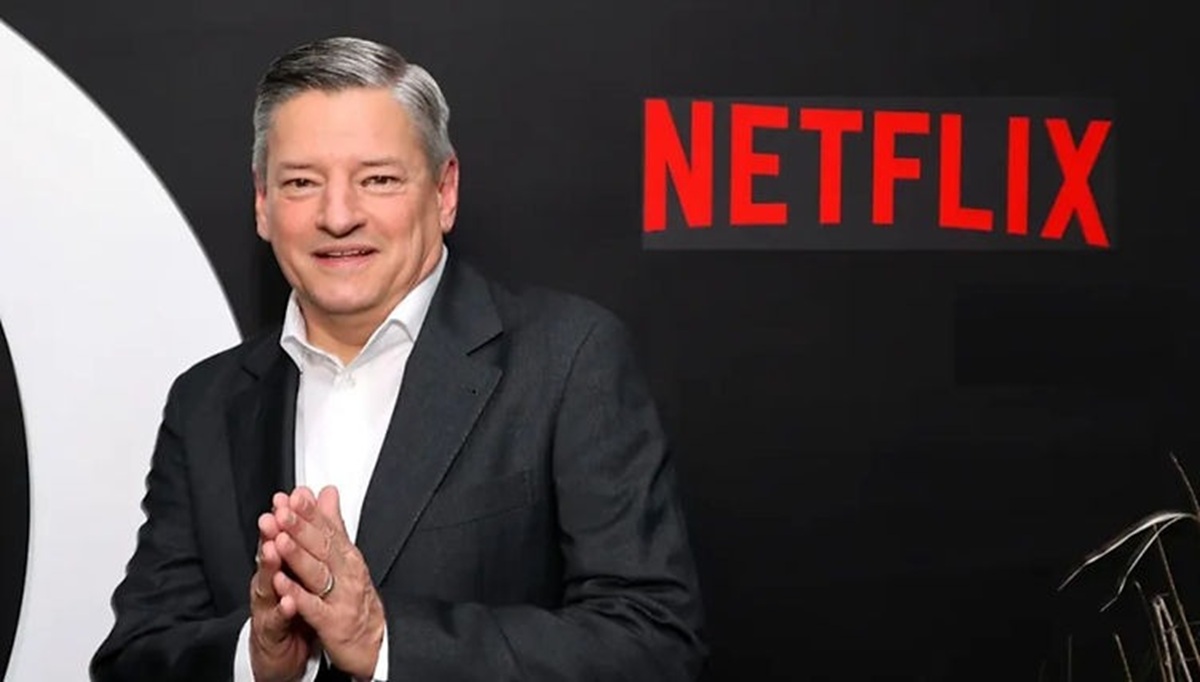
In Interview with CNBC, Netflix Co-CEO Says He Repeatedly Reads a Novel Published in 1902, Used as a Practical Reference for High-Risk Decisions, Risk Management, and Leadership Development Throughout His Executive Trajectory at the Streaming Company
Netflix Co-CEO Ted Sarandos stated that he repeatedly reads the novel “Typhoon,” published in 1902, to learn about leadership, citing the work as a personal reference when making high-stakes financial decisions and dealing with uncertainties throughout his time at the company.
A Novel from the Early Century as the Main Leadership Reference
Sarandos declared that he does not keep management books in his briefcase, on his desk, or by his bedside. According to him, learning about leadership happens through reading novels, not traditional business manuals.
In an interview on CNBC’s “Leaders Playbook,” the executive stated that his favorite management book is “Typhoon,” a novella published in 1902 by Joseph Conrad. The work depicts a captain and his crew facing a storm at sea.
-
India announces a plan of $3.06 billion to bring aviation to forgotten regions: 100 new airports, $1.07 billion in subsidies, and regional routes guaranteed for 10 years, from 2026 to 2036, away from the centers.

-
Brazil blocked a proposal from the United States at the WTO that would make the exemption from tariffs on digital products like streaming and ebooks permanent, favoring American tech giants at the expense of developing countries.

-
IPTU exemption for seniors in 2026: see how to secure the benefit.

-
The institute that trained the greatest aerospace engineers in Brazil has just opened its first campus outside São Paulo after 75 years: ITA Ceará will have R$ 445 million, new courses in energy and systems, and classes are expected to start in 2027.


“At first glance, it doesn’t seem like a story about management, but I think it’s the most impactful leadership story I’ve ever read,” said Sarandos, who is 61 years old. He noted that he rereads the book several times because he finds new insights with each reading.
Change of Perception Over Time and Lessons on Uncertainty
Sarandos shared that when he first read “Typhoon” about 20 years ago, he viewed the captain as a reckless character, capable of putting himself and his family in danger during risky decisions.
In more recent readings, the executive stated that he has drawn a different lesson. For him, the book now represents a study of leadership in contexts of conflict, uncertainty, and decisions that do not always yield the expected results.
“What I see is that throughout life and in business, we make many decisions that don’t turn out as expected,” Sarandos said. According to him, the true test of leadership is how these situations are confronted.
Practical Lessons Applied to the Trajectory at Netflix
Sarandos joined Netflix in 2000 as the head of content operations. He stated that he learned to deal even more with uncertainty while working alongside the co-founder and then-CEO of the company, Reed Hastings.
According to Sarandos, the main lesson he received from Hastings was to choose the best people, provide the right tools, and allow them to work autonomously. This approach, he said, influenced key strategic decisions over the years.
The executive recalled a specific episode where he exercised broad autonomy by making a significant financial investment without a guarantee of return. This incident occurred about a decade after he joined the streaming company.
The US$ 100 Million Investment and the Calculated Risk
Sarandos stated that he authorized a US$ 100 million investment to produce Netflix’s first original series, “House of Cards.” In addition, he approved two seasons of the project without prior authorization from Hastings.
According to the executive, when questioned about the decision, he explained that it was a straightforward risk-reward analysis. If the series failed, the company would have paid dearly, something that had already happened in other projects.
On the other hand, if it succeeded, it could completely transform the streaming market. The decision, Sarandos stated, reflected similar principles to those observed in Conrad’s novel, where leadership involves acting even under adverse conditions.
Other Business Leaders and the Influence of Fiction
Sarandos is not the only executive to cite fiction as a source of learning. The leadership style of Amazon founder Jeff Bezos was partially shaped by the novel “The Remains of the Day,” by Kazuo Ishiguro.
This information is mentioned in the biography “The Everything Store,” written by Brad Stone. Microsoft’s co-founder Bill Gates frequently highlights the value of reading fiction in his personal publications.
In a blog post dated November 25, Gates stated that some novels can reveal how something important really works, offering perspectives that do not emerge in traditional technical analyses.
Reading Fiction as an Accessible Development Tool
According to Brooke Vuckovic, a leadership professor at Northwestern University, anyone can extract practical lessons from novels if they adopt an analytical and structured reading approach.
She stated to CNBC Make It in January 2023 that summarizing plots, analyzing character motivations, and drawing parallels with professional challenges allows for applying lessons to everyday work in a continuous and low-cost manner.
For Vuckovic, many leaders seek constant development, and fiction represents an underutilized but powerful tool when read properly. This potential, she noted, remains underexplored in today’s corporate routines.
This article was prepared based on an interview and information published by CNBC Make It, including statements from Ted Sarandos, references to cited works, and analyses from the mentioned experts in the original material.










Seja o primeiro a reagir!