





 Portuguese
  English
  Spanish
  5 min of reading
  0 comments


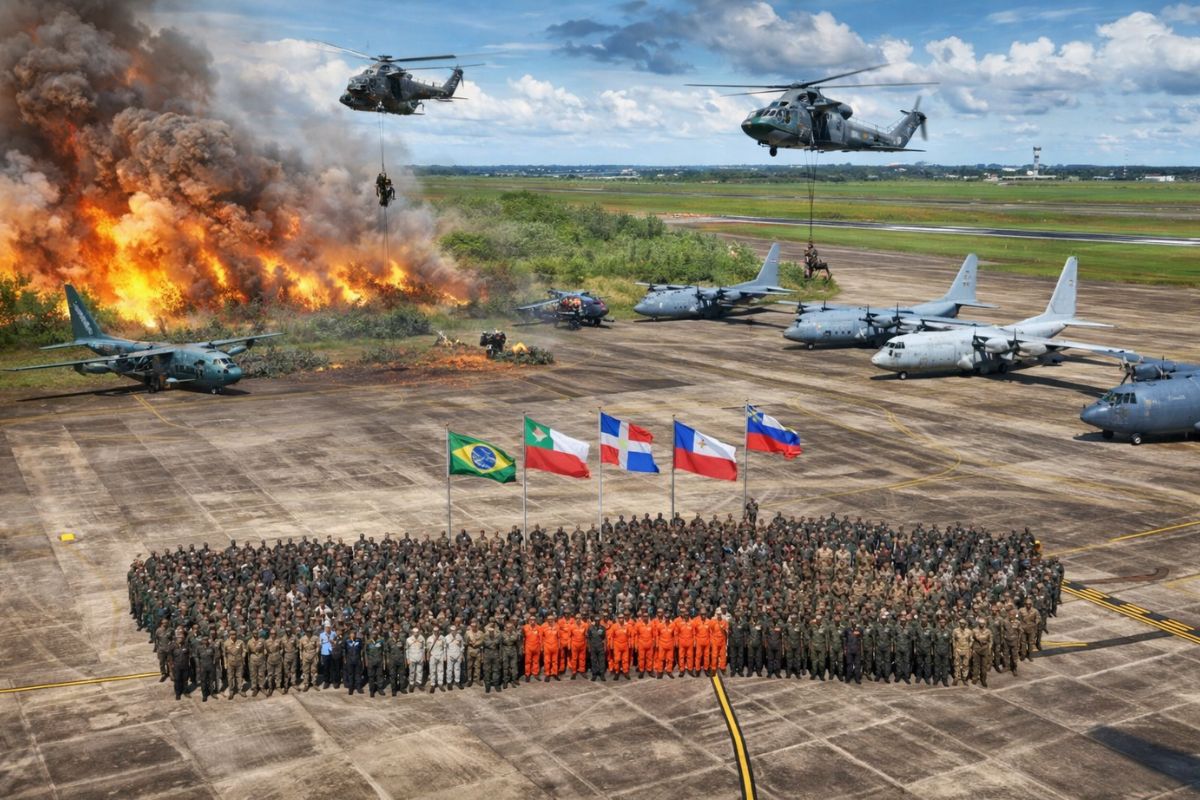
The Brazilian Air Force hosted the Cooperation XI exercise at the Campo Grande Air Base from March 16 to 27 with 13 countries training in search and rescue, aeromedical evacuation, and firefighting in simulated scenarios that required international coordination and quick decision-making during two intense weeks.
The Brazilian Air Force has just hosted the largest multinational natural disaster response exercise ever held in the country. The Cooperation XI exercise brought together 13 countries and over 1,200 military personnel at the Campo Grande Air Base from March 16 to 27, with simulations that included search and rescue, aeromedical evacuation, and wildfire firefighting both in the air and on the ground. This was the first time that this multinational training took place on Brazilian soil.
During two weeks of intense activities, the military personnel were subjected to high-complexity simulated situations that required coordination among countries, efficient use of air resources, and quick decision-making under pressure. The objective of the Brazilian Air Force with the exercise was to enhance the coordinated response capacity to natural or man-made disasters, at a time when wildfires, floods, and extreme weather events have become increasingly frequent in South America and around the world.
What was trained during the two weeks of the Brazilian Air Force exercise
According to information from the portal Aeroin, the Cooperation XI was not a generic exercise. The simulations replicated specific scenarios that the air forces of the 13 countries may face in real emergencies.
-
Sony is preparing the best video game in history with the PS6 expected in 2027, a native handheld running current games, a PlayGo system similar to Smart Delivery, savings of up to 70% in storage, and a new architecture based on the unified SDK 13.

-
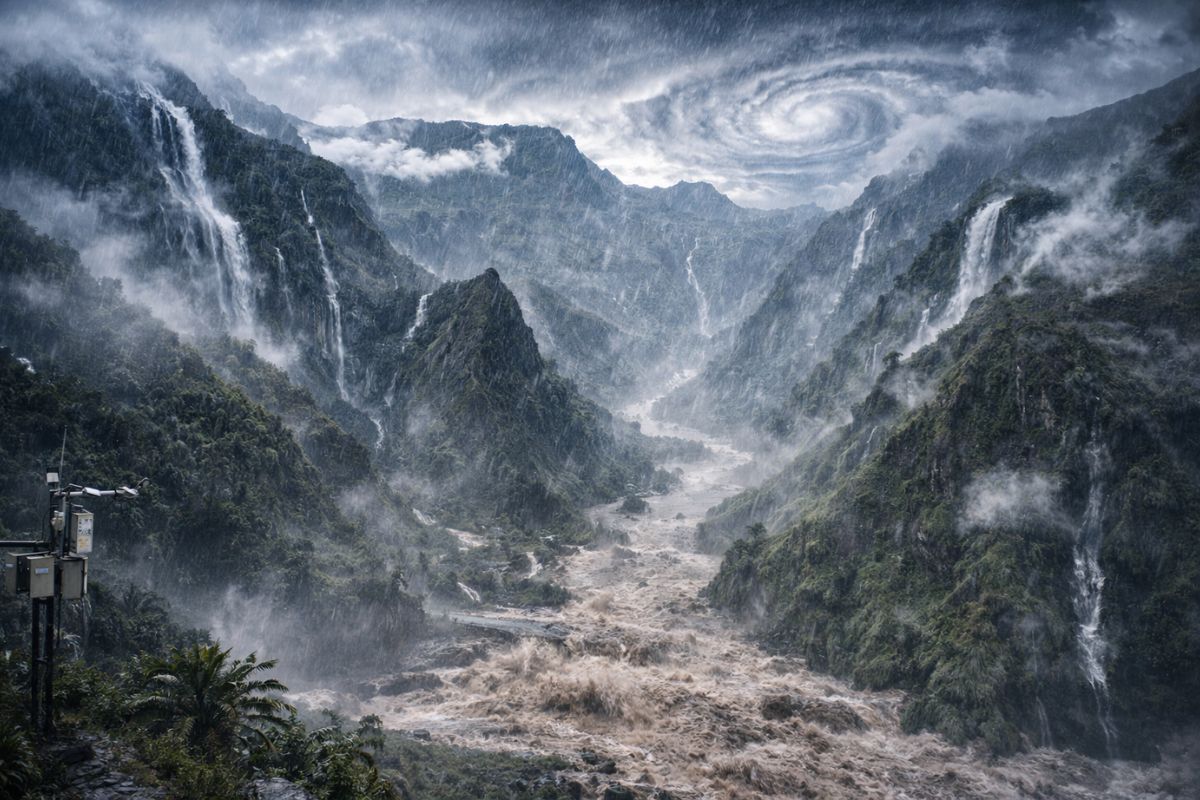
The day when 1,825 mm of rain fell in 24 hours: a world record recognized by the WMO on Réunion Island shows how tropical cyclones and extreme terrain can produce absurd amounts of precipitation.
-
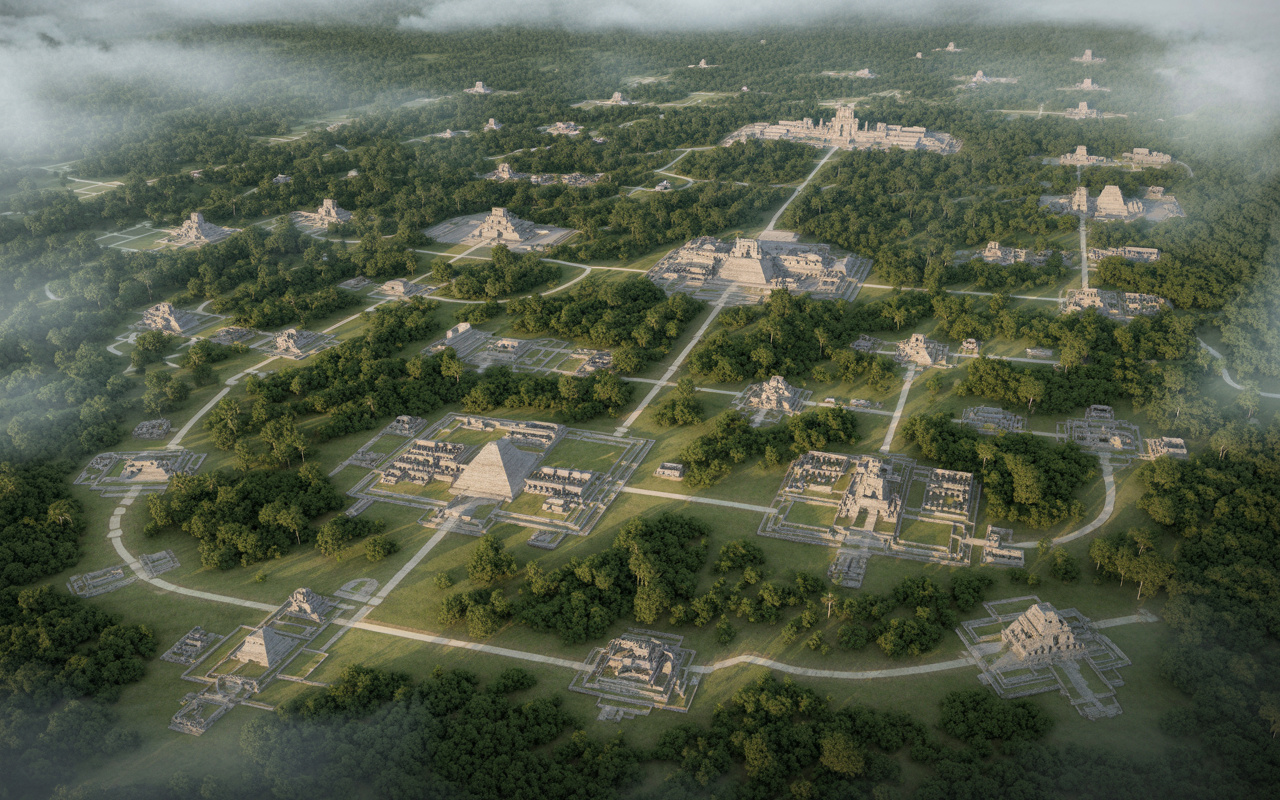
In northern Guatemala, a colossal scan revealed 964 Maya settlements and condensed this map into 417 cities, towns, and villages connected by 177 km of elevated walkways, suggesting a regional power much greater than previously thought for the Pre-Classical period.
-
Much more than a conventional boss: meet the story of the CEO of BYD who spends the day teaching his own engineers so they never stop creating.

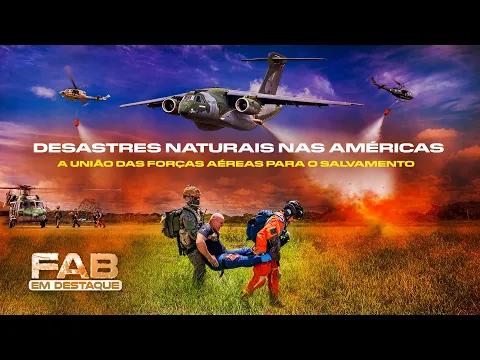
The Brazilian Air Force and its partners trained in search and rescue of victims in hard-to-reach areas, aeromedical evacuation of the injured, air transport of critically ill patients, and aerial firefighting, using aircraft equipped for water and retardant drops over simulated fire hotspots.
Each scenario required integration among teams from different nationalities who, in practice, speak different languages and operate under different protocols.
The great test was not only technical but also one of coordination. When a real disaster occurs and multiple countries send help, the ability to operate together without confusion is what determines whether the response saves lives or generates chaos.
The Brazilian Air Force, as the host, exercised the role of command and control of aerospace operations, practicing the function it would have if Brazil were the affected country requesting international assistance.
Why the Brazilian Air Force chose Campo Grande for the exercise
The Campo Grande Air Base, in Mato Grosso do Sul, was selected for strategic reasons. Its location in the Midwest of Brazil places the base relatively close to biomes that suffer from fires, such as the Cerrado and the Pantanal, and offers airport infrastructure capable of accommodating over a thousand military personnel and dozens of aircraft simultaneously.
For the Brazilian Air Force, training in Campo Grande simulates realistic operational conditions in a region where environmental disasters are already recurrent.
The choice of Brazil as the host of Cooperation XI for the first time also carries diplomatic significance. The country demonstrates the ability to organize and lead complex multinational exercises, which strengthens the position of the Brazilian Air Force as a reference in disaster response operations in South America.
For the 13 participating countries, training on Brazilian territory meant operating in a tropical environment with characteristics different from their home bases, a factor that enriches training and prepares teams for the unpredictability of real scenarios.
What the Brazilian Air Force exercise aims to prevent in practice

Recent numbers explain the urgency. Burned areas in South America have dramatically multiplied in recent years, with devastating fires in the Pantanal, Cerrado, and Amazon.
Floods like those in Rio Grande do Sul in 2024 showed that Brazil may need coordinated international assistance on a scale that no national agency can handle alone.
The Cooperation XI exists so that when the next disaster occurs, the Brazilian Air Force and its international partners know exactly how to operate together without improvising in the midst of the emergency.
The exercise also trained command and control procedures, which are the backbone of any multinational operation. In practical terms, this means defining who commands what, how information flows between countries, who authorizes takeoffs and missions, and how resources are distributed among different teams.
The Brazilian Air Force treated Cooperation XI not only as military training but as an investment in real capacity to save lives when the next environmental crisis hits the region.
Which countries participated in the exercise alongside the Brazilian Air Force
The Cooperation XI brought together 13 nations at the Campo Grande Air Base. The multinational format is one of the central characteristics of the exercise, which exists precisely to test the cooperation capacity among armed forces with different operational cultures, equipment, and languages.
For the Brazilian Air Force, hosting military personnel from 12 other countries is both a logistical challenge and an opportunity to strengthen ties that can be decisive in a real disaster scenario.
More than 1,200 military personnel participated over the two weeks, divided among flight crews, ground personnel, operations coordinators, and observers.
The Cooperation is a cyclical exercise that changes its host for each edition, and bringing the 11th edition to Brazil represents recognition of the Brazilian Air Force as a relevant actor in hemispheric civil defense. The legacy of the exercise goes beyond the two weeks in Campo Grande: the procedures practiced, the protocols adjusted, and the contacts established among the teams will be available for immediate activation when a real disaster requires a multinational response.
What do you think about this type of multinational exercise? Should Brazil invest more in disaster preparedness? Leave your opinion in the comments.





Seja o primeiro a reagir!