





 Portuguese
  English
  Spanish
  4 min of reading
  0 comments


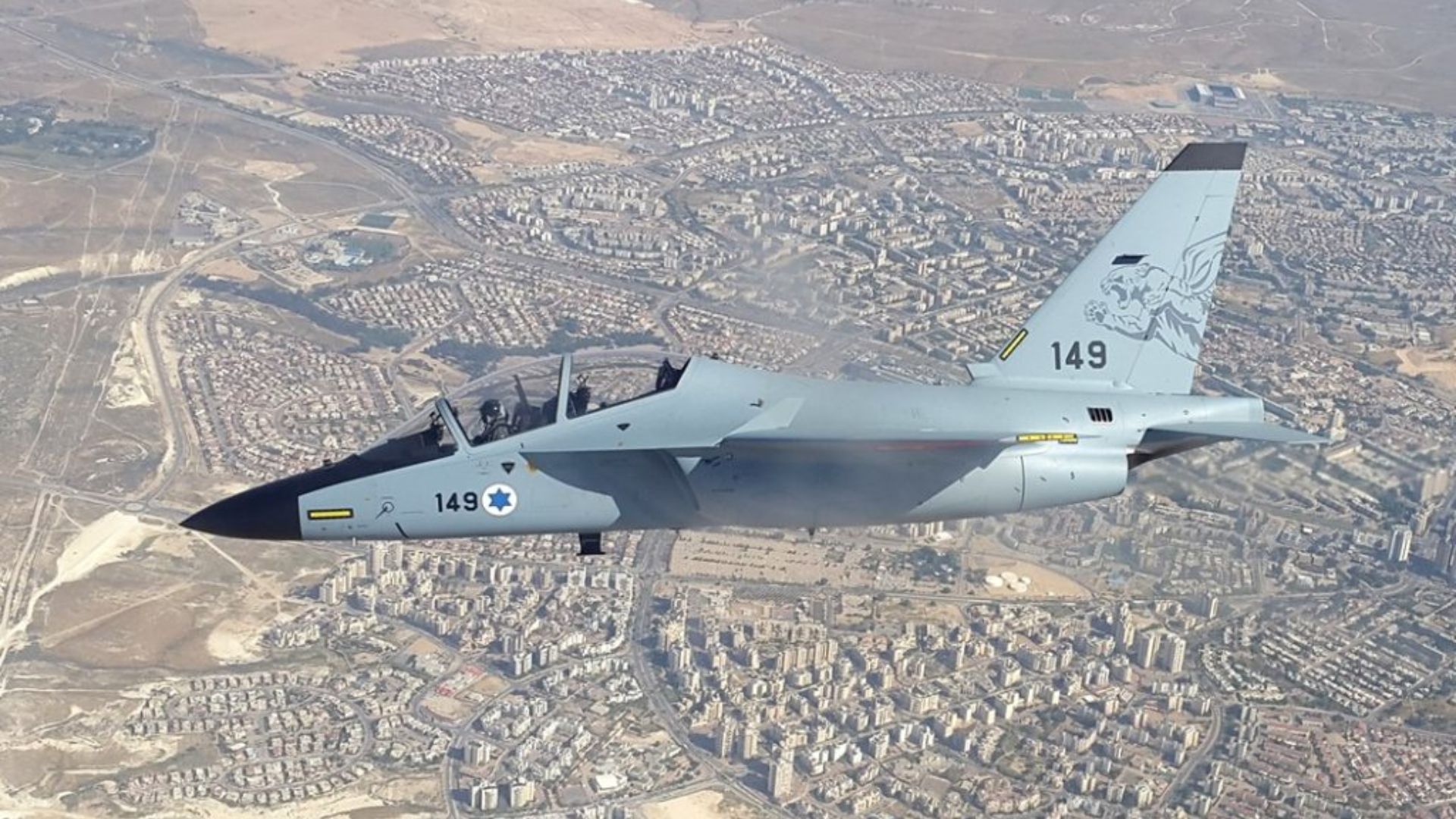
Advanced training, integrated simulation, and extreme requirements shape Israeli pilots to operate next-generation fighters in complex scenarios, focusing on decision-making, combat coordination, and adaptation to high-threat environments.
The preparation of Israel’s fighter pilots today revolves around a central axis: the M-346 “Lavi”, an advanced training jet that has taken on a decisive role in the transition to frontline aircraft and a combat environment marked by sensors, networks, electronic warfare, and decision-making under pressure.
Incorporated by the Israeli Air Force to replace the old TA-4 Skyhawk, the model was received starting in 2014 and became part of a training system designed to reduce the gap between instruction and real operation.
M-346 Lavi and the transformation of pilot training
This design is not limited to flight itself.
-
8-year-old boy discovers hidden gold mine in China and reveals millennia-old relics that could rewrite the history of ancient trade routes

-
A Brazilian teenager created an artificial intelligence to map heat islands and help cool down cities that are becoming open-air ovens under increasingly extreme temperatures.

-
With 18 levels carved into the rock and a capacity for 20,000 people, Turkey’s gigantic underground city was a complete refuge with churches, schools, water, and ventilation, created to keep an entire population hidden and protected.
-
A pizza owner discovers a fake R$ 173 Pix payment, sends a “pizza” filled with rubble to the scammer, goes viral with over 2 million views, and exposes a scam affecting small businesses, reinforcing the warning to check payment confirmations before delivering orders.


According to the portal Technology and Defense, the M-346 was conceived as part of an integrated training system, capable of simulating sensors, armaments, friendly forces, and computer-generated threats even during the mission.

In practice, this allows the student to fly a real aircraft while interacting, in real-time, with virtual and constructive elements, reproducing scenarios more complex than those that would be feasible with only the physical means available in the air.
Integration between simulation and realistic combat
In Israel, this architecture has been reinforced by a ground training center with participation from Elbit Systems, responsible for integrating simulators, mission planning, training management, and support for Lavi instruction.
The goal is to expose future aviators to a routine that combines aircraft, simulation, and continuous assessment, without relying exclusively on conventional flight hours.
As a result, the training now includes everything from navigation and tactical employment to threat response and coordination with other vectors, within a logic closer to contemporary air warfare.
Preparation to operate F-35I, F-15I, and F-16I
The relevance of this model grows because the Israeli fighter aviation operates and trains for a broad spectrum of missions.
In this context, advanced training needs to prepare crews for aircraft such as F-35I “Adir”, F-15I “Ra’am”, and F-16I “Sufa”, in missions where situational awareness and integration between platforms are as important as piloting.
The difference with the M-346 lies precisely in anticipating, during instruction, the operational logic of these fighters.
The aircraft uses digital avionics, a cockpit aligned with the latest training standards, and an onboard system that emulates radar, pods, weapons, and electronic warfare.
Embedded simulation and decisions under pressure
Instead of restricting learning to the basic domain of flight, the platform places the student in front of progressively more demanding tactical decisions.

This environment allows for the assessment of judgment errors, reaction time, and coordination ability, factors considered critical in real missions.
The subsequent analysis of the missions enhances the capacity for correction and continuous evolution of the pilots in training.
Rigor of the selection process and operational training
The Israeli Air Force also maintains a course recognized for its rigor.
The flight academy describes a closed training environment, with an intense routine, successive filters, and permanent monitoring of technical and mental performance.
The demand does not fall solely on motor skills or mastery of procedures.
Leadership, discipline, resilience, and the ability to work as a team are central to the evaluation, reflecting the complexity of modern air combat.
Integrated system and reduction of the distance to real combat
This standard helps explain why the Lavi has ceased to be seen merely as an advanced trainer and has come to be treated as a link in a larger chain of readiness.
The concept that combines real, virtual, and constructive environments reduces risks, expands the variety of scenarios, and allows for the repetition of missions with different levels of threat.
This approach decreases dependence on large physical means and optimizes training in operational and financial terms.
M-346FA and the evolution to combat capability
The evolution of this family appears in the M-346FA, a light combat variant derived from the trainer.
The version incorporates radar, multi-mission capability, and suitability for the use of guided munitions, close air support, interdiction, and tactical reconnaissance.
Although it is not the aircraft used by Israel as a primary fighter, the development shows how the technological base of the trainer has been expanded for operational functions.
Training focused on modern air warfare
In the Israeli case, the central point remains training.
The Lavi was introduced to replace an old platform and bring the student closer to a combat environment that can no longer be taught solely with classic maneuvers.
The combination of real flight, embedded simulation, and integrated training center has transformed the M-346 into a structural piece of the country’s fighter school.
More than teaching how to fly, the system was designed to train decisions under high informational load, focusing on coordination, threat reading, and precise execution from the instruction phase.




-

1 person reacted to this.