





 Portuguese
  English
  Spanish
  4 min of reading
  0 comments


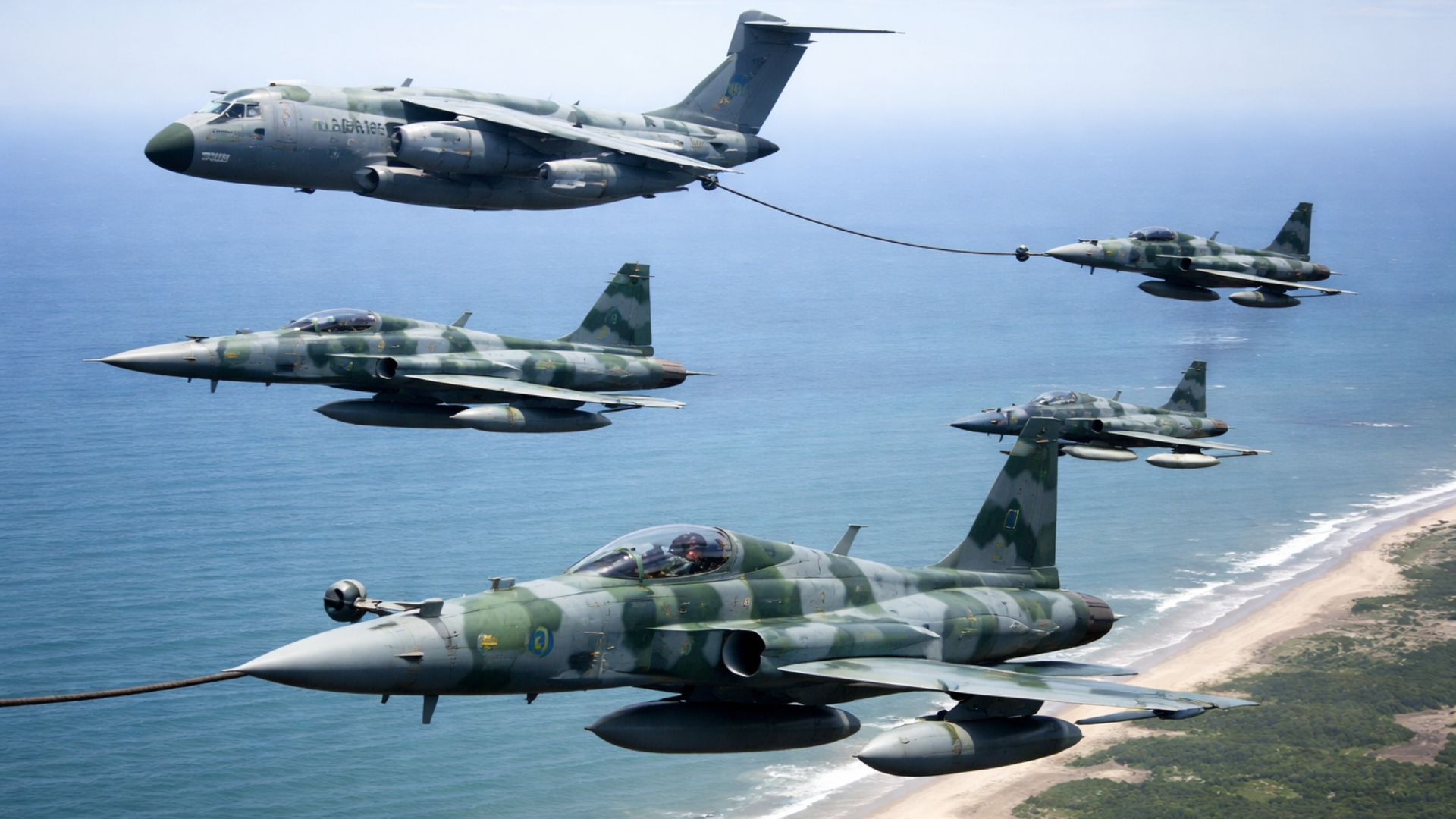
Air training in the South strengthens combined use of F-5 fighters and KC-390 in long-range missions
Between March 13 and 20, the Brazilian Air Force conducted a training maneuver from the Canoas Air Base in Rio Grande do Sul, employing F-5EM/FM Tiger II fighters in air-to-air combat missions.
The activity was part of the FAB’s operational routine and focused on preserving pilots’ proficiency in simulated interception and aerial engagement scenarios.
Air combat training with F-5 in RS
The training brought together aircraft from the 1st Fighter Aviation Group, based at Santa Cruz Air Base in Rio de Janeiro, as well as a KC-390 Millennium from the Gordo Squadron, responsible for in-flight refueling support.
-
In just 3 years, OMODA 5 surpasses 400,000 units and reaches a milestone that takes most cars a decade to achieve.

-
Without cement, without steel, and using only earth and recycled cardboard, engineers have created a construction system that drastically reduces carbon emissions and could change the way houses are built around the world.
-
Alert in the electric sector: excess solar energy triggers overload in the Brazilian electrical system, forces the operator to shut down power plants, and exposes an unexpected risk that could affect stability and energy costs.

-
Russia spent $5 billion and 28 years modernizing a nuclear warship that had been inactive since 1997. The Admiral Nakhimov returned to the sea in August 2025 as the heaviest surface combat ship in the world, with 176 missile launchers, including hypersonic Zircon missiles.

This operation expanded the operational range of the jets and also increased the time available for mission execution, a central element in exercises that aim to replicate conditions closer to the real environment.
BVR missions on the coast of Rio Grande do Sul

According to the report published about the activity, most of the beyond visual range combat flights, known by the acronym BVR, occurred over the coast of Rio Grande do Sul.
This type of profile requires more precise coordination between vectors, fuel planning, and management of simulated sensors and armaments, which explains the presence of the tanker aircraft as a support piece in the operation developed in Canoas.
Although the FAB treats the exercise as part of its recurring preparation calendar, the movement draws attention for occurring at a time of gradual transition in Brazilian fighter aviation.
The F-5 completed 50 years of operation in the country in 2025, a milestone officially highlighted by the Air Force, and continues to be employed in air defense missions while the incorporation of the F-39 Gripen into the force progresses.
In-flight refueling expands fighter autonomy
In practice, the support from the KC-390 allowed the F-5s to remain longer in the designated training areas without relying on premature returns to base for refueling.
This capability alters the design of the exercise because it gives pilots greater leeway to fulfill different stages of the mission, repeat tactical profiles, and operate in more distant areas without immediate loss of autonomy.
The use of the Millennium in this type of scenario also fits into the broader effort of the Air Force to expand and consolidate the use of the aircraft in various operational tasks.

In official publications, the FAB has associated the Gordo Squadron with the advancement of this platform in transport, launch, support, and refueling missions, which helps explain its participation in training aimed at sustaining fighter aircraft.
F-5 remains active in Brazilian air defense
Even in the face of fleet renewal, the Tiger II continues to occupy a relevant space in the Brazilian readiness structure.
The Air Force itself highlighted, while recalling the 50 years of the model, that the F-5 substantially increased the combat capability of the FAB and remains integrated into the national fighter aviation, after successive upgrades that extended its service life and kept the vector suitable for operational use.
This permanence helps to understand why movements like the one made to Canoas are still part of the force’s daily routine.
More than an occasional display, the exercise served to keep crews and resources in a state of readiness, emphasizing procedures that depend on fine coordination between fighters and support aircraft, especially when the scenario involves BVR missions and prolonged presence outside the area of origin.
In addition to the aerial activity, the operation was monitored at the Canoas Air Base by a group of observers coordinated by Col. Av. R1 Antônio Biasus, who recorded images of the training during the maneuver period.
The external monitoring occurred alongside the routine flights and helped document a movement that, although classified as routine by the FAB, brought together relevant elements of the current operational phase of Brazilian fighter aviation.
In Canoas, the combination of F-5 and KC-390 demonstrated how the FAB continues to use platforms from different generations complementarily to sustain preparation, range, and continuity of missions.
The result was a week of flights focused less on demonstration and more on training, in a profile that preserves capabilities considered essential for air defense and for maintaining the readiness of the squadrons.






Seja o primeiro a reagir!