





 Portuguese
  English
  Spanish
  5 min of reading
  0 comments


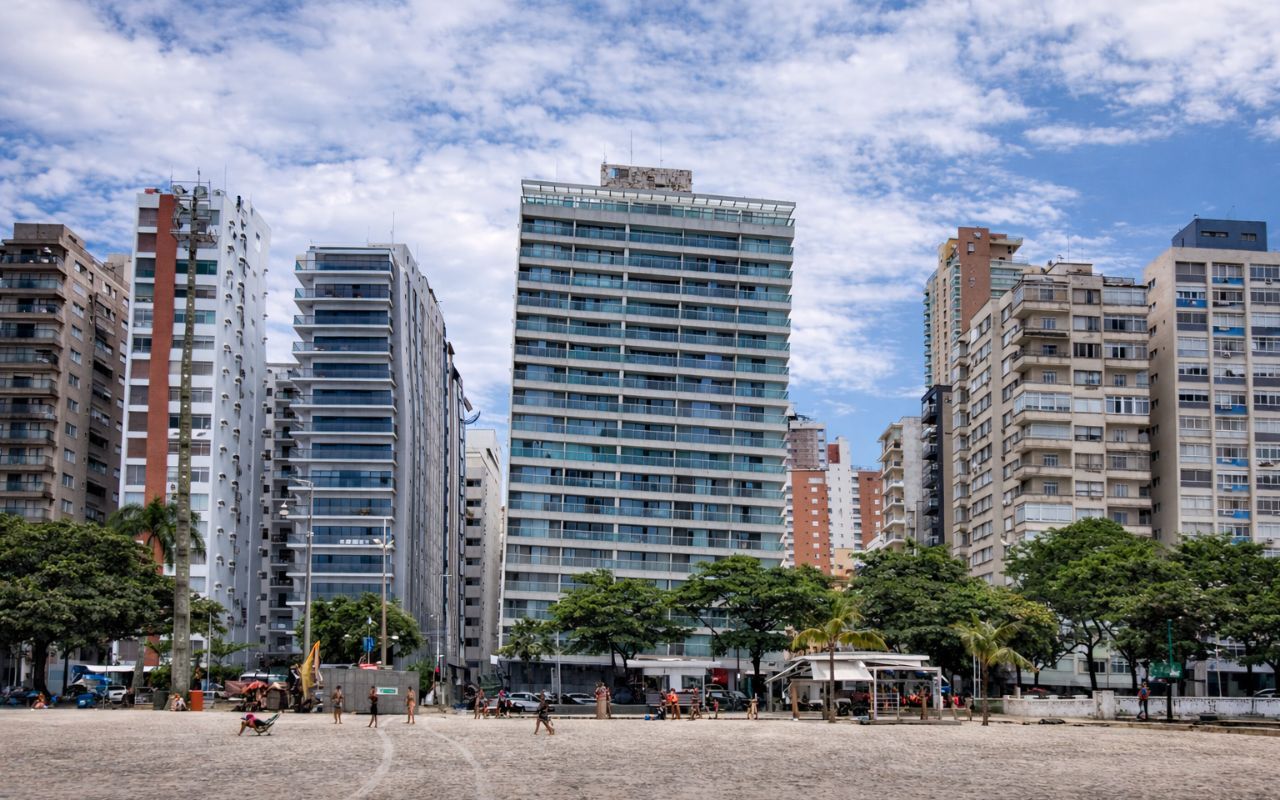
Discover how Santos brings together tilted buildings, the largest beach garden in the world, and a strong surf culture in one of the most curious destinations in Brazil.
The city of Santos draws national and international attention by bringing together three unique characteristics: the famous tilted buildings, the largest beach garden in the world, and its strong connection to surfing.
The urban phenomenon began to form in the 1940s, when rapid growth propelled the verticalization of the city.
Located on the coast of São Paulo, about 72 km from the capital, Santos developed rapidly without considering the limitations of the soil.
-
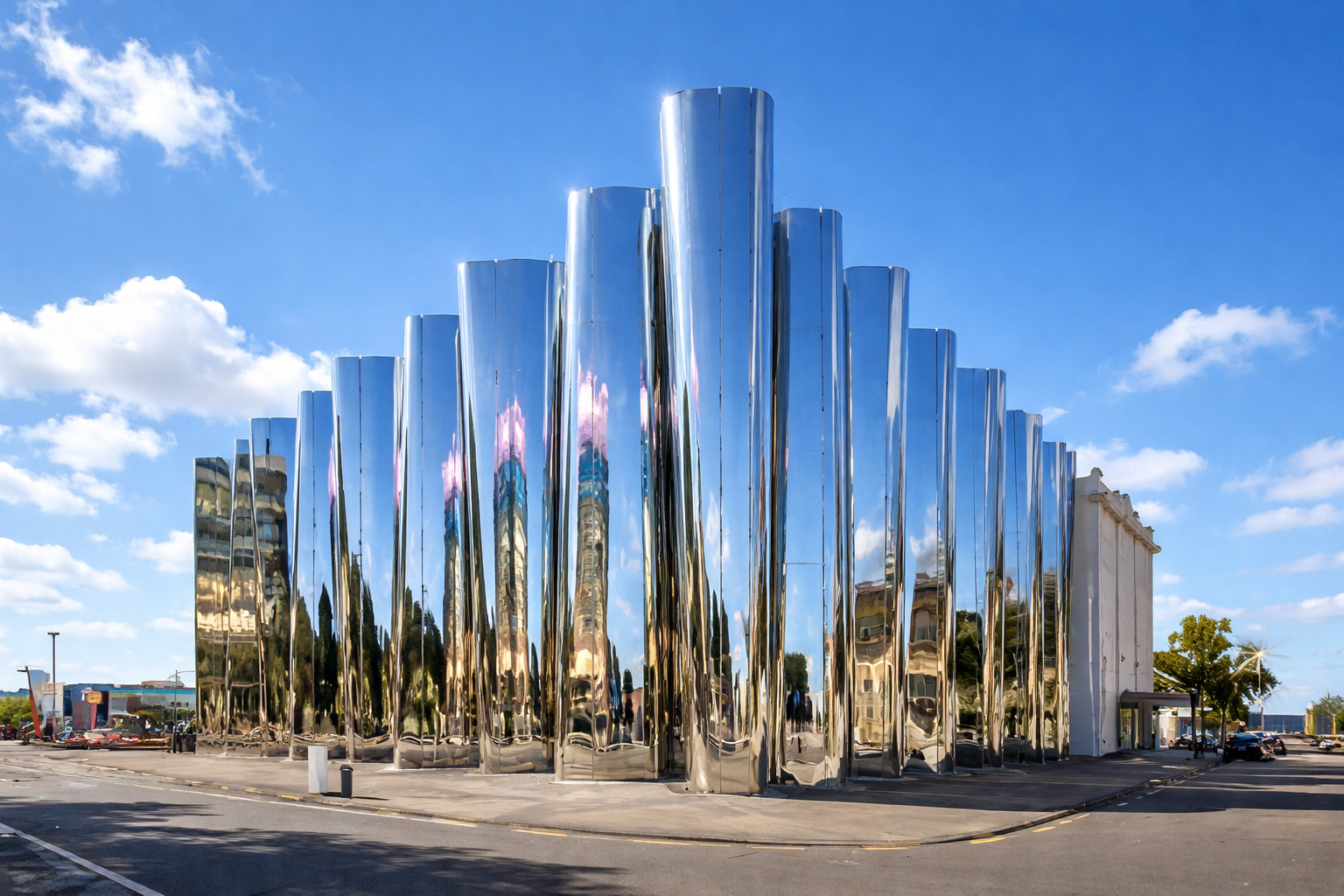
New Zealand builds a shimmering building that vibrates, featuring a 62-seat cinema, moving sculptures, and an environment where sound, light, and energy are felt in the body.
-
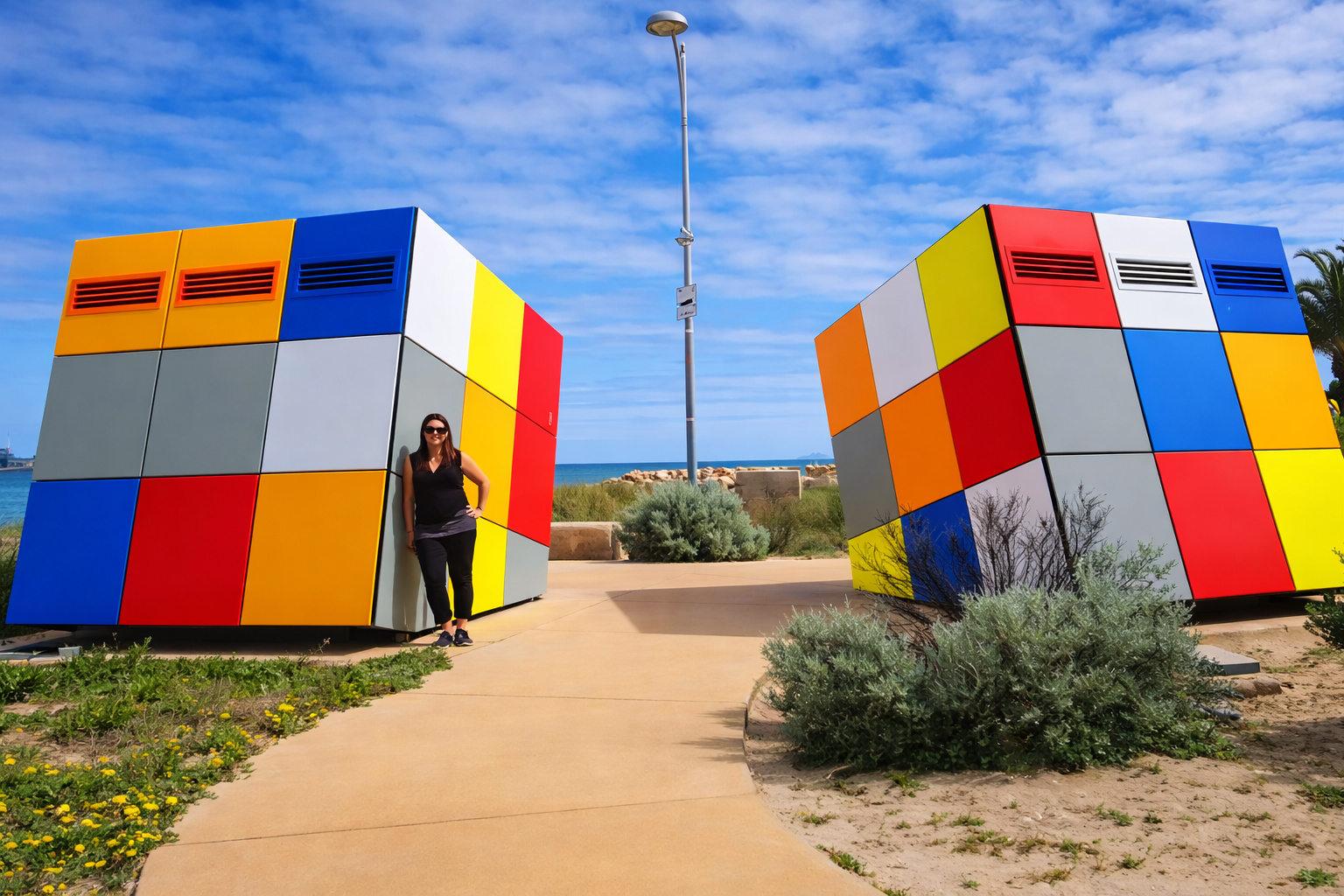
Two colored cubes of 2.5 m transform a public bathroom into a selfie spot in Western Australia, costing up to 75% less than traditional construction and helping to reduce vandalism in public spaces.
-
Santa Catarina produces up to 7 times more than it consumes in some sectors, and its century-old industries founded by grandparents and great-grandparents now compete on equal footing with Germany and the United States in the international market.

-
U.S. war giant weighing 9,600 tons and equipped with long-range missiles is sent to the Atlantic to protect global internet and hunt submarines.


As a result, the combination of urban expansion and geological characteristics created one of the most curious scenarios in world engineering.
Moreover, the city has established itself as a complete tourist destination, uniting history, nature, and sports. What was once seen as a structural problem has also become a visual attraction.
At the same time, the municipality maintains a high quality of life and modern infrastructure, reinforcing its relevance on the national scene.
Learn how the phenomenon of tilted buildings in Santos emerged
The tilted buildings of Santos originated during a period of intense urbanization. The inauguration of the Anchieta Highway in 1947 facilitated access to the city and boosted the construction of residential buildings.
However, the techniques used at the time were not suitable for the local soil type. Shallow foundations — that is, surface structures — were built on a layer of soft clay, which gives way under the weight of the constructions.
As the years passed, this process caused the gradual tilting of the buildings. This phenomenon is known as subsidence, when the soil slowly sinks under pressure.
Currently, Santos has more than 300 buildings with some level of tilt. Of these, about 65 have deviations considered more pronounced, according to technical standards.
One of the most emblematic cases was the Excelsior Building, which was closed in the 1970s after showing significant tilt. This episode marked a warning point for authorities and engineers.
Since then, the city has begun to invest in safer solutions. In fact, Santos became a reference by carrying out the first straightening process of a building with subsidence in the world.
Comparison of Santos with other cities with unstable soil
The case of the tilted buildings in Santos is often compared to that of Mexico City. Both face challenges related to the soil.
However, there is an important difference. While the Mexican city sinks more uniformly, in Santos the buildings tilt individually.
This creates a unique visual effect that attracts the attention of tourists and specialists. Thus, the Brazilian municipality stands out globally in this aspect.
Largest beach garden in the world enhances the coast of Santos
If on one hand the tilted buildings impress, on the other the largest beach garden in the world enchants visitors. Located along the coast, the space extends over 5 kilometers.
Recognized by the Guinness World Records, the garden was designed by engineer Saturnino de Brito. It brings together dozens of plant species and occupies a vast green area.
Additionally, the location serves as a large leisure space. Residents and tourists use the environment for walking, physical activities, and moments of rest.


The largest beach garden in the world is not just a tourist attraction. It also plays an important role in the urban organization of Santos.
The vegetation contributes to the ventilation of the city and helps to mitigate the climate. This improves the quality of life for residents.
At the same time, the space connects different points along the coast. Thus, it promotes integration between residential, commercial, and tourist areas.
Surf culture strengthens tourism in Santos
Surfing has a special history in Santos. The city is considered the birthplace of the practice in Brazil, with records dating back to the 1930s.
Pioneers introduced the sport on local beaches, initiating a culture that spread across the country. Since then, surfing has become part of the Santista identity.
Currently, Santos hosts important initiatives, such as the first public surf school in Brazil. This demonstrates the city’s commitment to the sport.
The tradition of surfing in Santos goes beyond the waves. It influences tourism, the economy, and the local lifestyle.
The city has spaces dedicated to the memory of the sport, such as the Surf Museum. The location gathers historical boards and honors great names in the discipline.
Moreover, renowned athletes have helped to consolidate the city’s reputation. This attracts visitors interested in both the sport and its history.

Tourist attractions reinforce the identity of the city
In addition to the tilted buildings, the largest beach garden in the world, and surfing, Santos offers various cultural attractions.
Among them is the Coffee Museum, housed in a historic building that depicts the economic importance of the grain to Brazil.
Another highlight is the Municipal Aquarium of Santos, considered the oldest in the country. The space gathers various marine species and attracts visitors of all ages.
These places help tell the story of the city and reinforce its cultural relevance.
Quality of life and infrastructure
Even with challenges like the tilted buildings, Santos stands out for its quality of life. The city presents good human development indices and efficient urban infrastructure.
The mobility system includes light rail, bike lanes, and well-planned roads. This facilitates movement for both residents and tourists.
Additionally, the tropical climate contributes to making the destination attractive year-round. In the summer, the demand for beaches increases significantly.
Santos is an example of how challenges can turn into opportunities. The tilted buildings, which arose from a geological problem, today are part of the city’s visual identity.
At the same time, the largest beach garden in the world and the tradition in surfing reinforce the tourist potential. These elements create a unique combination on the Brazilian coast.
Therefore, the city continues to be a reference in urban innovation, culture, and leisure. Santos proves that it is possible to balance development, history, and quality of life in one place.
With information from the website Terra Brasil Notícias






Seja o primeiro a reagir!