





 Portuguese
  English
  Spanish
  2 min of reading
  0 comments


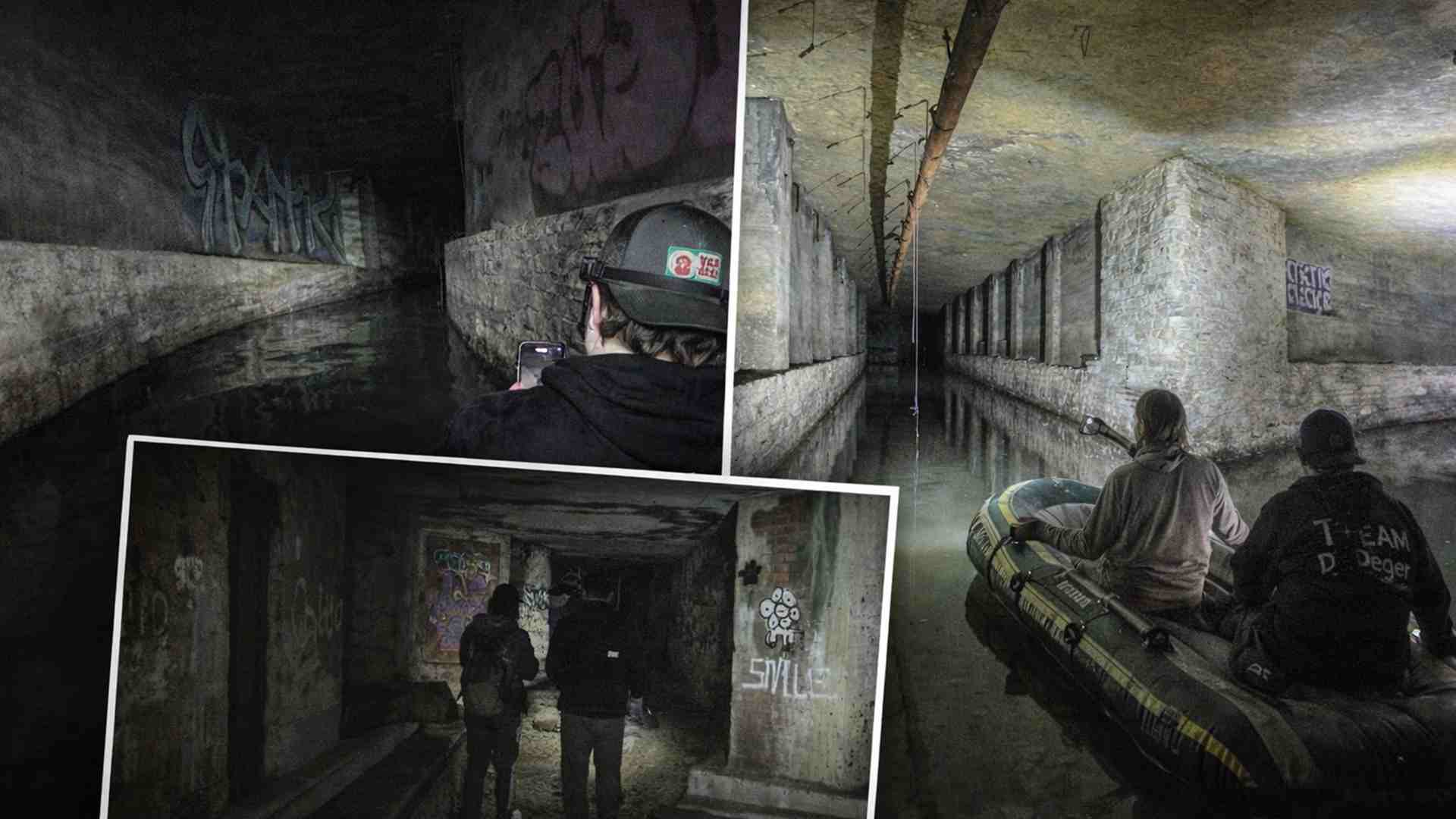
Beneath Saint Paul, Minnesota, an underground network of tunnels, sewers, service galleries, and storm drainage continues to attract urban explorers even after deaths recorded in 2007 and 2009, while a recent video has once again exposed the risks of entering the so-called Labyrinth on rainy days
The underground Labyrinth beneath the Twin Cities in Minnesota continues to attract urban explorers even after deaths recorded in floods and successive warnings about the risks of the tunnel network, concentrated mainly under Saint Paul. The set includes old service galleries, storm drainage tunnels, basements, sewers, and interconnected telephone galleries.
Origin of the urban area
Minnesota, in the north-central United States, is home to a large urban area formed by Minneapolis and Saint Paul, known as the Twin Cities. The name refers to the two main municipalities of the region, with Saint Paul serving as the state capital and Minneapolis as the most populous city in the state.
The two cities are considered modern compared to European standards. Saint Paul was founded in 1854, while Minneapolis emerged in 1867.
-
Argentina enters the phase of the receiver network in Patagonia and Antarctica to monitor the far south, while Brazil keeps an eye on the South Atlantic and spreads sensors over 5.7 million km² of the Blue Amazon and reinforces its maritime sovereignty.

-
Goodbye disposable batteries: an item still consumed in 1.2 billion units per year in Brazil has a rechargeable alternative that can be used up to 1,000 times and reduces household expenses.

-
Millions of people have been eating mushrooms for millennia without knowing that this discreet food contains ergothioneine, an antioxidant that scientists now associate with memory protection and healthier aging.

-
Sun Tzu wrote 2,500 years ago that the supreme art of war is to defeat the enemy without fighting, and this phrase from a Chinese general born in 544 B.C. has become the most applied advice in the business world, in conflict psychology, and even in neighborly relations in 2026.

The underground Labyrinth beneath Saint Paul
Despite the relatively recent formation of the urban area, the underground space beneath the Twin Cities houses an extensive network popularly known as the Labyrinth. This structure is primarily located beneath Saint Paul and connects old buildings of different functions.
The system includes abandoned service galleries, storm drainage tunnels, basements, sewers, and telephone galleries. The underground environment is described as dark and dangerous, especially during rainy periods.
Deaths and risk on rainy days
The history of the site includes fatal accidents related to flooding. In 2007, two sewage system workers died in the Labyrinth after a flood.
Two years later, in 2009, urban explorer Ian Talty also died in the area. He was venturing through a storm sewer tunnel during a storm.
Video reignites warning
A few weeks ago, the Free4All channel on YouTube published a video showing explorers traversing the Labyrinth on a rainy day. The footage once again drew attention to the underground world beneath Saint Paul and the risks faced by those who enter the site.
A civil engineer who traveled and mapped these areas for 20 years warned that the group was not adequately prepared for this type of adventure. He also stated that the city had closed problematic areas to prevent people from getting lost, unable to exit, or panicking within the underground system.






Seja o primeiro a reagir!