





 Portuguese
  English
  Spanish
  4 min of reading
  0 comments


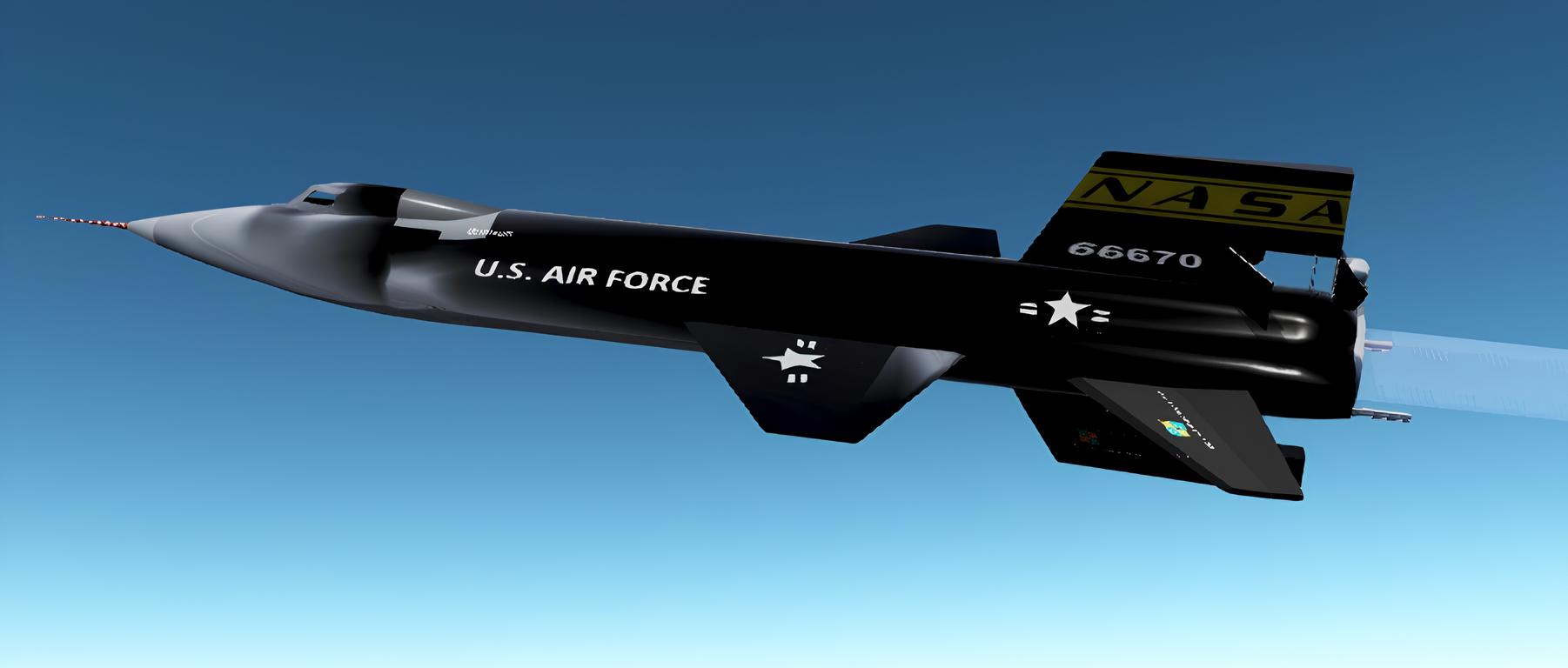
With a Speed of Mach 6.7 (7,274 km/h), the X-15 Is the Fastest Airplane in History — and It Was Flown by Humans in Space Suits in the 1960s. Understand the Legendary Project.
In an era when commercial airplanes struggle to reach Mach 1 and modern fighters barely exceed Mach 2, it is almost unbelievable to think that an American experimental aircraft reached Mach 6.7 — or 7,274 km/h — back in the 1960s. And the most surprising part: with a pilot on board, dressed in a space suit and flying at the edge of space. This feat, which has not been surpassed by any crewed aircraft to this day, belongs to the legendary North American X-15 — a bold, almost fictional project that helped shape the future of hypersonic aviation, suborbital flights, and even space exploration.
A Rocket with Wings
The X-15 was not an ordinary airplane. It resembled more of a winged missile with a cockpit. Built by North American Aviation and operated by the United States Air Force and NASA, the X-15 was designed to go where no airplane had gone before: the edge of space.
With a rocket engine, a structure reinforced with titanium and niobium alloy, and the ability to withstand extreme temperatures, the X-15 was developed to test the limits of speed, altitude, and atmospheric control at hypersonic speeds.
-
Chaos On Airplane Could Be Expensive: Proposal Aims To Prevent Disruptive Passengers From Flying For Up To 1 Year In Brazil And Face Fines Of Up To R$17,500

-
Man Arrested After Halting Takeoff of Fire Department Helicopter During Child Rescue in Guaratuba

-
With 37 Tons of Cargo, Over 8,000 km Range, and Ability to Land on Unpaved Runways, the Airbus A400M Demonstrates How Europe Created a Military Giant That Transports Armored Vehicles, Aerially Refuels Fighters, and Operates in Conflict Zones and Humanitarian Missions Worldwide
-
Emergency Landing in Campos Amarais After Bird Strike on Small Plane

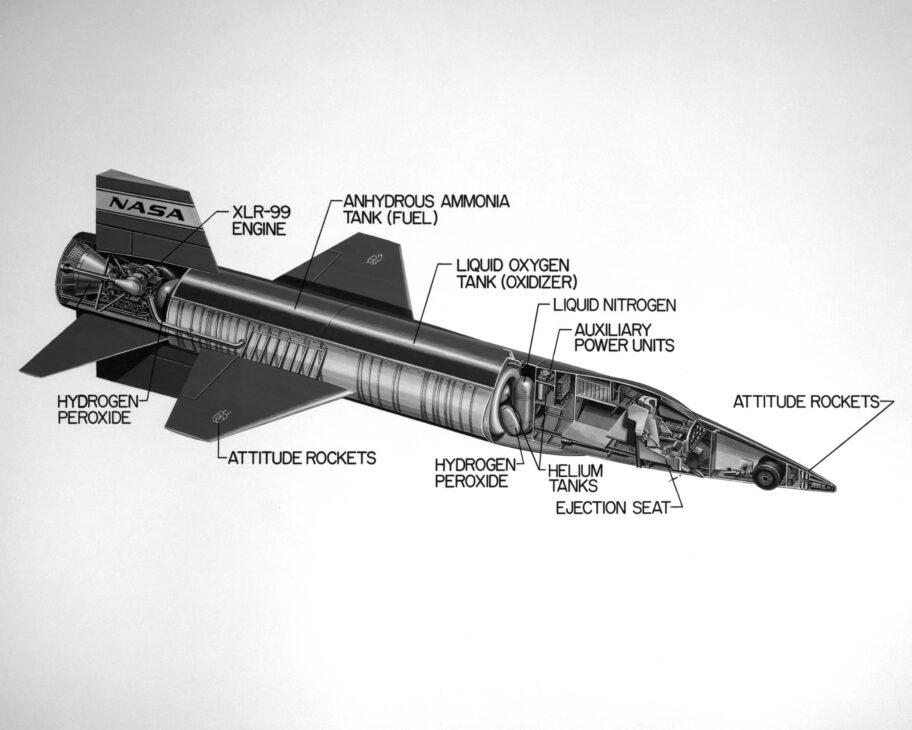
Its operation mode was also unusual: the X-15 was air-launched, attached under the wing of a B-52 bomber. After reaching the ideal altitude and position, the X-15 was released and then ignited its rocket engine, shooting to altitudes close to 100 km and speeds that defied any logic of traditional aviation.
The Day the Impossible Happened: Mach 6.7
On October 3, 1967, test pilot William J. “Pete” Knight made history by reaching Mach 6.7, equivalent to 7,274 km/h — an absolute record never surpassed by any crewed aircraft.
Knight was piloting the X-15A-2, a modified version of the X-15 with external tanks and additional thermal protection. He wore a pressurized space suit, similar to those used in orbital flights, necessary to withstand the altitude and rarefied environment.


The flight lasted only a few minutes, but the data obtained impacted generations of aerospace engineering. During the mission, the aircraft’s fuselage reached temperatures exceeding 1,200°C and some parts melted. The feat was so extreme that the X-15A-2 never flew again after this record.
An Aircraft Ahead of Its Time
Between 1959 and 1968, the three X-15s built performed 199 experimental flights, piloted by legends such as Neil Armstrong (before Apollo 11) and Joe Engle. In several of these missions, the pilots reached altitudes above 80 km, officially considered “space flights” by the U.S. Air Force.
Therefore, 13 X-15 pilots received astronaut wings, making the project one of the direct precursors to the American space program.
With it, engineers tested:
- Aircraft control at hypersonic speeds
- Entry into the atmosphere at varying angles
- Navigation systems at suborbital altitudes
- Materials resistant to extreme heat
- Flight profiles that would later be used in space shuttles
In many aspects, the X-15 was a flying laboratory, responsible for proving that humans can travel above the atmosphere and return safely — something that seemed impossible just a decade before.
Why Has No One Surpassed the X-15 Until Today?
Despite technological advancements since then, no crewed aircraft has managed to exceed the X-15’s 7,274 km/h. There are several reasons for this:
- The risk of flying at this speed is extreme, even with a pressurized suit.
- The cost-effectiveness of crewed hypersonic flights is low compared to probes or missiles.
- After the X-15, the industry’s focus shifted to space rockets and satellites.
- Commercial aviation has no real interest in flying above Mach 3 with passengers.
Even modern hypersonic fighters, such as Lockheed Martin’s experimental SR-72 (still in development), do not carry pilots on board.
In other words, the X-15’s record remains unbeatable after nearly 60 years, reinforcing the importance of the project as one of the boldest and most successful in the history of aerospace engineering.
The Legacy of the X-15: From Sky to Space
The X-15 was more than an aircraft — it was a step between traditional aviation and space exploration. Its legacy is still felt in SpaceX’s rocket re-entry systems, NASA’s capsules, and even in the commercial spaceflight projects of Blue Origin and Virgin Galactic.
It’s as if the X-15 had stated back in the 1960s: “It is possible to fly to space without leaving the planet.” And the truth is that it did so, repeatedly.
To this day, many consider the X-15 the greatest airplane ever built by humanity — not for its size, but for its boldness, speed, and ambition to take a human faster than any other flying vehicle has ever achieved.










-

-

2 pessoas reagiram a isso.