





 Portuguese
  English
  Spanish
  4 min of reading
  0 comments


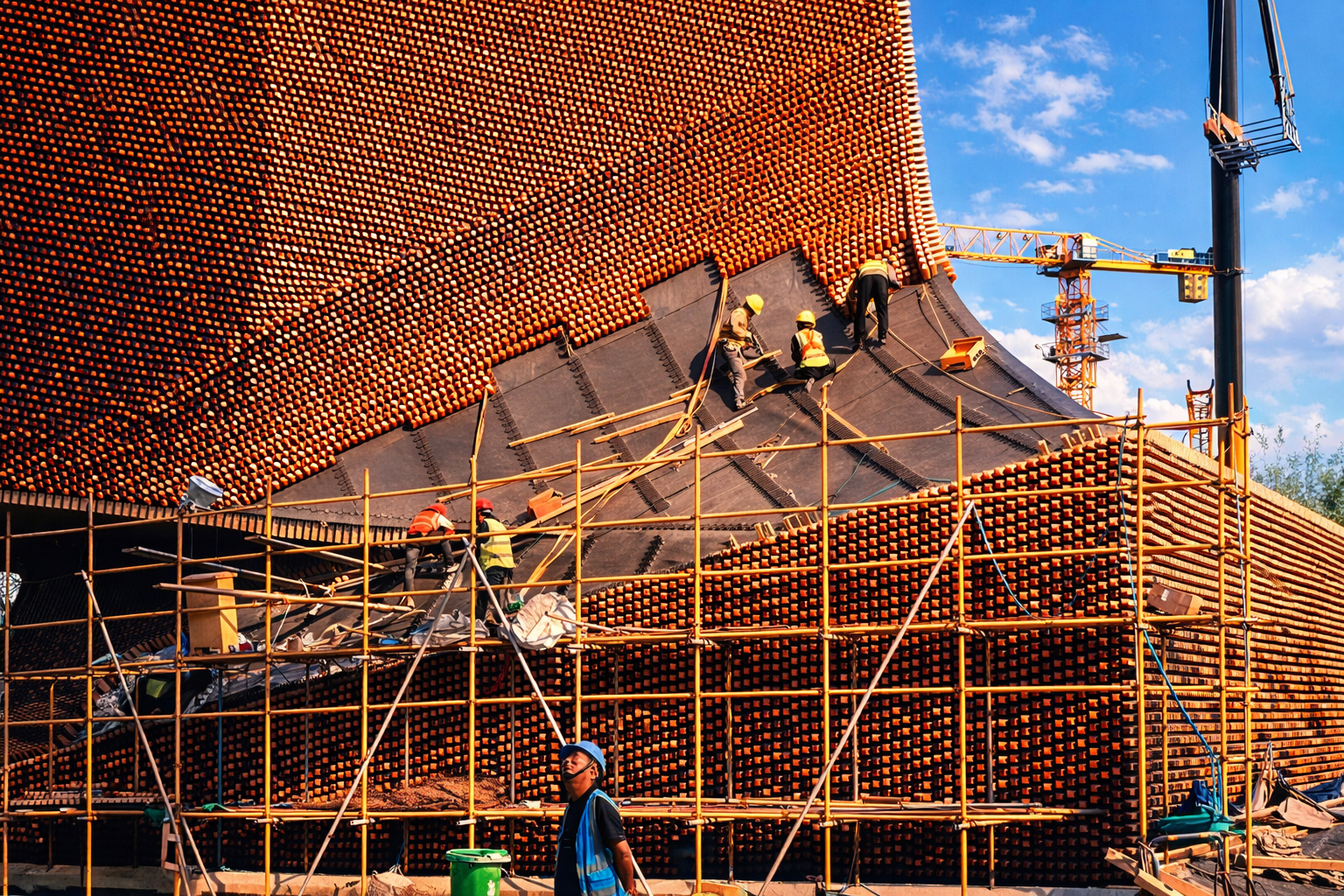
Jinling Art Museum in China, with a unique ceramic brick facade and twisted design, featuring advanced engineering that transforms contemporary architecture and blends steel structure in its construction in the first city in the world to reach 1 million inhabitants
The museum Jinling Art, in the first city in the world to reach 1 million inhabitants, has become one of the most impressive projects in recent architecture by bringing together 139,000 custom ceramic bricks, a twisted design, and a strong connection to China’s millennia-old history, located in Nanjing.
The project goes beyond a cultural space and solidifies itself as a symbol of urban innovation and historical identity, uniting modern technology with traditional references in every detail of the construction.
Architecture of the Jinling Art Museum blends Chinese tradition with contemporary design
The project was developed by the firm AZL Architects, an international architecture studio, responsible for the design of the structure completed in 2024. The proposal offers a modern interpretation of Nanjing’s cultural heritage.
-
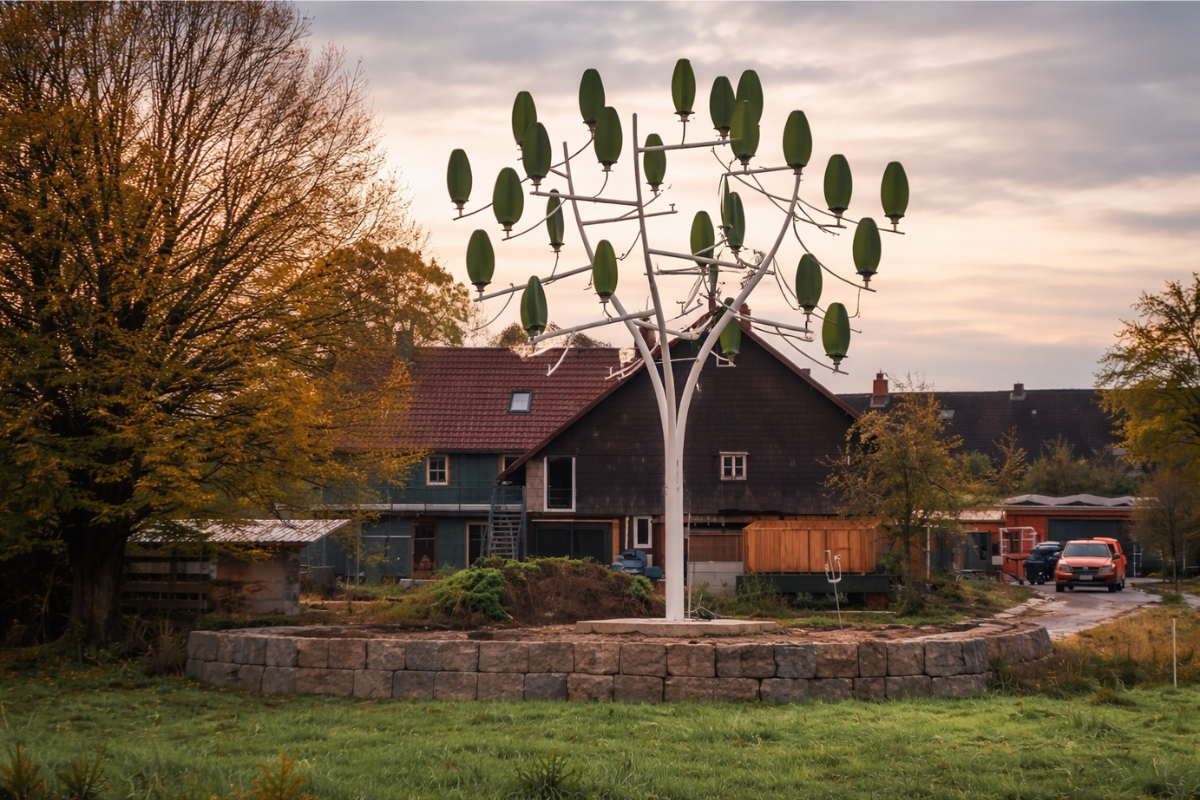
A German man installs a nearly 10-meter “wind tree” with 36 microturbines in his garden, combining wind energy with solar panels, and aims to power his home, office, and electric car without paying anything on his electricity bill.
-
Brazilian fish that lives out of water and hides inside dry logs intrigues scientists and reveals one of the rarest adaptations of mangroves.

-
The Brazilian Navy puts on a show in a complex operation in the Atlantic and rescues an African ship adrift for almost 60 days, with 11 crew members, a rudder failure, no communication, environmental risk, and a mission 1,200 km from the coast.

-
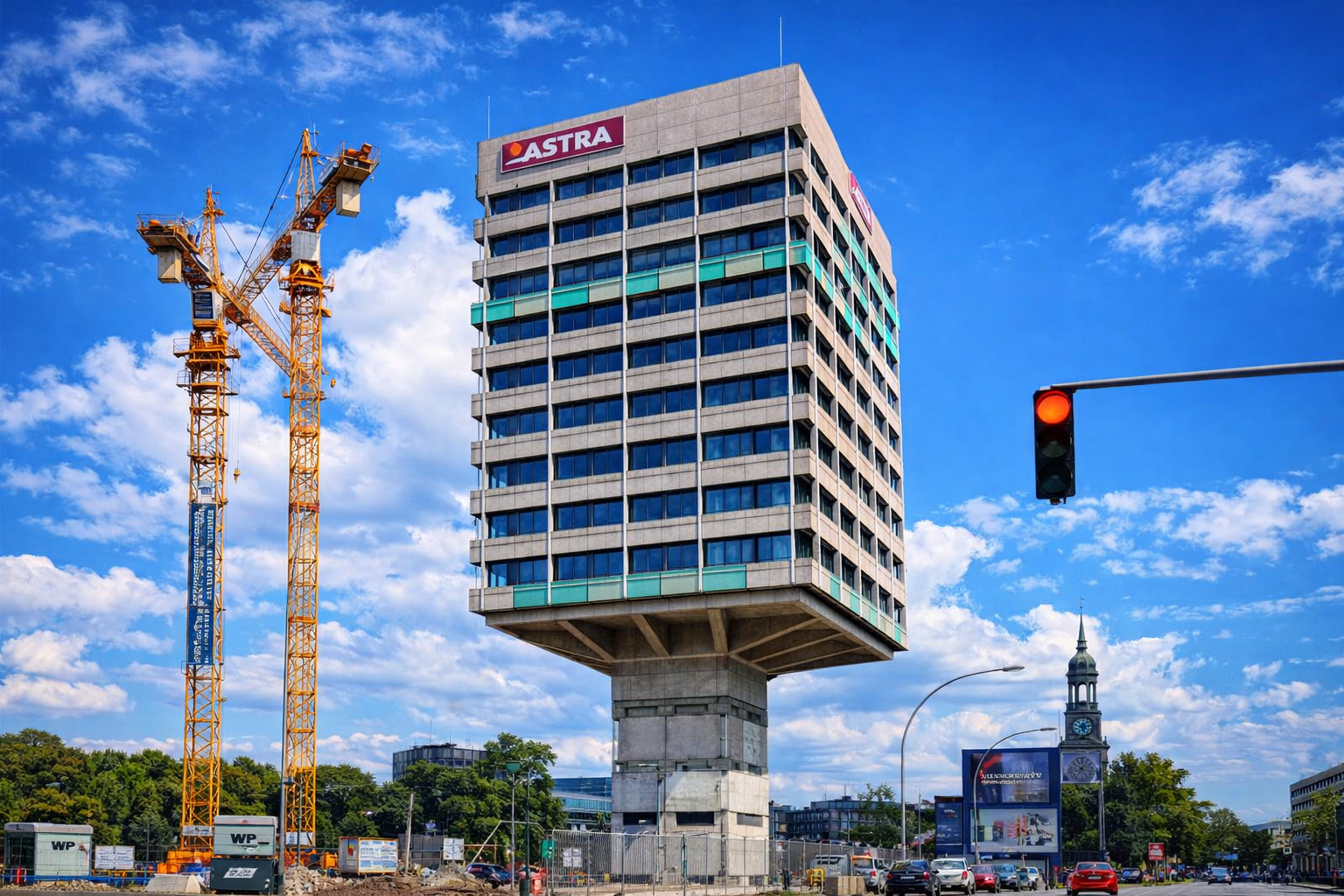
A 68-meter tower, which housed a historic brewery in the heart of Germany’s port, balances on a small base and uses activated core concrete for cooling that reduces the need for air conditioning.


The city carries over 7,000 years of history and was once considered the first in the world to reach 1 million inhabitants. This historical relevance is reflected in the museum’s concept.
The building features two rotated blocks connected by twisted surfaces, creating a sense of movement and growth. The shape references the Chinese character “陵”, associated with the idea of energy and ancestry.
Twisted structure creates unique visual effect and dynamic spaces
The geometry of the Jinling Art Museum differs from traditional mathematical patterns and embraces an organic concept. The twisting of the structure creates internal and external areas with different perspectives and experiences.
The base of the building aligns with the surrounding residential buildings, while the top aligns with the nearby highway. This contrast reinforces the proposal for integration between the city and architecture.
The diamond shape also alludes to the walls of the Ming dynasty, built in 1366, as well as references to local historical constructions.
Facade with 139,000 ceramic bricks recreates historical aging effect
One of the project’s highlights is the facade composed of 139,000 custom ceramic tiles, each measuring 60 by 60 by 180 mm.
The bricks were inspired by pieces from the Eastern Jin dynasty and the ancient city walls. The variation between glazed and unglazed surfaces creates a visual effect that simulates natural aging over 3,100 years.

The result is a gradient that changes with the light, especially at sunset, creating a striking and highly photogenic visual effect.
Precision engineering ensured complex assembly of the structure
The construction required advanced techniques to ensure safety and precision. U-shaped groove fastening systems and chemical anchors were used to adapt the bricks to curved and flat surfaces.
A full-scale physical model was developed to validate every detail of the assembly. This process allowed for precise adjustments before the final installation.
The use of 1.2-meter steel structure modules brought efficiency to the process and facilitated execution in areas with complex geometries.
AZL Architects details integration between modern technology and handcrafted tradition
The project reinforces the combination of traditional techniques and contemporary solutions. AZL Architects, an international architecture studio, highlighted the importance of uniting Chinese craftsmanship with modern engineering to achieve the final result.
This integration ensures not only aesthetics but also durability and adaptation to different climatic conditions, making the construction more resilient.
Additionally, the museum incorporates spaces such as a library and community areas, expanding its role within the city.
Museum reflects urban transformation of Nanjing over the centuries
The Jinling Art Museum symbolizes the evolution of Nanjing, which has transitioned from one of the largest cities of the ancient world to a modern urban center.
The work translates this transition by combining historical elements with a contemporary architectural language. The result is a space that connects the past, present, and future in an integrated manner.

The construction also reinforces the potential of architecture as a tool for cultural enhancement and urban revitalization.
Architectural project stands out as a global reference for innovation and cultural identity
The Jinling Art Museum consolidates itself as a landmark of contemporary architecture by uniting bold design, advanced engineering, and a strong historical connection.
The presence of 139,000 ceramic bricks and the twisted shape make the museum a visual and technical reference, attracting international attention and strengthening Nanjing’s image as a cultural hub.
This type of project shows how architecture can go beyond aesthetic function and become an active element in building a city’s identity.
Did you enjoy this content about architecture and innovation? Leave your comment and share it with those who are also interested in impressive projects around the world.







Seja o primeiro a reagir!