





 English
  Francês
  Alemão
  Italiano
  Japonês
  Norueguês
  Portuguese
  Spanish
  4 min of reading
  0 comments


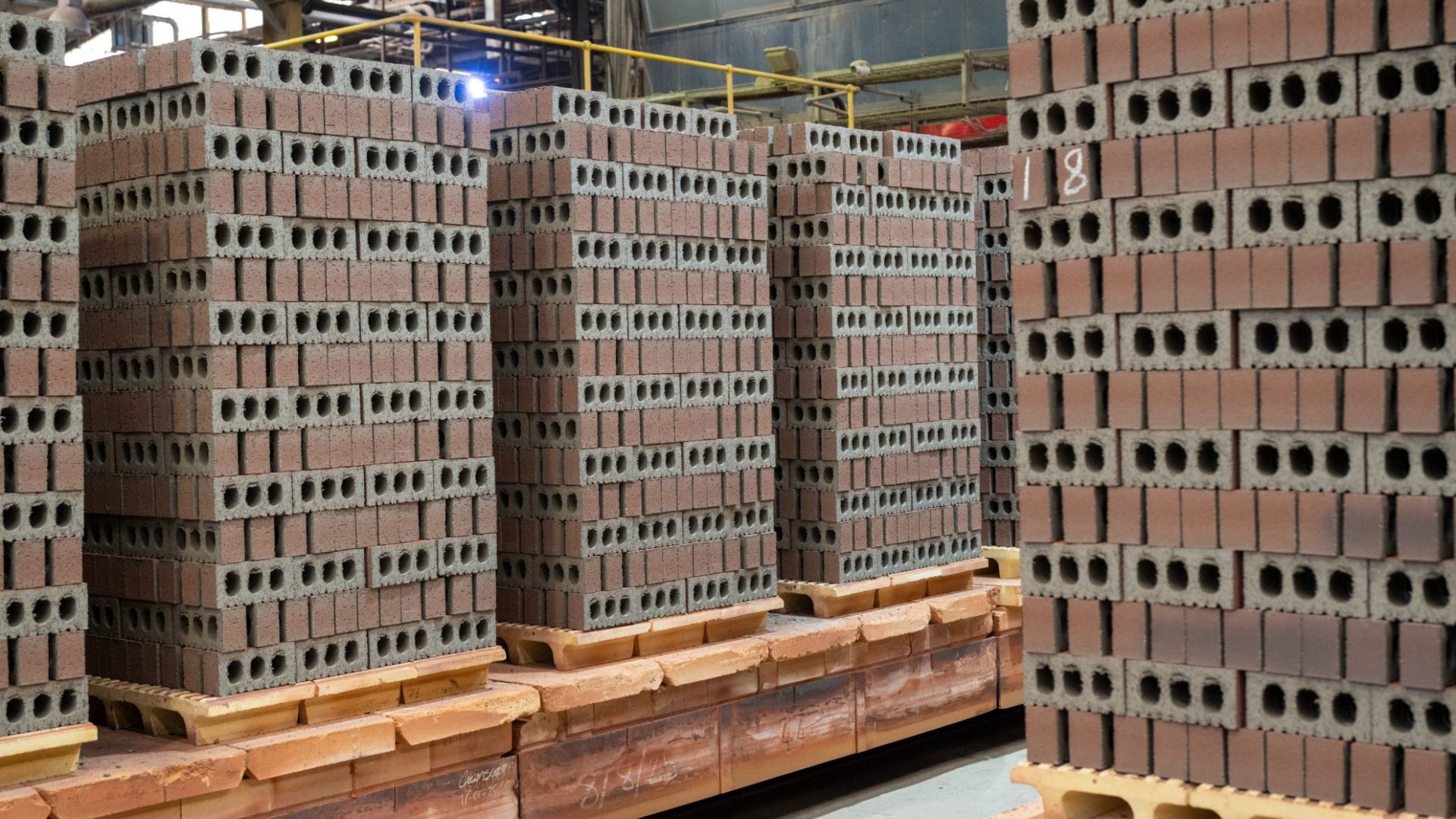
The conversion of a brick factory in the United Kingdom to operate with green hydrogen, with an investment of 6 million pounds and a goal to cut 11.6 thousand tons of CO₂ per year, puts the ceramic industry at the center of the race for less polluting industrial processes
The United Kingdom will host the world’s first commercial-scale hydrogen brick factory, with the modernization of the Wienerberger UK & Ireland unit in Denton, in the Greater Manchester area. The project, aimed at decarbonizing heavy clay production, received government funding and plans to replace natural gas-fired kilns with systems powered entirely by green hydrogen.
The initiative is part of a 6 million pound modernization supported by the UK Government’s Industrial Energy Transformation Fund. Upon completion of the works, the brick factory is expected to position Wienerberger prominently in the use of low-carbon industrial heat, in a move that the company considers decisive for the future of ceramic production.
Brick factory in Denton will be converted to hydrogen
The Wienerberger brick factory in Denton was chosen for a project that the British government considers promising for high-temperature industrial processes. The burning of hydrogen appears, in this context, as a long-term alternative to reduce emissions in energy-intensive industrial activities.
-
Goodbye to the noisy exhaust fan: silent and smart technology transforms modern kitchens with more comfort, design, and efficiency in everyday life.
-
At just 14 years old, a boy creates a system without energy, using steel pipes buried in the ground, that irrigates seedlings with moisture from the air, to combat the water scarcity threatening reforestation in northern China.
-
Anti-tank mines appear near a missile base in Iran, causing fatalities and raising suspicion of a new move to block underground launchers.
-
Contaminated water from uranium threatens mining areas, and Chinese scientists have created a solar-powered living filter that could change environmental decontamination.
According to the company, the unit is expected to serve as a flagship project for the UK ceramic sector. The expectation is that the site will function as a scalable model for future emission reductions in other operations within the company’s production network.
The modernization plans include the adaptation of two existing tunnel kilns. In total, 224 natural gas burners will be replaced with hydrogen-compatible systems, along with the installation of new supply infrastructure and the upgrading of electrical and control systems, without altering the structural integrity of the kilns.
Supply will be made under a 15-year contract
The hydrogen supply for the brick factory is outlined in a 15-year agreement with Trafford Green Hydrogen. This initiative is developed by Carlton Power and Schroders Greencoat, within the Hydrogen Allocation Rounds funding program mentioned by the company.
Fuel deliveries will be made by tank trucks to a dedicated unloading and pressure reduction facility on-site. This arrangement is part of the planned structure to enable operation with the new fuel without changes to the structural base of the kilns.
The timeline released by Wienerberger states that by the fall of 2027, the company intends to have one fully operational kiln with hydrogen or both kilns partially converted. The complete transition to 100% hydrogen burning throughout the factory is expected to begin in the fall of 2028, marking another milestone in the industrial decarbonization process.
Emission reduction and low-carbon materials goal
When the operation is fully adapted, the switch from natural gas to green hydrogen at the Denton unit is expected to reduce CO₂ emissions by more than 11,600 tons per year. According to the company, this equates to a 9% reduction in Wienerberger’s Scope 1 and 2 emissions.
The company also states that the volume of avoided emissions can be compared to the emissions generated by heating nearly 5,000 homes in the UK over a year. The investment was presented as a central part of the company’s long-term strategy to achieve net-zero carbon emissions and meet the demand for low-carbon building materials in the British market.
As the transition progresses, the unit’s teams will undergo specialized training focused on the new safety systems and updated operational procedures. At the same time, tests conducted in a cross-sector research program supported by the UK government and led by Ceramics UK indicated that the fuel switch will not affect product quality.
According to the results mentioned by the company, the strength, appearance, and overall technical performance of the clay bricks should remain consistent. The proposal, thus, is to combine environmental gains with the maintenance of performance standards and the production capacity of the operation.
Company cites operational robustness and expands strategy
In a statement, Keith Barker, COO of Wienerberger, stated that the Denton project is expected to provide substantial reductions in carbon emissions without compromising product quality, production capacity, and operational robustness. According to him, the initiative represents the company’s commitment to innovative technologies and sustainable practices aimed at the future of construction and industry.
Alongside the conversion of the brick factory in Denton, the company is also developing the UK’s first fully electric tunnel kiln for tile production at the Broomfleet unit. Wienerberger presents this move as part of a multi-technology strategy to achieve net-zero carbon emissions by 2050.







Seja o primeiro a reagir!