





 Portuguese
  English
  Spanish
  6 min of reading
  0 comments


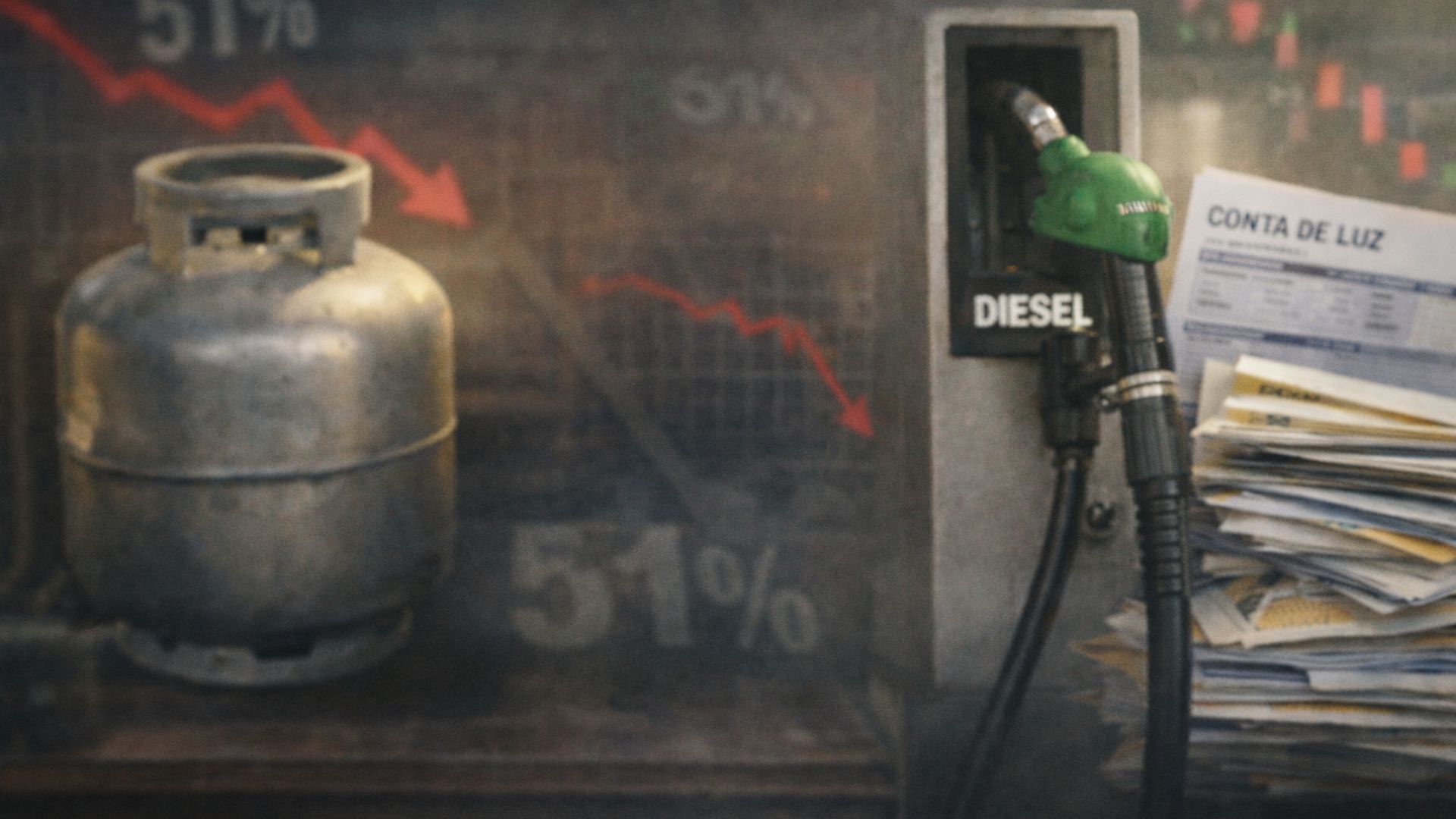
Record disapproval, family indebtedness, and measures to relieve the burden put the cost of living back at the center of the presidential dispute, while the Planalto tries to transform social programs, energy, fuels, and credit into quick responses to the wear captured by electoral research.
Six months before the 2026 presidential election, the government of Luiz Inácio Lula da Silva is trying to react to the wear shown by surveys with an agenda of measures aimed at immediate relief of the cost of living.
The movement comes after Ipsos-Ipec recorded, in March, 51% disapproval of the way the president governs, against 43% approval, a scenario that put the Planalto in a more uncomfortable position than observed in previous cycles when the PT sought to maintain power.
According to O Globo newspaper, the strategy includes actions already implemented and others in preparation or discussion within the government.
-
The chamber approves a project that transforms plots of up to 2,000 square meters into official rural properties, allowing thousands of small producers who were invisible to the government to now access credit, tax exemptions, and technical assistance.
-
Factory 52, in the USA, cost over $5 billion, covers 270,000 square meters, and manufactures cutting-edge chips: it was named Project of the Year by the world’s largest engineering magazine, marking the global race for semiconductors.

-
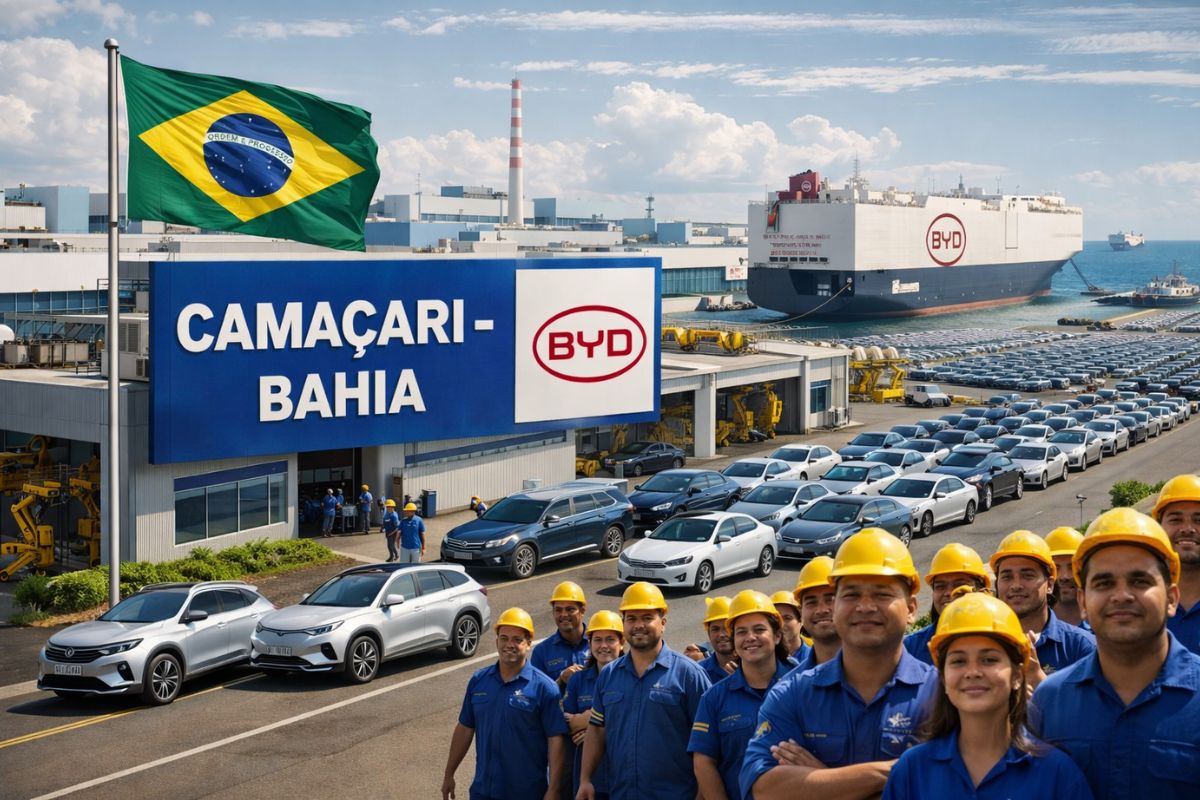
While BYD lays off 100,000 in China due to falling profits, the factory in Brazil remains strong: the unit in Camaçari, Bahia, could generate up to 20,000 jobs and become an export hub for all of Latin America.
-
The two largest powers of BRICS are putting rivalries aside: China and India are making historic advances in rapprochement and plan to use their consecutive presidencies of the bloc to deepen ties and reshape the global balance of power.
Among them are the expansion of Gas for the People, a new debt renegotiation program with discounts that can reach 80%, the defense of mechanisms to contain the rise of imported diesel, and the attempt to transform into political gain initiatives such as the new income tax exemption threshold and the debate on ending the 6×1 scale.
The backdrop is ambiguous.
On one hand, the country exhibits low unemployment, rising average income, and inflation under control compared to previous years.
On the other hand, families continue to be pressured by high interest rates, record indebtedness, and a persistent sense of budget tightening, a mismatch that helps explain why the improvement in macroeconomic indicators has not yet converted, to the same extent, into government approval.
Debt renegotiation becomes central bet of the Planalto
Among the fronts under study, debt renegotiation appears as one of the most sensitive for the electorate.
Recent data from the Central Bank shows that the commitment of family income to debt payments reached 29.33% in January, the highest level in the historical series that began in 2005.
In this environment, the Ministry of Finance has begun to design a new version of Desenrola, now with a simpler format and expected discounts of up to 80% on part of the debts.
The government’s bet is that the renegotiation will resonate with a concrete difficulty of daily life, even though the job market is heated.
In the quarter ending in February, the unemployment rate stood at 5.8%, the lowest result for this period since the beginning of the PNAD Continuous series, and the usual real income reached R$ 3,679.
Even so, the weight of installments, interest, and default remains high, which limits the perception of material improvement by a significant portion of the population.
When discussing this financial stranglehold, Lula resorted to an argument already used by the government to explain popular discontent.
According to the president, small monthly expenses end up accumulating and, at the end of the month, create the feeling that the salary disappears without leaving any surplus.
The Planalto’s reading is that this malaise, although diffuse, politically falls on those who are in command of the country.
Cooking gas, electricity bill, and diesel are in the package
In the field of basic consumption, Gas for the People has gained weight as one of the social showcases of the pre-election stretch.
Launched in 2025, the program started with a smaller initial reach but was expanded and began to serve nearly 15 million families in March 2026, according to the federal government.
The policy replaced financial transfers with direct withdrawals of the 13-kilogram gas cylinder at accredited resellers, increasing the visibility of the benefit in an item of strong impact on the household budget.
In energy, the Planalto is also looking to explore a practically effective agenda.
The Light for the People program, sanctioned in October 2025, guaranteed total exemption from the electricity bill for low-income families registered in CadÚnico with consumption of up to 80 kWh per month, in addition to increasing discounts for other groups.
The law was presented by the government as a tool to reduce so-called energy poverty, but aides are still discussing ways to soften adjustments and preserve the political gain of the measure in an election year.
As for diesel, the government reached an agreement with most states on a temporary proposal for subsidies for imported fuel to contain price pressures.
The disclosed design provides for a total subsidy of R$ 1.20 per liter for two months, equally divided between the Union and state governments.
The concern is twofold: to avoid direct irritation among drivers and to reduce the impact on freight and product prices in a country that heavily relies on road transport.
Blouse tax, free flow toll, and income tax enter the strategy
At the same time as expanding benefits, the government is reassessing issues that have generated wear.
One of the most sensitive is the so-called “blouse tax”, a tax on international purchases of up to $50.
The topic returned to the Planalto’s agenda in 2026 because the measure has become a frequent target of the opposition and has begun to be seen internally as one of the political mistakes with the greatest repercussions among low and middle-income consumers connected to e-commerce.
Another ongoing discussion involves the free flow toll system.
Members of the government have begun to advocate for the suspension of fines imposed on drivers who did not pay the automatic toll without a barrier, a topic that gained political contours in recent weeks.
The idea, according to reports on the internal discussion, is to reduce the irritation caused by a billing model that expanded faster than the average user’s familiarity with the payment rules.
In the tax field, Lula’s team is trying to turn the new income tax exemption threshold into an electoral asset.
The rule that eliminates the tax for those earning up to R$ 5,000 per month came into effect in January 2026.
According to the government, more than 10 million people have become completely exempt, while the total number of beneficiaries reaches about 15 million, also including those who had a reduction in the amount owed.
The labor agenda has also been incorporated into the strategy.
Lula and ministers have begun to publicly advocate for advancing the debate on ending the 6×1 scale, with a reduction of the weekly workload from 44 to 40 hours, a proposal that the government wants to take to Congress.
Although the topic involves complex negotiations with the productive sector, it has been treated as a banner with strong appeal among urban workers and young employees in commerce and services.
High disapproval changes the logic of the electoral race
The current scenario contrasts with the cycles in which the PT managed to maintain the Palácio do Planalto.
In 2006, Lula was re-elected.
In 2010 and 2014, the party won with Dilma Rousseff.
Now, the president reaches the final half of the journey with disapproval above 50%, something uncommon for an incumbent seeking re-election.
For political scientist Carlos Melo from Insper, today’s electoral environment is more unstable than it was two decades ago and has made the logic of re-election less automatic.
Melo states that “there is today an instability, a volatility that did not exist at the beginning of the century” and assesses that the mere display of good numbers is no longer sufficient to produce lasting political adherence.
In his view, the government is right to try to speak directly to the voter’s pocket, but still faces difficulty in selling an image of the future capable of overcoming the accumulated wear of the present.
The comparison with Jair Bolsonaro remains another axis of the PT’s communication.
In the ministerial meeting at the end of March, the Minister of the Civil House, Rui Costa, demanded more clarity in this contrast by saying to Sidônio Palmeira: “My doubt, Sidônio, is whether the people know this. I think we need to focus on comparing and showing.”
The statement exposed the evaluation, within the government, that part of the deliveries has not converted into sufficient social perception.
Bolsonaro, when he attempted re-election, faced even worse ratings at the end of 2021, with 27% approval according to Ipec, but managed to narrow the gap with his opponent in 2022 after measures of strong fiscal and social impact.
The precedent fuels expectations in the Planalto that benefits concentrated in the daily life of the voter may reduce resistance to Lula, even if they do not eliminate the weight of the rejection already crystallized in surveys.



Seja o primeiro a reagir!