





 Portuguese
  English
  Spanish
  5 min of reading
  0 comments


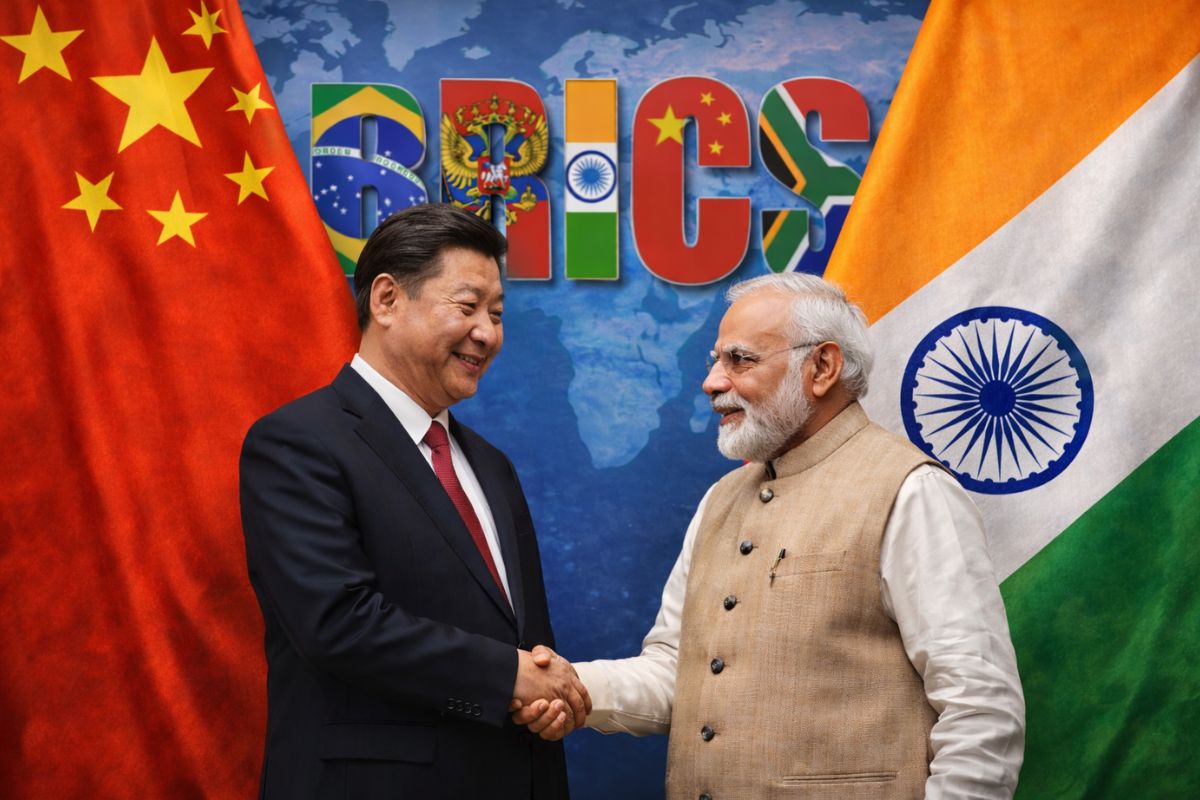
The Chinese Consul General in Mumbai declared that the BRICS summits in India and China will open special opportunities to strengthen the friendship between the two countries while senior officials on both sides have already agreed to mutually support each other in the consecutive presidencies of the bloc in motion that could reshape global geopolitics.
The two largest powers of BRICS are doing something that few analysts considered likely just a few years ago: genuinely coming closer. According to information from the portal TV Brics, the Chinese Consul General in Mumbai, Qin Jie, stated that the upcoming BRICS summits in Delhi this year and in China in 2027 will provide the two countries with “special opportunities to deepen ties and friendship, helping to achieve progress for the good of our peoples and for global stability.” This is not generic diplomatic rhetoric; it is the latest sign of a rapprochement that has been built through bilateral meetings, strategic dialogues, and declarations of mutual support.
The context makes this movement even more significant. China and India are historical rivals with territorial disputes, military tensions along the Himalayan border, and geopolitical interests that often collide. That these two countries are coordinating their consecutive presidencies of the BRICS to strengthen bilateral relations is a change in posture that could have profound consequences for the global balance of power and for the future of the bloc itself as a platform for global influence.
What is behind the rapprochement between China and India within BRICS
The rapprochement did not happen overnight. The last bilateral meeting between Chinese President Xi Jinping and Indian Prime Minister Narendra Modi took place in August 2025 in Tianjin, China, on the sidelines of the Shanghai Cooperation Organization summit.
-
Federal state-owned companies accumulate a record deficit of R$ 5.9 billion in just 4 months, the worst result for the period since 2002, while Correios faces a loss of R$ 8.5 billion and financial restructuring.

-
In 2026, Brazil became the number one destination for Chinese capital abroad, with 52 megaprojects totaling 6.1 billion dollars in mining, railways, energy, and ports, in a silent advance that could compromise national logistics corridors.

-
Selling cooking gas in smaller portions and refilling cylinders of any brand are proposals under review by the ANP that divide the sector, with resellers promising cheaper prices for consumers and the Ministry of Mines and Energy warning of risks of fraud and infiltration of factions in the market.

-
The Porto Belo City Council, in Santa Catarina, purchased 11 luxury iPhones at R$ 11,299 each for the councilors and justifies the R$ 124,000 expense as part of a project to eliminate paper, in a spending that draws attention because the same device is sold for around R$ 9,000 in stores.


In February 2026, senior officials from both countries held a new round of Sino-Indian strategic dialogue in New Delhi, where they agreed on something unprecedented: to mutually support each other in the BRICS presidencies in 2026 and 2027.
In March, China’s Foreign Minister Wang Yi reinforced the message by publicly calling for strengthening cooperation between New Delhi and Beijing.
Each step in this diplomatic sequence points in the same direction: China and India have decided that BRICS is the most strategic ground to advance bilateral relations, using the bloc as a platform to demonstrate to the world that the two largest emerging powers in Asia can work together when interests converge.
What the consecutive presidencies of BRICS mean in practice
India officially assumed the presidency of BRICS on January 1, 2026, and China will take over in 2027.
The BRICS summit under Indian presidency is scheduled for September this year in Delhi, with the meeting of the group’s foreign ministers set for May, according to the representative of the Russian Ministry of Foreign Affairs, Maria Zakharova.
In practice, this means that China and India will have two consecutive years defining the agenda, priorities, and tone of BRICS.
A bloc that already includes Brazil, Russia, South Africa, and the newly expanded members will have its agenda determined precisely by the two powers that are growing the most demographically and economically on the planet.
If they use this period to coordinate positions on issues such as reforming the international financial system, trade in local currencies, and governance of multilateral institutions, the impact will be felt far beyond the bloc’s limits.
Why this rapprochement could reshape the global balance of power
China and India together represent more than a third of the global population and two of the fastest-growing economies in the world.
When they are at odds, BRICS loses cohesion and capacity for influence. When they coordinate, the bloc becomes the largest platform for articulation of the so-called Global South — with enough weight to push for reforms in institutions like the IMF, the World Bank, and the UN Security Council.
The rapprochement also has a dimension that goes beyond BRICS. At a time when the United States imposes tariffs, competes for influence in the Asia-Pacific, and pressures allies to choose sides, seeing China and India coordinating positions within BRICS sends a clear geopolitical message: the two largest emerging powers prefer to build bridges between themselves rather than compete for Washington’s favor.
This does not mean that rivalries have disappeared; the border dispute in the Himalayas remains unresolved, but it indicates that both countries have calculated that strategic cooperation within BRICS is worth more than maintaining a permanent confrontation.
The limits of rapprochement and what could go wrong in BRICS
Despite the positive signs, caution is needed. China and India have a long history of diplomatic rapprochements that did not survive the first crisis. The disputed border in the Himalayas, with the deadly Galwan incident in 2020 still fresh in memory, remains a powder keg that could explode at any moment and undo months of diplomatic building.
Within BRICS itself, there are tensions that Sino-Indian coordination does not automatically resolve. The expanded bloc has members with divergent interests, and not everyone views the predominance of China and India in setting the agenda favorably.
But the fact that the two largest powers of BRICS are investing real political capital in this rapprochement with strategic dialogues, declared mutual support, and coordinated presidencies suggests that both sides calculate that the gains outweigh the risks.
If they can maintain this trajectory during the two years of consecutive presidencies, BRICS could emerge from 2027 as a very different and more influential bloc than it entered in 2026.
What do you think: is the rapprochement between China and India in BRICS lasting or will it crumble at the first crisis? Leave your opinion in the comments.


Be the first to react!