






 Portuguese
  Spanish


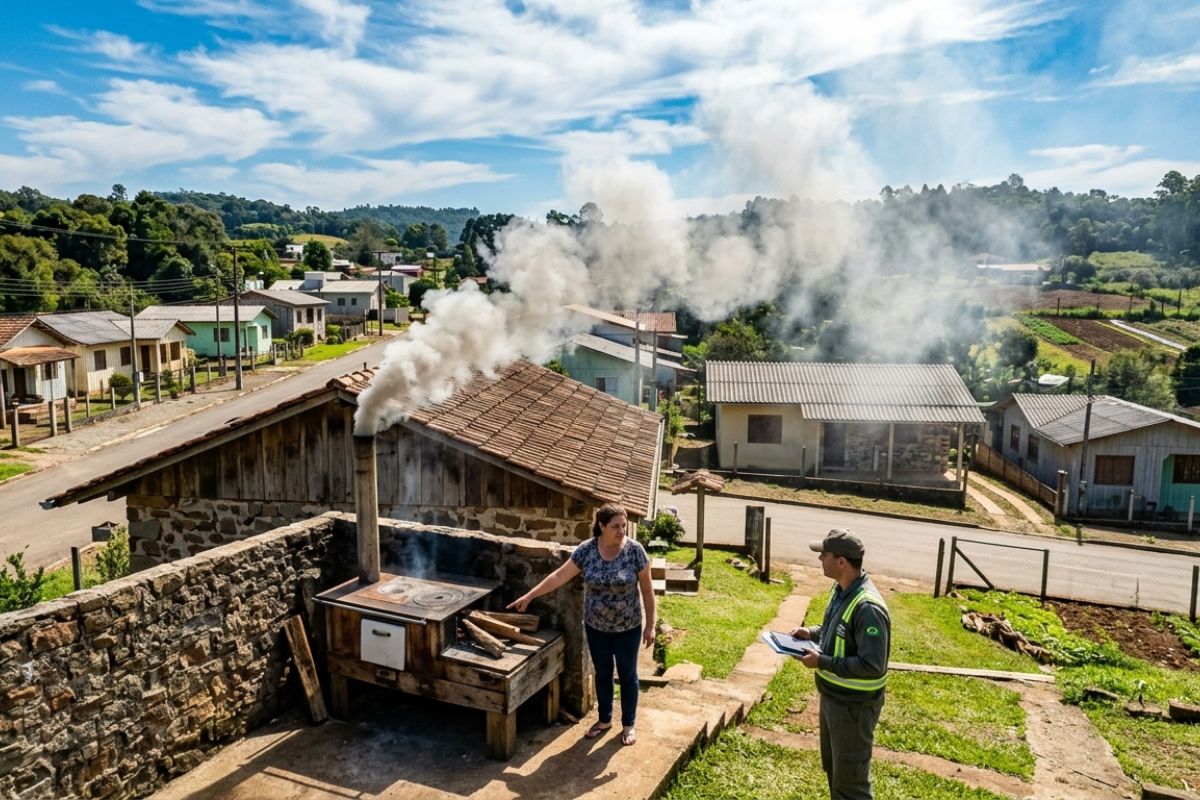

Wood-burning stoves have not been prohibited in Brazil, but excessive smoke, irregular burning, and urban use can lead to fines, and enforcement varies according to the agency and the inspector
The wood-burning stove has become the target of rumors and fear because many people heard “fines of up to R$ 10,000” and concluded that it has become a crime. However, the real discussion is different: the focus is not on the wood-burning stove, but on the pollution generated when its use deviates from the appropriate domestic standard.
In practice, environmental legislation already provides for penalties for those who cause pollution that can harm human health or the environment. This is where smoke comes into play as a point of inspection, especially when there is burning of inappropriate materials, makeshift structures, and direct impact on neighbors, especially in urban areas.
Why wood-burning stoves are still common in Brazil

The wood-burning stove is not just a tradition. It is present in the daily lives of millions of people, especially in rural areas and in colder regions of the country. Data from IBGE is cited as an indication that a significant portion of the population still cooks with wood or charcoal, reinforcing that this use is not an exception.
-
Security Guard Becomes Doctor at Louisiana Hospital Where He Once Worked, Studied Chemistry Between Shifts

-
Woman Rescued from Luxury Complex in Brazil Worked Without Pay for 55 Years, May Be Entitled to Over $300,000

-
Brazilians in Portugal Face Increased Police Checks as Consulate Advises Carrying Documents; Long-term Resident and Tourist Report Heightened Scrutiny in Porto.

-
Russia Proposes Bold Energy Transition Plan at BRICS, Citing $8 Trillion Annual Cost for 2050 Global Target



In states like Santa Catarina, Rio Grande do Sul, and Paraná, the wood-burning stove also serves as a heating source in winter. In many cases, it is not a “luxury”: it is a necessity, whether due to cost or lack of accessible alternatives.
Where the confusion about fines and environmental crime begins
The law was not created to prohibit wood-burning stoves. It was created to combat pollution. The noise arises when public discussion oversimplifies and turns a technical issue into a narrative.
What can lead to enforcement is not the simple act of cooking with wood. What raises the alarm is the scenario in which smoke gets out of control and becomes irregular emission, especially when there is risk to health or environmental impact.
When the wood-burning stove can become a problem for inspection
There are situations cited as triggers for classification and fines. The central point is the manner of use.
Burning of inappropriate materials
Plastic, garbage, treated wood, and other materials outside the standard significantly increase the risk of pollution. This completely changes the classification, as it ceases to be traditional domestic use and becomes irregular burning.
Structure without proper chimney
Without proper exhaust, smoke tends to concentrate and cause more discomfort, especially in urban areas. Here, the problem is not the existence of the wood-burning stove, but the lack of structure to reduce emissions in the surrounding area.
Constant use in dense areas
In places with high population density, smoke can more easily impact neighbors. In these cases, inspection may occur due to complaints, inspections, or routine checks by local agencies.
Why “the rule changes according to the local inspector”
Environmental inspection in Brazil is decentralized. It can be conducted by municipal and state agencies, such as environmental secretariats and foundations, and in some cases by IBAMA. This means that there is no identical application throughout the country.
In urban areas, there are records of inspections related to smoke and irregular burning. In rural areas, the tendency is to be more flexible. The problem is that when the norm depends on interpretation, a feeling of insecurity arises: the risk is not only in the law, but in how it is applied.
Domestic use is not equal to irregular burning
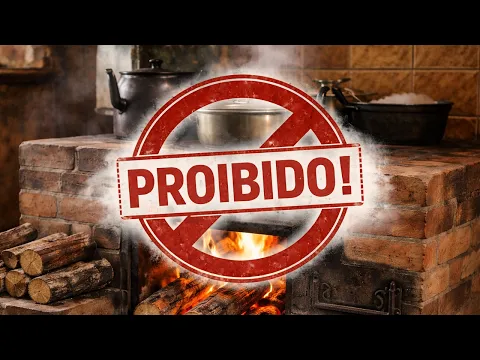

There is an important difference between suitable wood and garbage. There is a difference between correct structure and makeshift setups. And there is a difference between a wood-burning stove used traditionally and a use that generates smoke at levels that affect air quality.
Therefore, the debate needs to be technical. The point is not to criminalize a cultural practice, but to reduce harmful emissions when they occur due to inappropriate use.
What is clear so far
Wood-burning stoves have not become a crime. But there may be fines in specific cases, depending on the situation, recurrence, and impact, within an inspection that varies by region.
The fact that the doubt has gone viral reveals something bigger: there is a lack of clarity, and excess noise, and those in the field or maintaining the tradition end up being pulled into a discussion often made far from local reality.
Does the wood-burning stove still play a part in your routine, or have you left it in the past?


