





 Portuguese
  English
  Spanish
  7 min of reading
  0 comments


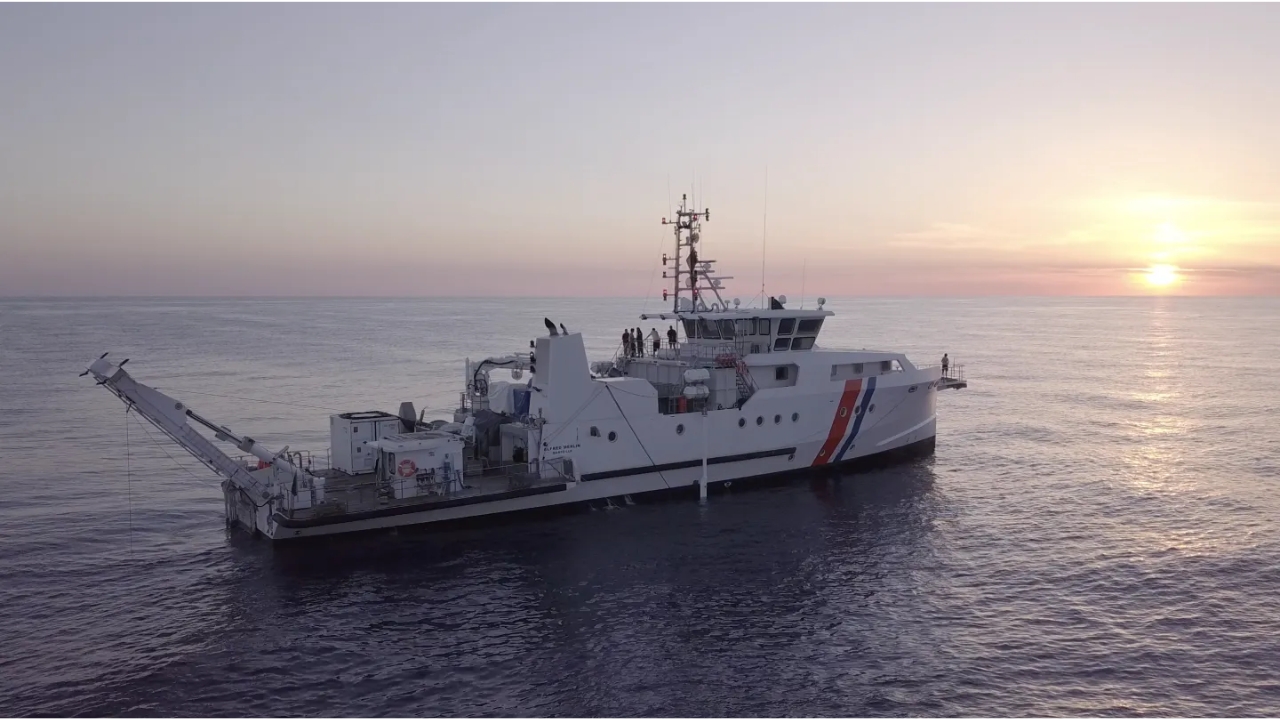
UNESCO leads the largest underwater archaeological mission ever conducted in the Mediterranean: eight countries mapped shipwrecks in the Skerki Bank, between Italy and Tunisia, to protect a historic corridor that holds centuries of trade, wars, and mysteries.
Between Sicily, in southern Italy, and the coast of Tunisia, there is a stretch of sea that for centuries was one of the most strategic passages in the Mediterranean. It was here that merchants, armies, navigators, and empires circulated. Today, this same corridor has returned to the spotlight for another reason: it has become the target of the largest and most ambitious underwater archaeological mission ever coordinated by UNESCO.
The operation took place in the so-called Skerki Bank, an underwater area of the Sicilian Channel known for decades for hiding remnants of sunken vessels from different periods of history. What makes the mission extraordinary is not just the location, but the scale of the action: eight Mediterranean countries have come together to map shipwrecks, document the seabed, and create concrete protection measures for a heritage that has remained hidden underwater for centuries.
More than a simple scientific expedition, this is an international operation that blends archaeology, technology, diplomacy, and historical preservation. And this helps explain why the initiative attracts so much attention: it brings together sea, mystery, submerged ruins, and a rare multinational cooperation around a shared heritage.
-
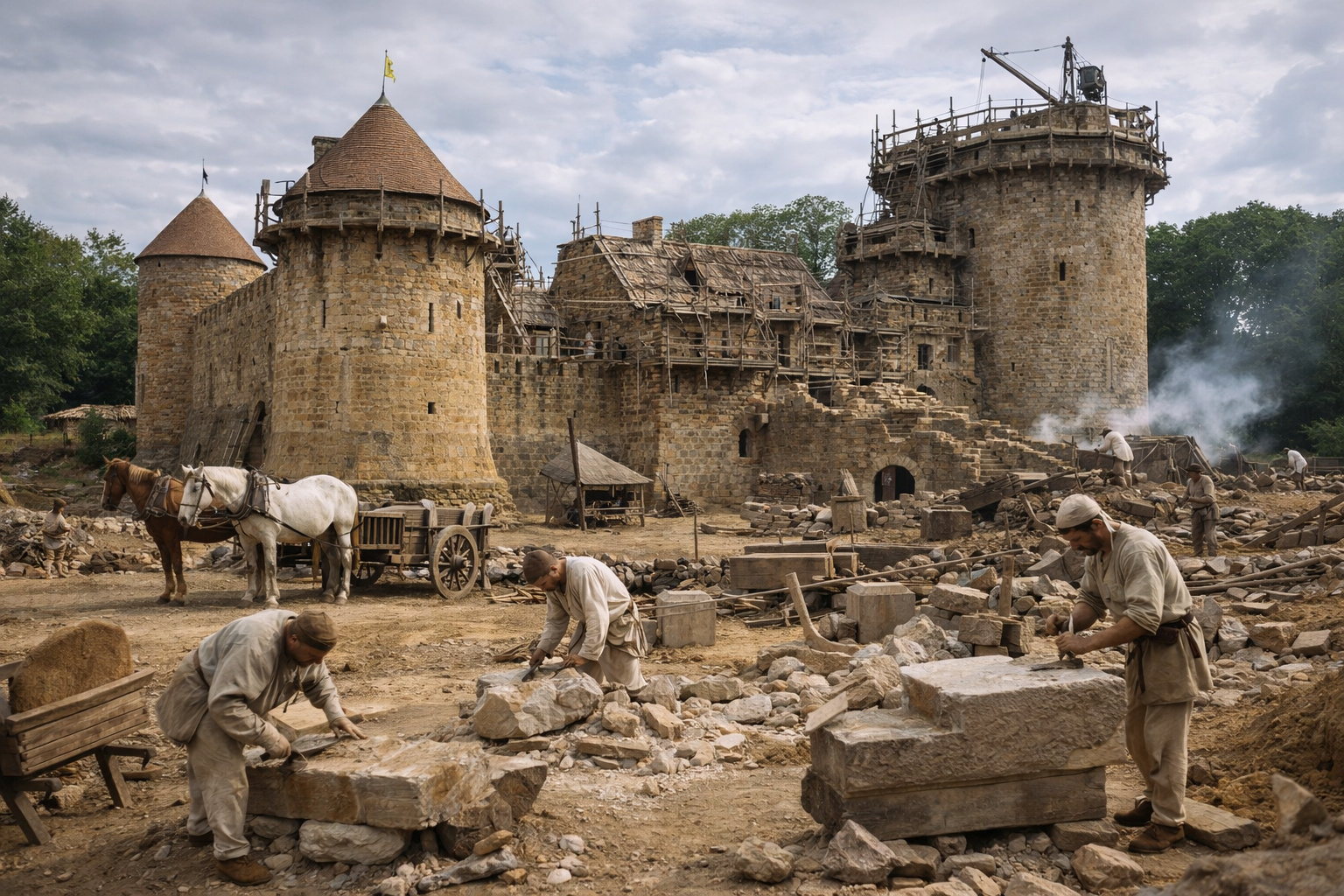
In France, a group of artisans spends 28 years building a medieval castle with 13th-century tools, without machines, without measuring tapes, and with almost zero carbon footprint, and the rediscovered techniques helped in the reconstruction of Notre-Dame.
-
Tourists on Everest were poisoned by guides who mixed substances in food to provoke false symptoms of altitude sickness while helicopter operators and hospitals charged inflated rescue fees to insurance companies.

-
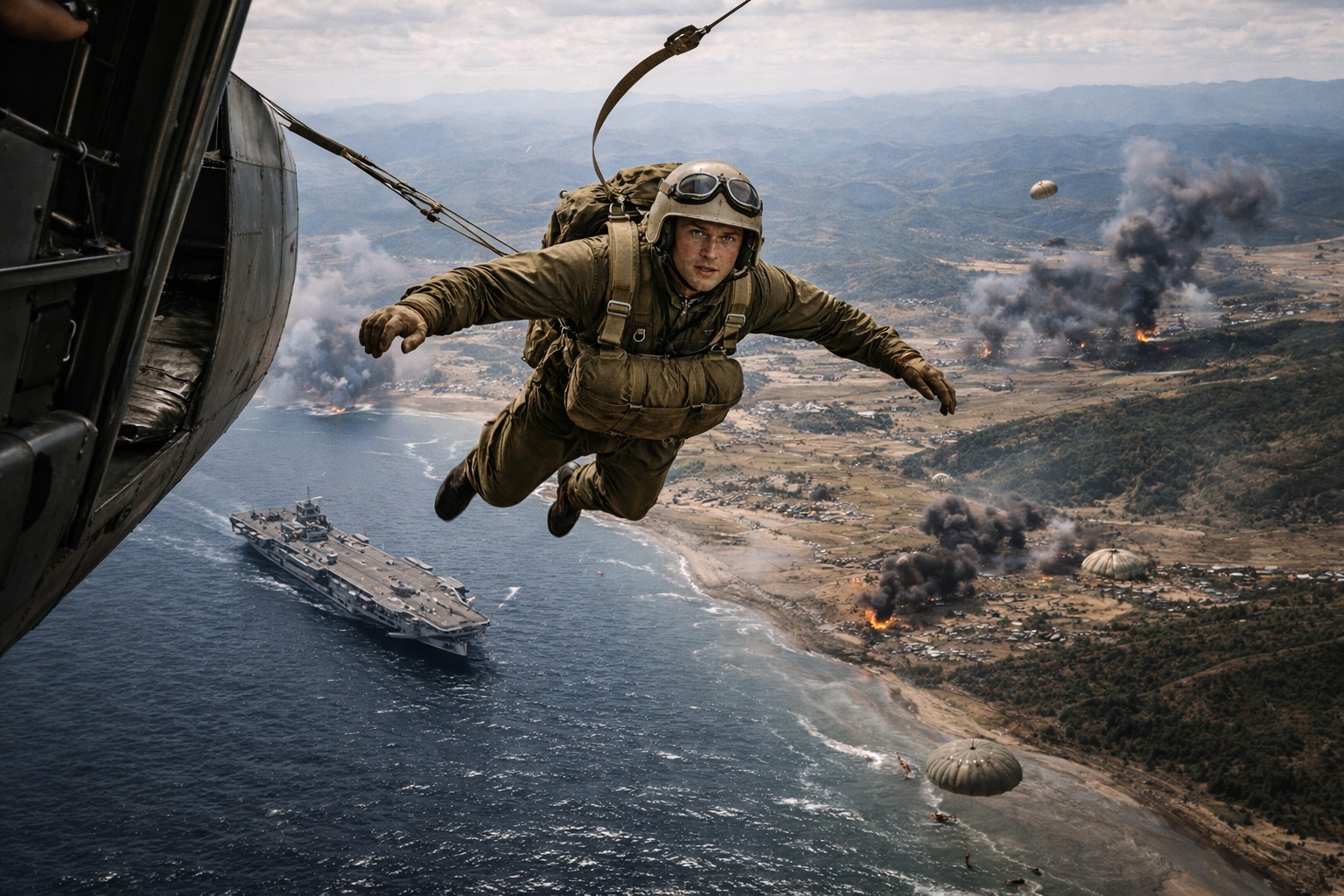
Few people know this, but Neil Armstrong, one of the most famous NASA astronauts in history, survived the Korean War after jumping from the plane during his seventh combat mission aboard the USS Essex aircraft carrier of the United States.
-
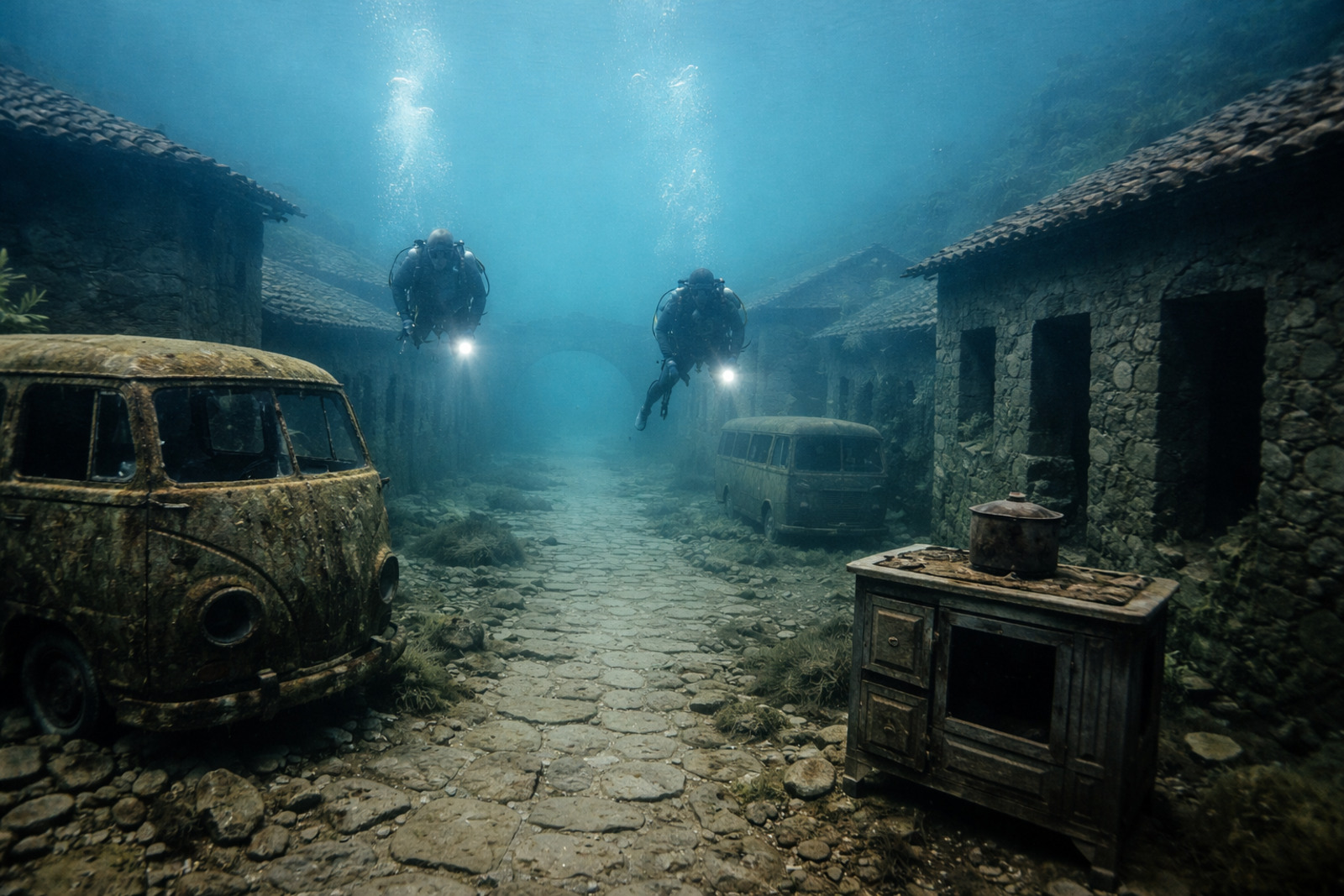
Diving with a camera in Lake Furnas reveals a submerged city with an entire street, almost intact houses, a preserved bridge, a wood stove, a Kombi, and even a bus at the bottom of the largest lake in the Southeast.

A historical corridor that functioned for millennia
The Skerki Bank is located in a maritime zone that, throughout history, connected North Africa to the Italian peninsula and Sicily. This position transformed the region into a kind of “maritime highway” of Antiquity and later periods. Merchant ships, military vessels, and boats from different origins crossed this stretch for centuries.
But there was a problem: the area was also dangerous. The rocky seabed and treacherous geography made the Skerki Bank a high-risk point for navigation. The result was an impressive accumulation of shipwrecks. Instead of disappearing completely, many of these remains were preserved on the seabed, forming a kind of submerged archive of Mediterranean history.
It is precisely this contrast that makes the area so fascinating: the same place that connected peoples and economies also functioned as a deadly trap for ships.
The largest mission ever coordinated by UNESCO

UNESCO classified the expedition as the largest and most ambitious ever carried out under its coordination to protect underwater cultural heritage. The initiative involved Algeria, Croatia, Egypt, France, Italy, Morocco, Spain, and Tunisia.
This detail is central. The project was not conducted by a single country interested in its own waters, but by a group of nations that recognized the collective value of what lies submerged in that region. This transforms the mission into something greater than archaeology: it also becomes an example of international cooperation in the Mediterranean.
In practice, the operation demonstrated that heritage located on the seabed, especially in areas of common interest, requires joint responses. Ancient shipwrecks do not belong solely to the nearest country; they often tell stories that connect various cultures, trade routes, and civilizations at the same time.
What the team found on the seabed
The results of the mission helped confirm something that archaeologists had already suspected: the Skerki Bank is one of the richest points in the Mediterranean in terms of naval remnants.
The expedition documented six shipwrecks, with chronologies ranging from Antiquity to the 20th century, and identified three vessels previously unknown to archaeologists. One of the finds was dated between the 1st century BC and the 2nd century AD, a period when Rome dominated much of the Mediterranean routes. The other two appear to belong to much more recent periods, between the 19th and 20th centuries.
This chronological contrast is one of the most impressive aspects of the mission. The seabed does not hold just a specific moment in history, but a long sequence of maritime losses accumulated over more than two thousand years. In the same underwater corridor, it is possible to find remnants of Roman trade, modern navigation, and even conflicts related to the 20th century.
In other words, Skerki is not just an archaeological site: it is a condensed panorama of Mediterranean history.

Cutting-edge technology to explore an invisible past
Another striking point of the operation was the use of advanced technology. The mission employed sonars, high-resolution imaging systems, and underwater robots to investigate deep areas that cannot be studied by conventional diving archaeology.
This makes all the difference. For a long time, many deep-water shipwrecks were practically out of reach of detailed research. Today, with more sophisticated equipment, it is possible to map the terrain, locate remains of vessels, capture images of the site, and assess the condition of the wreckage without removing pieces from their location.
This model is important because modern underwater archaeology is increasingly moving away from the logic of “recovered treasure” and closer to the idea of documentation and preservation. The main goal is not to take objects from the sea for display, but to understand the site as a whole and protect it from destruction.
Why UNESCO decided to act now
The urgency of the mission is directly related to the risks threatening this heritage. Submerged shipwrecks are not protected simply by being on the seabed. Many suffer from looting, trawling, economic exploitation of the seabed, and environmental degradation.
UNESCO stepped in regarding the Skerki case precisely to strengthen international protection of the area. The project connects to the 2001 Convention on the Protection of the Underwater Cultural Heritage, created to prevent the commercial exploitation of submerged archaeological remains and encourage responsible scientific research.
This point is decisive. For a long time, the popular image of shipwrecks has been associated with gold, relics, and treasure hunting. UNESCO’s proposal goes in the opposite direction: to treat the seabed as historical heritage, not as an antiques market.
Much more than archaeology: a story of connected civilizations
Perhaps the most powerful aspect of this mission is what it symbolizes. The Skerki Bank shows that the Mediterranean has never been just a separation between Europe and Africa. It has always functioned as a zone of intense contact between shores, peoples, and cultures.
Each shipwreck found there helps to tell this story. A sunken hull, a lost cargo, or the location of a vessel can reveal how wine, ceramics, metals, food, soldiers, and ideas circulated between different Mediterranean regions.
Therefore, protecting these sites does not mean just preserving ancient ruins. It means protecting concrete evidence of how civilizations met, exchanged goods, contested power, and built a common history.
A model for the future
The mission in the Skerki Bank can also serve as a reference for other regions of the world. The operation demonstrated that it is possible to bring together several countries around a shared goal of underwater research and preservation.
This model is likely to become increasingly important. As new technologies facilitate access to the seabed, the need for clear rules, scientific cooperation, and international protection mechanisms also grows.
In the case of Skerki, what has been done does not close the story — it opens a new chapter. The data collected can still generate years of study on ancient routes, commercial cargoes, naval techniques, and deterioration processes in the marine environment.
A sea that still holds secrets
The most fascinating thing about all this is realizing that, even in one of the most studied seas on the planet, there are still discoveries capable of surprising. The Mediterranean is a central space for the history of humanity, but it continues to hide entire chapters underwater.
The mission coordinated by UNESCO in the Skerki Bank shows exactly this: the past has not disappeared, it has only sunk. And now, with science, international cooperation, and cutting-edge technology, it begins to emerge again — not as a spectacle, but as knowledge.
In the end, perhaps this is the greatest strength of this story. It is not just about ancient shipwrecks. It is about a piece of the Mediterranean transformed into a living archive of human memory, where each wreck on the seabed helps to reconstruct thousands of years of trade, conflict, crossings, and encounters between continents.









Seja o primeiro a reagir!