





 Portuguese
  English
  Spanish
  5 min of reading
  0 comments


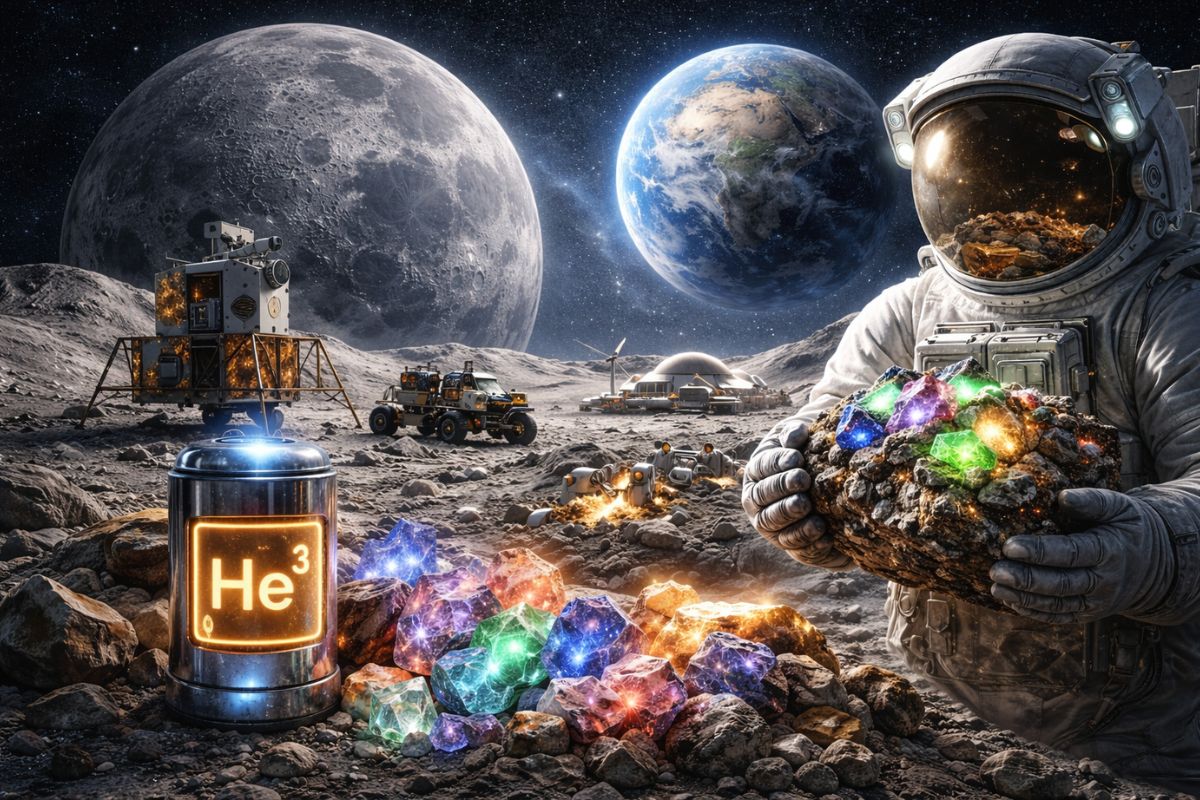
The Moon concentrates rare earth minerals used in 99% of electronic devices and Helium-3, called “the gold of the Moon,” a clean and carbon-free fuel that is rare on Earth. More than 70 countries are already participating in agreements for lunar exploration, and Brazil is trying to enter the race with satellite and agriculture projects on lunar bases via partnership with NASA.
The Moon has rare earth minerals, the same chemical elements that power 99% of the electronics you use daily: cell phones, televisions, cameras, computers. In addition to rare earth minerals, the satellite concentrates reserves of Helium-3, an isotope called “the gold of the Moon” and considered the fuel of the future, a clean, efficient energy source with no carbon emissions that is extremely rare on Earth. These resources are why humanity has returned to look at the Moon with economic interest, not just scientific.
According to the G1 portal, the lunar race is no longer fiction. More than 70 countries are already participating in cooperation agreements for the exploration of the satellite, led by the United States and China. The Artemis II mission, launched this Wednesday (1st), marked the resumption of crewed flights around the Moon after more than 50 years. And Brazil is trying not to be left out: the Brazilian Space Agency is negotiating a bilateral agreement with the USA to send two national projects to the Moon throughout the Artemis program: a scientific satellite and an agriculture experiment on lunar bases.
Rare earth minerals on the Moon: why 99% of your electronics depend on what exists on the satellite
According to Alexandre Cherman, director of the Planetarium of Rio, the answer for the renewed interest in the Moon lies in economic viability.
-
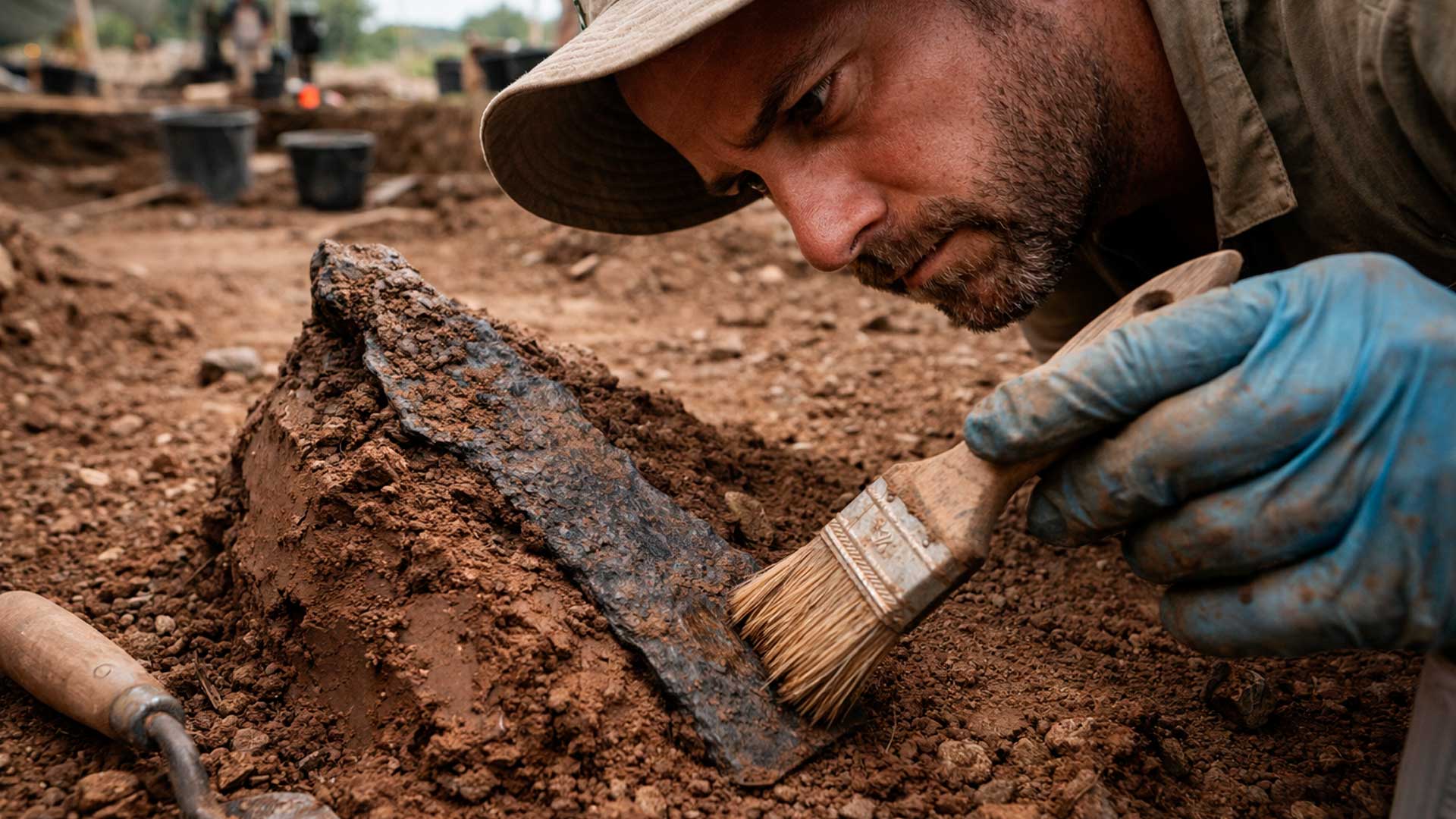
Scientists reveal an impossible artifact for its time made with iron from space, and the discovery reignites a historical debate about the Bronze Age in China.
-
The humanoid robot G1 has gained a new digital brain that has transformed it into a true domestic worker: it learns by observing the environment, interprets objectives, and executes complete tasks without receiving step-by-step instructions.

-
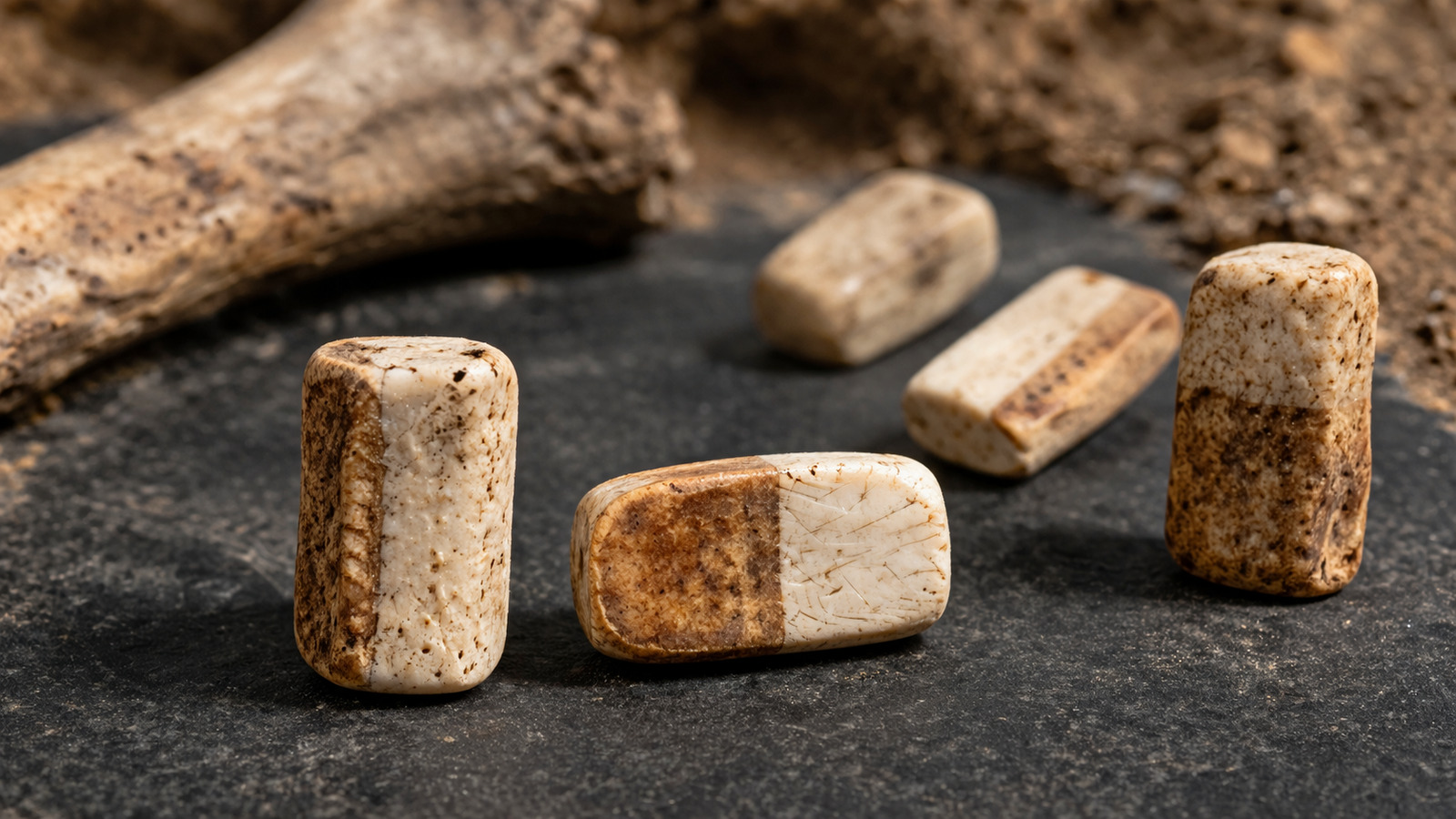
They seemed like common bones, but scientists were surprised to find a relic over 12,000 years old that dates back to before the Bronze Age.
-
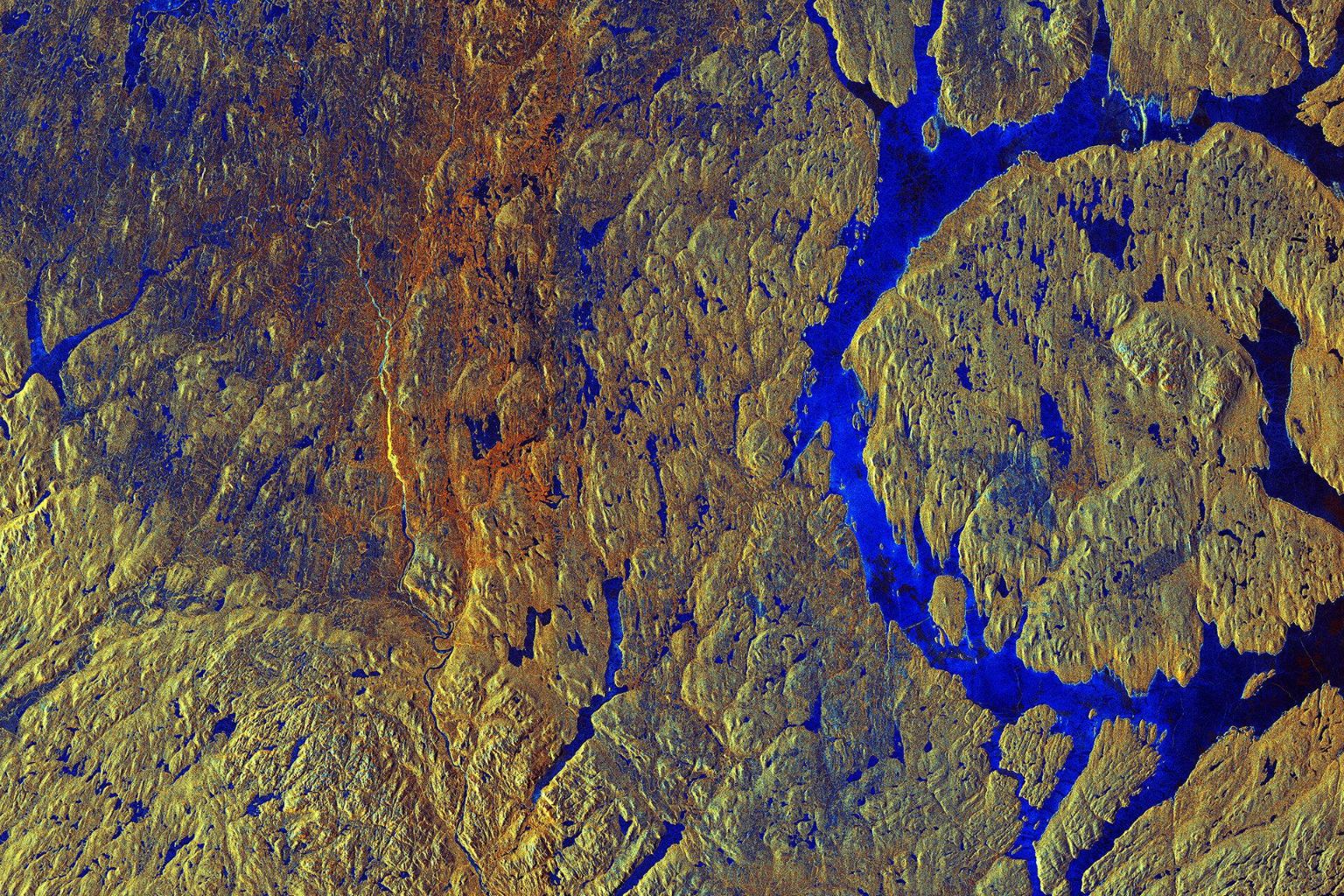
With an almost perfect ring of 70 km visible from space, known as the “Eye of Quebec” and over 100 km in length, the Manicouagan Crater in Canada reveals the colossal mark left by a giant asteroid and has become one of the most impressive formations ever identified on the Earth’s surface.
“Today we know that the Moon has minerals, it has very important chemical elements for the economy of Earth,” explains Cherman.
The rare earth minerals found on the satellite are the same ones that sustain the entire microelectronics industry on the planet; without them, there would be no chips, processors, smartphone screens, or most of the components that make modern technology work.
On Earth, rare earth minerals are already the target of geopolitical disputes; China controls most of the global production and refining, which worries the United States and Europe.
The possibility of accessing reserves of rare earth minerals on the Moon adds a new dimension to this dispute: whoever can extract these resources from the satellite first will have a strategic advantage that could reshape the global economy.
That is why more than 70 countries are already moving towards lunar exploration agreements.
Helium-3: the “gold of the Moon” that could be the fuel of the future
If the rare earth minerals on the Moon are important, Helium-3 is potentially revolutionary. This helium isotope is considered the ideal fuel for nuclear fusion — the nuclear energy of the future, which uses light elements and leaves no radioactive trace. On Earth, Helium-3 is extremely rare. On the Moon, it exists in significant quantities, deposited over billions of years by solar wind on the surface of the satellite.
“The nuclear energy of the future is nuclear fusion, which involves light elements that do not leave a radioactive trace. And Helium-3, which is abundant on the Moon, is very important for this process,” explains Cherman.
Private companies are already moving: a U.S. startup is developing technologies for the extraction of Helium-3 directly from the lunar surface.
The race for rare earth minerals and Helium-3 on the Moon is, therefore, a race for control of the two most strategic sources of wealth for the future: electronics and energy.
Artemis II and the resumption of crewed flights: why humanity returned to the Moon after 50 years
The last time a human set foot on the Moon was in 1972, during the Apollo program. The Artemis II mission, launched this Wednesday, marks the resumption of crewed flights around the satellite and unlike the past, the new space race is driven not only by national pride but by concrete economic interests linked to rare earth minerals, Helium-3, and the possibility of establishing a permanent presence on the Moon.
The expectation is that the Moon will serve as a base for more ambitious missions, especially to Mars. “We will return to the Moon and maintain a presence on the satellite, which will serve as a portal for the next step: reaching Mars.
“I have no doubt that the first person to go to Mars has already been born,” says Cherman. Human presence on the Moon is now seen as a long-term project, and rare earth minerals and Helium-3 are what make this project economically viable.
Brazil wants to “ride along” to the Moon: scientific satellite and agriculture on lunar bases
With a still modest space program, Brazil is trying to insert itself into the lunar race through a partnership with NASA.
Rodrigo Leonardi, director of the Brazilian Space Agency, revealed that a bilateral agreement is being negotiated with the United States so that two national projects can “ride along” to the Moon throughout the Artemis program. The two projects already have guaranteed funding.
The first is a scientific satellite for space weather, developed by the Aeronautics Institute of Technology (ITA), which is expected to orbit the Moon.
The second is a project with Embrapa for food cultivation on lunar bases the first tests include chickpeas and sweet potatoes, grown in vertical farms inside lunar caves, where the environment may be more conducive to this type of production.
“There are caves on the Moon, and inside one of these caves, we could find a more suitable environment for this type of cultivation,” explained Leonardi. It is Brazil trying to make its presence felt in a territory that will be contested for rare earth minerals, energy, and even agriculture.
The Moon has ceased to be a romantic destination and has become a territory of real dispute. Rare earth minerals that sustain 99% of global electronics, Helium-3 that could be the clean energy source of the future, more than 70 countries in exploration agreements, and private companies already developing lunar extraction technology all of this transforms the satellite into the next economic frontier of humanity.
Brazil wants to participate with science and agriculture. The USA and China are competing for leadership. And the question remains: when the rare earth minerals and Helium-3 from the Moon start to be extracted, who will control these resources?
Do you think that the exploration of rare earth minerals on the Moon is viable or does it still seem like science fiction?




Seja o primeiro a reagir!