





 Portuguese
  English
  Spanish
  3 min of reading
  0 comments


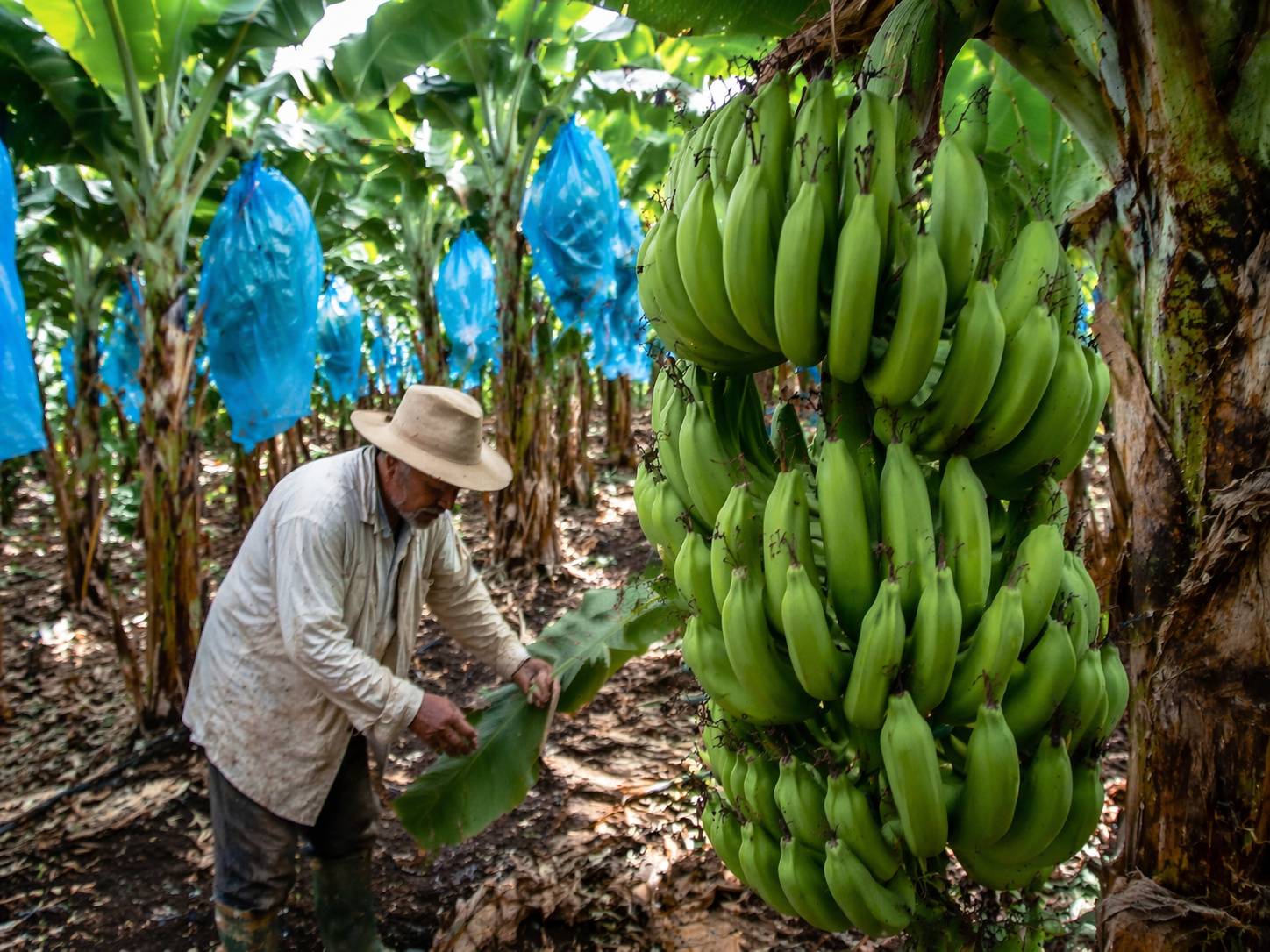
The main variety of banana in the world is at risk due to Panama disease, while scientists seek solutions to prevent impacts on global production.
A significant agricultural threat has recently been identified, attracting the attention of researchers and producers.
The Cavendish banana, widely consumed around the world, has begun to be affected by an aggressive fungus that compromises its production.
According to a study published in 2024 in the journal Nature Microbiology, the responsible fungus is Fusarium oxysporum, which causes the so-called Panama disease.
-
Workers were digging normally and came across a 300-year-old cannon, nearly 3 meters long and weighing over a ton, buried in an old dock area in the United Kingdom.

-
The water cooling system of the nuclear fuel pool in Fukushima has resumed operation.

-
With images from NASA’s Juno spacecraft, researchers detected lightning on Jupiter that is up to 100 times stronger than that on Earth.

-
Ancient Romans were obsessed with a plant that they said was a contraceptive and an aphrodisiac – then it became extinct.

This disease already caused the destruction of the Gros Michel variety in the 1950s, which dominated the market at the time.
This historical episode marked a shift in global production, leading to the adoption of Cavendish as a resistant alternative.
New variant of the fungus raises global alert
Currently, Cavendish faces a new threat with the emergence of the TR4 variant of the same fungus.
This version has distinct genetic characteristics, making control more complex.
According to researchers, TR4 releases a gas that weakens the plant’s natural defenses.

As a result, the infection occurs more efficiently, compromising the development of the banana.
This scientific discovery is considered crucial for understanding the disease’s progression.
Scientists point to ways to contain the advance
According to researcher Li-Jun Ma from the University of Massachusetts Amherst, in 2024, new strategies can be developed.
The identification of the fungus’s characteristics allows for advancements in control methods.
Additionally, the scientist emphasizes the importance of agricultural diversification.
According to her, cultivating different varieties reduces the disease pressure on a single species.
Farmers and researchers can thus develop or identify bananas resistant to TR4.
Species diversity can reduce impacts
Meanwhile, in tropical countries like Brazil, there is a greater variety of bananas available.
Among them, silver banana, apple banana, gold banana, and earth banana stand out.
In contrast, in various regions of the world, Cavendish dominates the market.
This concentration increases global vulnerability to the advance of the fungus.
Moreover, consumers can also contribute to reducing this risk.
According to the researcher, trying different types of bananas available in stores can help balance consumption.
Origin and global expansion of the banana
Historically, the banana originates from Southeast Asia.
Regions such as Malaysia, Indonesia, and the Philippines have cultivated the fruit for thousands of years, according to archaeological evidence.
Over time, the banana spread around the world through trade routes.
Later, it arrived in the Americas with Portuguese colonizers.
Currently, according to recent agricultural data, India and China lead global production, with Brazil among the top producers.
Nutritional value and characteristics of the fruit
In addition to its economic relevance, the banana has high nutritional value.
It is rich in potassium, vitamins C and B6, fiber, and carbohydrates.
Therefore, it provides quick energy to the body and is recommended before physical activities.
Another important point is that the banana develops through parthenocarpy.
That is, it grows without fertilization, which explains the absence of seeds in the fruit.
Additionally, its versatility allows consumption in various forms, such as raw, in recipes, drinks, and various dishes.
In light of this scenario, with a growing threat and solutions still in development, the diversification of production and consumption emerges as an essential strategy — but will the world be able to protect the most consumed banana before it is too late?








Seja o primeiro a reagir!