





 Portuguese
  English
  Spanish
  6 min of reading
  0 comments


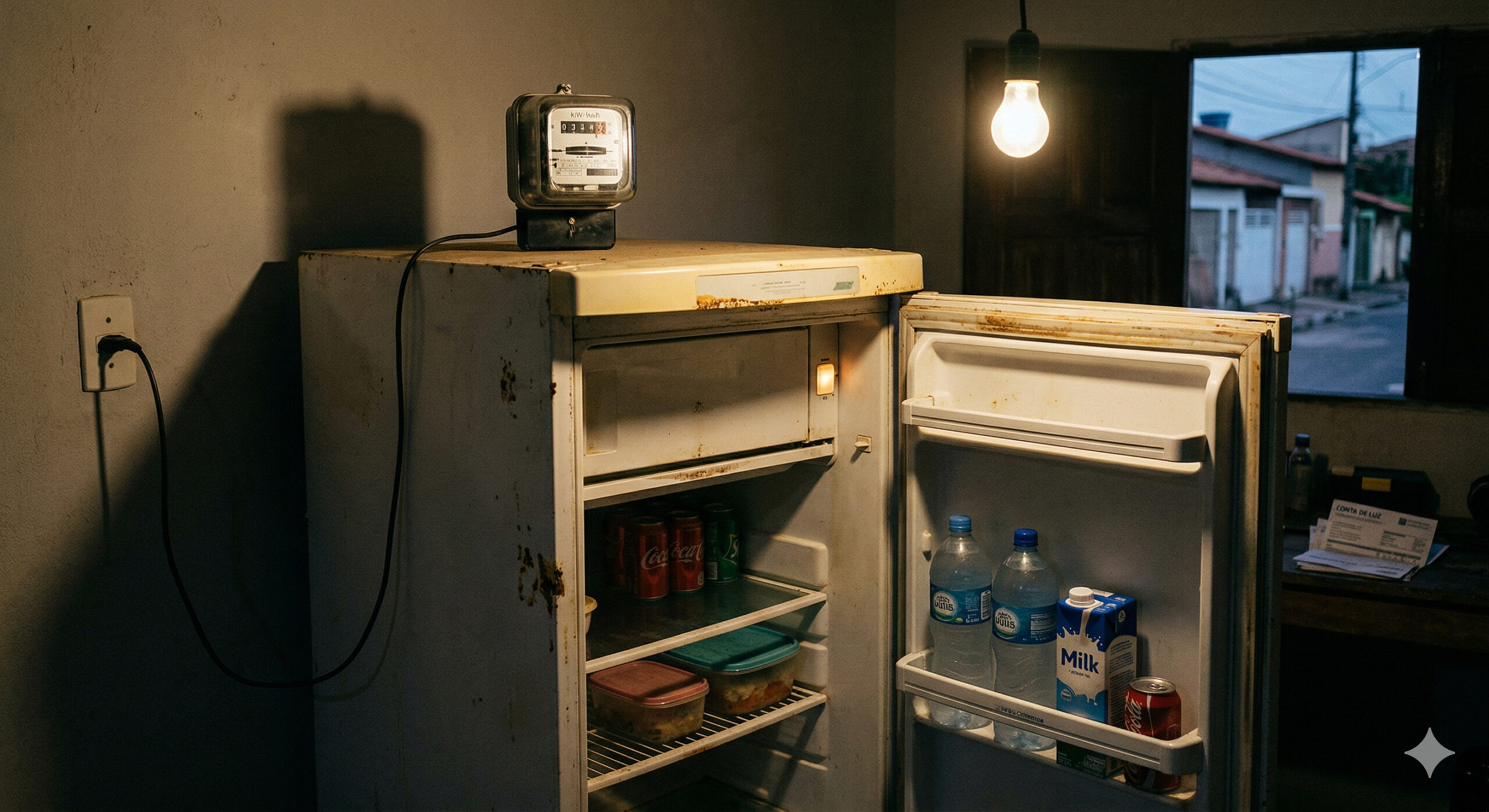
Old refrigerator in the garage can increase electric bill by up to R$ 100 per month; understand consumption and how to reduce energy costs
In 2025, according to an official alert from the National Program for Electric Energy Conservation, millions of Brazilian households keep an old refrigerator in the garage, service area, or balcony, silently contributing to the increase in the electric bill. These appliances, usually replaced by new models in the kitchen, continue to operate 24 hours a day, even with low usage, potentially generating an additional cost of up to R$ 100 monthly in electricity.
This type of consumption occurs because the old refrigerator has accumulated structural deficiencies over time, such as an inefficient compressor, compromised sealing, and degraded thermal insulation. The result is an appliance that consumes up to three times more energy than a modern model, even when used to cool only a few items.
Old refrigerator becomes invisible in domestic energy consumption
Millions of Brazilian households keep a second refrigerator in the garage, service area, or balcony. It is almost always an old model, the one that left the kitchen when the new one arrived, but still works and is used to store drinks, leftovers, and cold water.
-
Beneath 25 km of ice, a moon of Jupiter hides an ocean with more water than all the seas on Earth and may have the necessary conditions to support life, according to studies supported by NASA.

-
The appliance that should cool your home may be driving up your electricity bill when installed with the wrong power, forcing the device to work harder and consume much more than necessary.

-
Airbnb now offers private car service to pick you up at the airport in 125 cities around the world with a fixed price and no extra fees: the platform aims to become a complete hotel within your smartphone.

-
Japan tests for the first time a hydrogen-powered engine for large cargo ships and achieves over 95% of the fuel’s energy at full load, paving the way to equip a 17,500-ton cargo ship already planned for 2027.


When the electric bill increases, attention usually falls on the electric shower, air conditioning, or washing machine. The old refrigerator rarely enters the calculation. This happens because it becomes part of the domestic landscape, operating continuously without drawing attention.
Unlike other appliances, the refrigerator operates 24 hours a day, 365 days a year. Old models, manufactured over a decade ago, were designed at a time when energy efficiency was not a priority. This factor turns the appliance into a permanent hidden consumption within the residence.
Energy consumption of old refrigerator can be up to three times higher than new models
According to data from the National Institute of Metrology, Quality and Technology and Procel, a conventional 400-liter refrigerator consumes about 60 kWh per month. In contrast, old models, especially those manufactured before 2010, can reach between 80 and 100 kWh monthly or even more, depending on wear.
On the other hand, a modern refrigerator with inverter technology and Procel A+++ label consumes between 31 and 40 kWh monthly. The difference can reach up to 60 kWh per month.
Considering an average rate of R$ 0.85 per kWh, the additional expense generated by an old refrigerator can vary between R$ 34 and R$ 51 monthly. In more extreme scenarios, this amount can exceed R$ 100 per month, depending on the conditions of the appliance and the environment.
Old refrigerator can cost more than what it stores
A simple analysis reveals the financial impact of this consumption. A family that spends about R$ 50 per month on drinks may end up paying between R$ 40 and R$ 100 just to keep those items chilled in a second refrigerator.
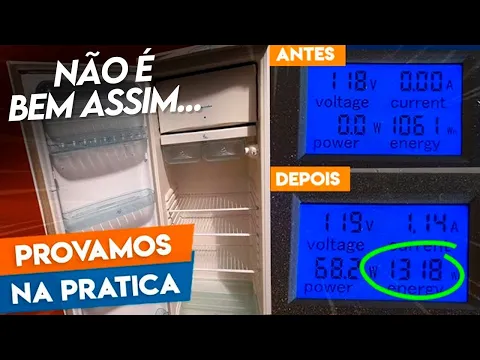

Over the course of a year, this additional cost can exceed R$ 600 to R$ 1,200. This amount is sufficient to purchase a more efficient new model. In other words, the cost of maintaining the old refrigerator can be greater than the value of what it stores, making its use economically unviable.
Old compressor increases energy consumption of the refrigerator
The compressor is the main component responsible for the energy consumption of a refrigerator. In old models, the system operates in an on-off mode, always running at maximum power.
This cycle generates constant peaks in consumption. In contrast, modern models with inverter technology have a compressor that operates continuously and variably, adjusting power according to need.
The difference in efficiency can reach 40%. This technological advancement is one of the main factors that reduce the energy consumption of current refrigerators.
Compromised sealing of the refrigerator increases electricity costs
The rubber sealing of the door plays an essential role in the efficiency of the appliance. Over time, it dries out, deforms, and loses its sealing capacity.
When this occurs, warm air constantly enters the refrigerator, forcing the compressor to work harder. In warm environments, such as garages, this effect intensifies.
A compromised seal can significantly increase energy consumption, making the operation of the appliance even more costly.
Degraded thermal insulation reduces efficiency of the old refrigerator
The walls of a refrigerator contain insulating material responsible for preventing heat exchange with the external environment. Over the years, this insulation loses efficiency.
Old models use less advanced technologies, which increases heat transfer. Modern models use more efficient materials, ensuring lower consumption.
This factor explains why a new refrigerator can consume less than half the energy of an old model, even with greater internal capacity.

The location of the appliance also directly influences consumption. While the kitchen refrigerator operates in a controlled environment, the one in the garage faces elevated temperatures, dust, and thermal variations.
On hot days, temperatures can exceed 40°C in closed garages. This forces the compressor to work continuously under extreme conditions. The hostile environment amplifies energy consumption and accelerates wear on the appliance.
New Inmetro classification in 2026 will expose low efficiency of old refrigerators
Starting in 2026, Inmetro will implement a new, stricter energy classification. Equipment that currently has an A label may be reclassified to lower categories.
This change aims to align Brazil with international standards and encourage greater energy efficiency. Old refrigerators, especially those made before 2010, are likely to fall into the worst classifications. In the new scale, many of these models would not even meet the minimum efficiency levels currently required.
According to Procel, replacing an old refrigerator can generate savings of up to R$ 100 monthly. In a year, this represents R$ 1,200.
A modern refrigerator costs between R$ 2,500 and R$ 4,000. The return on investment occurs in two to three years. However, the most immediate alternative is to unplug the old refrigerator. This action can generate instant savings without any investment.
Energy consumption of the old refrigerator equates to daily use of electric shower
A refrigerator that consumes between 80 and 100 kWh per month is equivalent to the daily use of a 5,500-watt electric shower for about 15 to 18 minutes.

This means that the appliance operates as an invisible consumption within the house. Unlike the shower, which is used consciously, the refrigerator operates continuously without awareness of the expense. The accumulated impact of this consumption over time is significant on the electric bill.
Some indicators help identify excessive consumption. Usage time exceeding 10 years, increased electric bill without new appliances, constant compressor noise, ice formation, and external heating are clear signs. If three or more of these signs are present, the appliance is likely operating with low energy efficiency.
Unplugging the old refrigerator may be the most economical decision in the house
Unplugging the old refrigerator from the garage can represent one of the most financially advantageous decisions within a household.
The savings are immediate, require no investment, and directly impact the electric bill. It is a recurring cost reduction with a continuous effect over the months.
The most expensive appliance in the house is not necessarily the most powerful or visible. It is the one that operates continuously, out of sight, consuming energy for a function that is often unnecessary. And in most cases, it is in the garage.








Seja o primeiro a reagir!