





 Portuguese
  English
  Spanish
  3 min of reading
  0 comments


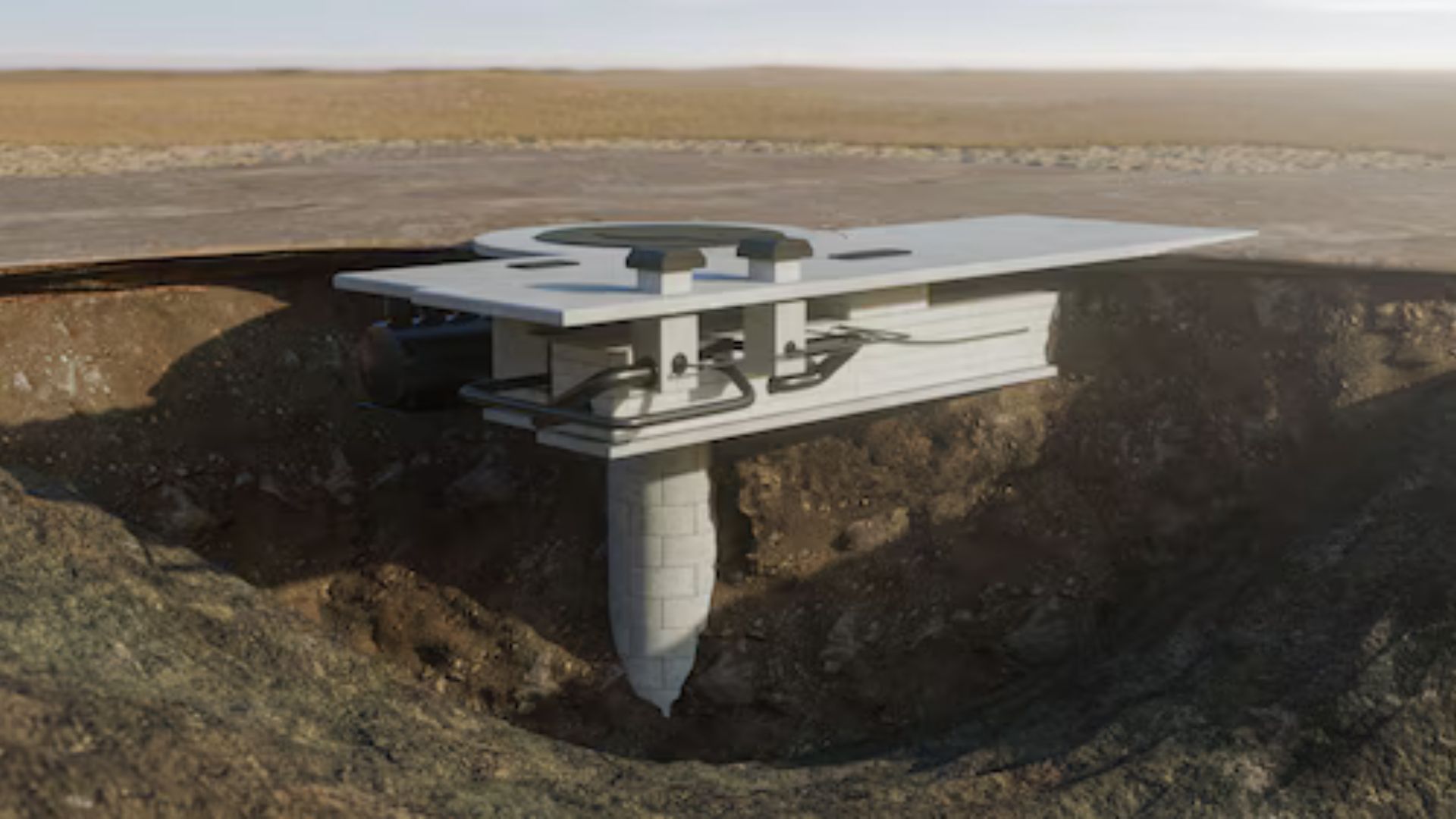
The United States began on March 27, 2026, in Promontory, Utah, the construction of a prototype silo for Sentinel nuclear missiles, an 18-meter system with a 475-kiloton warhead that will replace the old Minuteman III after decades of use and increasing maintenance difficulty
The United States took a new step in modernizing its land-based deterrent force on March 27, 2026, when Northrop Grumman began construction of a prototype silo for Sentinel nuclear missiles in Promontory, Utah. The facility is designed to support the future operation of the LGM-35A Sentinel, developed to replace the current LGM-30 Minuteman III.
This initiative comes amid the advancement of the renewal program for one of the three bases of American strategic deterrence. The structure consists of bombers, submarines, and land-based missiles, allowing for a responsive capability even in the event of a surprise attack.
Modernization of the land-based nuclear missile force
Since 1970, the land component of this structure has relied on 550 Minuteman III missiles. Of this total, 400 are currently deployed in silos located in Wyoming, North Dakota, and Montana, each equipped with a single nuclear warhead.
-
End of the RAM memory crisis? Google develops a new method that changes memory usage in AI and allows for reduced computational costs while maintaining consistent performance in increasingly demanding applications.

-
Japan builds a 3D-printed train station overnight, between the last train and the first of the morning.
-
Instead of manufacturing expensive and difficult-to-recycle lithium batteries, engineers introduced in 2026 a battery made of paper and salt that is completely biodegradable: the Flint Paper Battery costs a fraction of conventional batteries and, when discarded, decomposes in the soil like a piece of newspaper.

-
A ship with 500,000 silver coins and 45 tons of gold sank and was never recovered; meet Royal Merchant, the ship that became one of the greatest maritime disasters in history.

However, these systems are approaching the end of their useful life. Maintenance has become increasingly complex, while concerns related to the reliability of the infrastructure and equipment in operation are growing.
This scenario has strengthened the decision to replace the entire fleet with the Sentinel system. Instead of extending the life of the existing structure, the program has begun to prioritize a broader renewal of the land-based nuclear missile capability.
What changes with the Sentinel missile
The LGM-35A Sentinel was designed with capabilities superior to the system it will replace. The missile is a solid-fuel rocket with three stages and about 18 meters tall, equivalent to approximately 60 feet in American measurement.
The system also incorporates a liquid-fueled post-boost vehicle, described as a platform aimed at the precise targeting of the nuclear warhead. This warhead has a yield of 475 kilotons, reinforcing the expected performance leap with the new generation.
Current plans foresee the operational deployment of 400 units of the Sentinel. Additionally, another 234 will be allocated for testing and spare parts stock, expanding the support base of the new system.
Old silos hinder the transition
Despite the advancement represented by the new missile, the integration with the inherited Minuteman infrastructure has encountered significant obstacles. The initial proposal was to reuse the existing silos, but the age of the facilities and their design limitations imposed relevant difficulties.
Much of these silos were built with reinforced concrete cast on-site. This characteristic makes structural alterations more difficult and increases the cost of any attempts to adapt them to accommodate the new nuclear missiles.
The internal systems also reflect outdated technology. The facilities rely heavily on analog electronics, wired connections, copper cabling, and voice lines for communication.
Environmental controls are old and prone to moisture problems. The limited internal space further complicates maintenance work and reduces the flexibility needed to incorporate the Sentinel.
New construction replaces renovation
In addition to technical hurdles, the physical deterioration of the facilities has become an increasing concern over time. The challenge is heightened because the Sentinel missile is larger than the Minuteman, creating additional space restrictions within the older silos.
With this set of factors, the conclusion was that the most efficient path would be to build new structures rather than renovate the old ones.
The prototype initiated in Utah thus represents a central step in the American effort to replace its land-based fleet with a new generation of nuclear missiles.








Seja o primeiro a reagir!