






 Portuguese
  Spanish




The Royal Merchant sank in 1641 after a disaster at sea, carrying a huge cargo of silver coins, gold, and jewels never recovered.
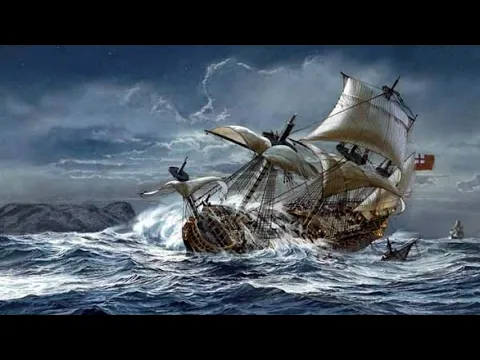
The Royal Merchant was involved in one of the most impactful maritime disasters of the 17th century when it sank on September 23, 1641, near the English Channel. The ship, which was on a route between Spain and England, was transporting an immense amount of coins, silver, gold, and jewels.
Under the command of Captain John Limbrey, the vessel could not withstand technical failures combined with bad weather. The lost cargo is estimated today to be worth over 1 billion pounds.
Royal Merchant faced critical failures before sinking
The collapse of the Royal Merchant began when essential systems failed. The pumps that removed water from the hull completely failed.
-
Ancient Ritual Circle, Hidden for 5,000 Years, Discovered in Scotland’s Machrie Moor Using Sensors, Revealing a “Phantom Stonehenge”

-
Engineers Develop Fridge-Sized Machine to Produce 95-Octane Synthetic Fuel from Air and Water, Aiming to Sustain Combustion Engines Without Oil
-
Two-Armed Robot Uses AI to Reassemble Destroyed Pompeii Frescoes, Solving an “Impossible” Puzzle
-
New Law in Brazil Requires Breaks for Type 1 Diabetes Management at Work, School, and Public Exams


As a result, the interior of the ship began to flood rapidly. At the same time, the rough sea made any attempt at containment difficult.
Thus, the disaster evolved irreversibly.
Cargo of silver coins made the ship one of the most valuable
The Royal Merchant was carrying an exceptional cargo for the time. It had about 500,000 coins, hundreds of bars of silver, and approximately 45 tons of gold.
Additionally, various jewels completed the load. This set elevated the total value of the cargo to extraordinary levels.
Therefore, the loss of the ship represented a significant economic impact.
Decision in Cádiz increased the volume of silver transported
Before continuing its journey, the Royal Merchant passed through Cádiz, Spain. There, a fire destroyed another vessel loaded with precious metals.
In light of the situation, the captain decided to incorporate this cargo into the ship. As a result, the amount of silver and coins increased considerably.
This choice ended up making the journey even riskier.

During the final moments, Captain John Limbrey showed resistance to leaving the ship. He feared losing the gains accumulated over years of work.
However, upon realizing the gravity of the disaster, he decided to call for help. A signal was sent to the Dover Merchant. Limbrey was rescued and became the last survivor to leave the vessel.
Disaster of the Royal Merchant left victims and irreversible losses
The shipwreck resulted in the death of about 18 crew members. Meanwhile, all the cargo of coins, silver, and gold was taken to the bottom of the sea.
With no means of rescue at the time, the ship completely disappeared. Thus, one of the greatest maritime treasures ever transported was lost.
The Royal Merchant is one of the most emblematic examples of a disaster involving a ship loaded with silver coins.
Its story combines technical factors, strategic decisions, and adverse natural conditions.
More than three centuries later, the case continues to be remembered as one of the greatest losses of wealth ever recorded at sea.

With information from Mega Curioso







