






 Portuguese
  Spanish
  4 min of reading
  0 comments


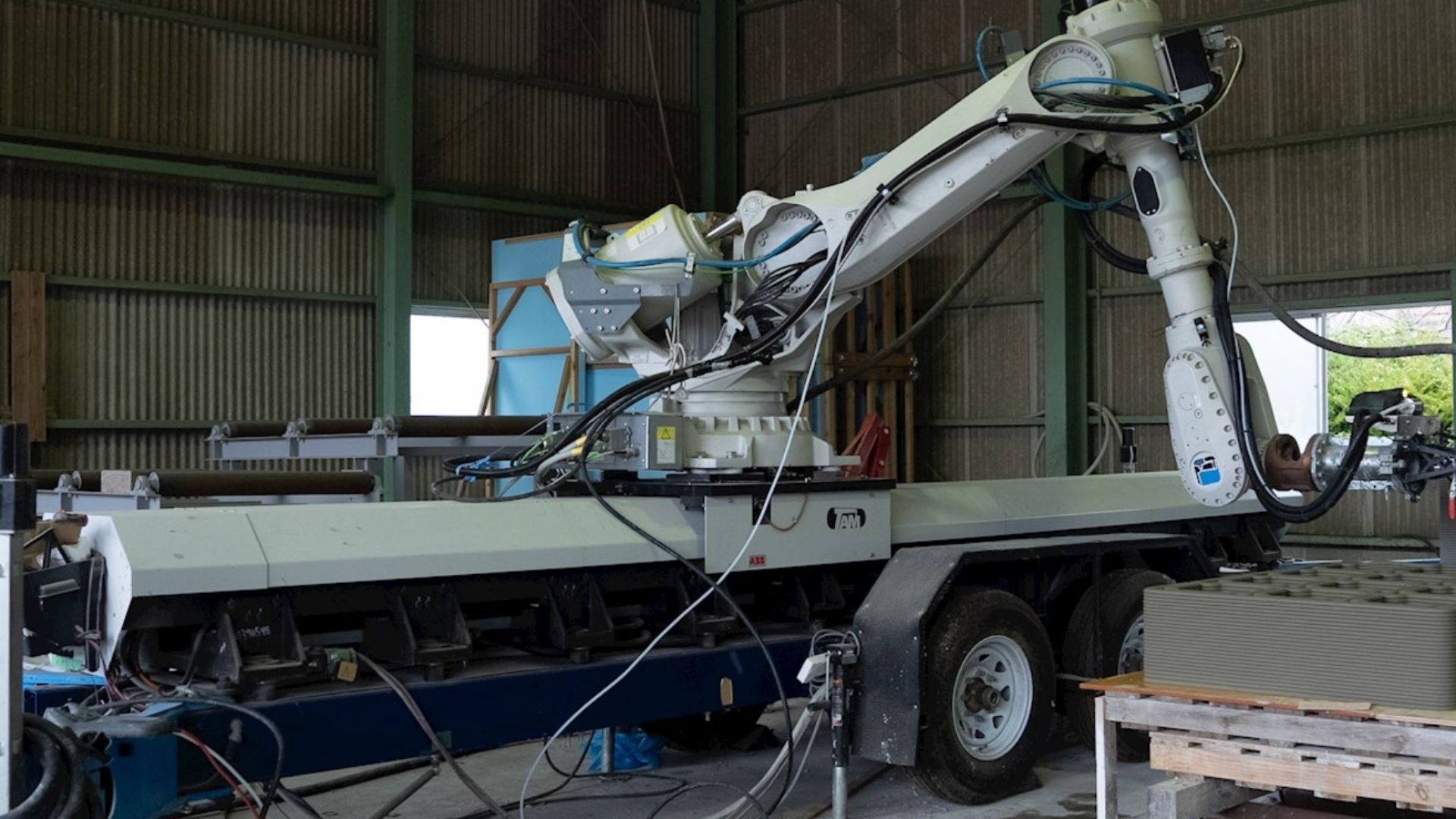
The 3D printed railway station, assembled in a single night in Japan between the last train of the day and the first in the morning the next day, put ABB robotics at the center of a project that reduced construction time, labor needs, and impact on railway operations.
The construction of Japan’s first 3D printed railway station was completed in a single night with the support of ABB Ltd.’s automation technology, in a project carried out with Serendix and West Japan Railway Company, JR West, between the last train of the day and the first in the morning the next day.
The initiative demonstrated how robotics and 3D printing can reduce construction time, labor needs, and disruption to infrastructure operations.
The railway station was produced with structural components printed in 3D off-site and then transported for assembly. An ABB industrial robot played a central role in manufacturing these parts with high precision before installation at the final location.
-
Wikipedia Blocks AI-Generated Edits, Citing Distrust in Automated Systems and Outlining Plans to Use Technology Without Losing Article Control

-
NASA Tests Rover with Lizard-Like Suspension and Independent Wheel Traction, Aiming for Speed Ten Times Faster than Perseverance on Mars

-
Scientists Warn: Gulf Stream Shift Warms Canadian Waters by Up to 5°C, Revealing Rapid AMOC Response

-
Apple and Tesla on Alert After Cyberattack on Indian Supplier Exposes Over 200,000 Confidential Files, Industrial Projects, Employee Data, and Potential Trade Secrets on the Dark Web



The assembly took place during the early morning hours, after the last train departed, and was completed before the resumption of railway services in the morning. This allowed the project to proceed without interrupting the operation of the line, one of the main challenges in railway infrastructure modernization projects.
The railway station was assembled during the early morning
The project adopted a construction model based on the external manufacturing of structural elements and rapid assembly on-site. This strategy allowed for concentrating the most sensitive activity into a single overnight window, reducing the impact on railway operations.
ABB stated that the combination of robotic automation and off-site manufacturing helped to drastically reduce construction time and the need for workers compared to traditional methods. The company also highlighted gains related to precision, safety, and reduced disruptions during the execution of the project.
In a statement, ABB declared that the project demonstrates how robotics and automation can transform construction by reducing time, costs, and disruptions, while also improving precision and safety. The assessment reinforces the growing use of these technologies in structures that require rapid execution and strict control of the construction process.
3D printing and automation accelerate construction
Traditional construction of railway stations can take several months and requires a high volume of labor and planning on-site. In the Japanese project, the 3D printed components were produced off-site and quickly assembled with the help of a robot, significantly shortening this process.
ABB’s robotic technology enabled the printing of structural components with high precision, reducing construction errors and increasing overall operational efficiency. The project also demonstrated how robotic methods can help address labor shortages and rising costs in the construction sector.
The application of robotics in construction has been gaining importance as industries seek more efficiency, less waste, and shorter timelines. Automation also expands the possibilities for execution in locations where conventional methods may be more difficult or time-consuming to apply.
For ABB, robotic construction can open new possibilities in infrastructure development, especially in projects that need to be completed quickly or in areas where construction time must be minimized. In this context, the railway station became a practical example of how these systems can be integrated into sensitive interventions.
Robots advance in infrastructure and construction
The project also highlighted a broader movement of expanding robotics and automation beyond manufacturing. Sectors such as construction, logistics, and infrastructure development are emerging as fields where these solutions are gaining traction.
ABB stated that automation and robotics are opening new opportunities in construction and infrastructure projects, especially in situations where speed, precision, and safety are central factors. The statement positions the technology as a direct application resource in projects that require agile execution and high control.
Mr. Sato, operations director at Serendix, stated that the construction sector has been severely impacted by rising labor and material costs, as well as a shortage of skilled workers.
He added that the company’s approach, based on 3D printers, can reduce labor costs and produce all construction materials from mortar.
According to the executive, the simultaneous reduction of labor and material costs can help address the challenge of rising prices.
The assessment was presented as part of the potential of this technology to respond to the pressures affecting the construction sector.
The completion of the 3D printed railway station reinforced, at the end of the project, the potential of robotic construction for future infrastructure works. Among the cited applications are small buildings, shelters, and transportation facilities, areas where execution speed and lower operational impact can be decisive.




Be the first to react!