





 Portuguese
  English
  Spanish
  5 min of reading
  0 comments


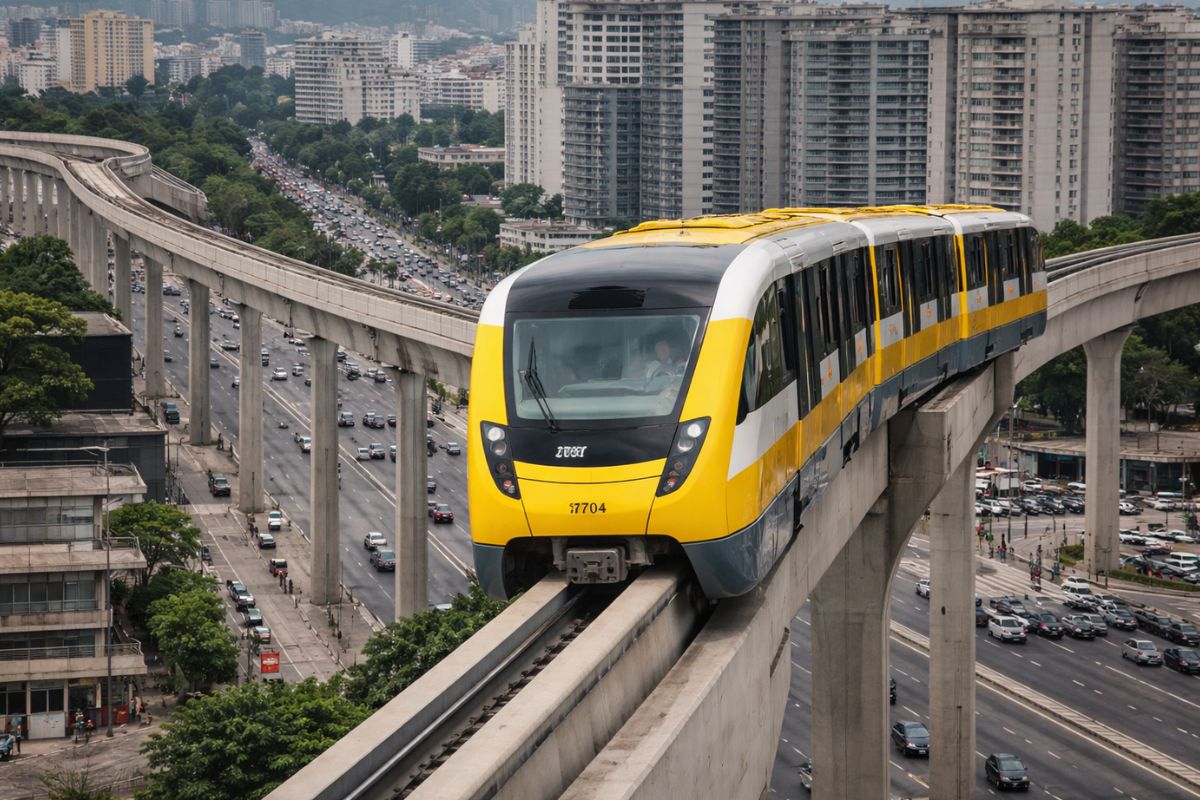
The 17-Gold Line of the São Paulo monorail opened to the public on Tuesday (31/03) with 12 years of delay in relation to the original promise made for the 2014 World Cup, after an investment of R$ 5.97 billion and a four-year paralysis between 2019 and 2023, and the initial operation is reduced with fewer schedules until reaching full capacity of 100 thousand passengers per day in October
The 17-Gold Line of the São Paulo monorail finally opened to the public last Tuesday (31/03).
The project had been promised for the 2014 World Cup. It debuted with a 12-year delay.
The 17-Gold Line consumed R$ 5.97 billion in investments, was paralyzed for four years between 2019 and 2023, and opened with a reduced initial operation, with fewer schedules, because it is still in a technical monitoring phase.
-
Neither the Pyramids nor the Great Wall of China, this gigantic construction in Spain is the human mark on planet Earth that intrigues the most when seen in images from space.
-
Surrounded by cliffs, mist, and chilling stories, the ancient Hotel del Salto has been reborn as a museum while still unable to shake off its reputation as a haunted place.

-
This star-shaped fortified construction, hidden near the border of Spain, may be the largest fortress on the planet.

-
Congonhas receives the monorail promised for the 2014 World Cup after more than a decade of delays and becomes the first airport in Brazil with integrated subway.
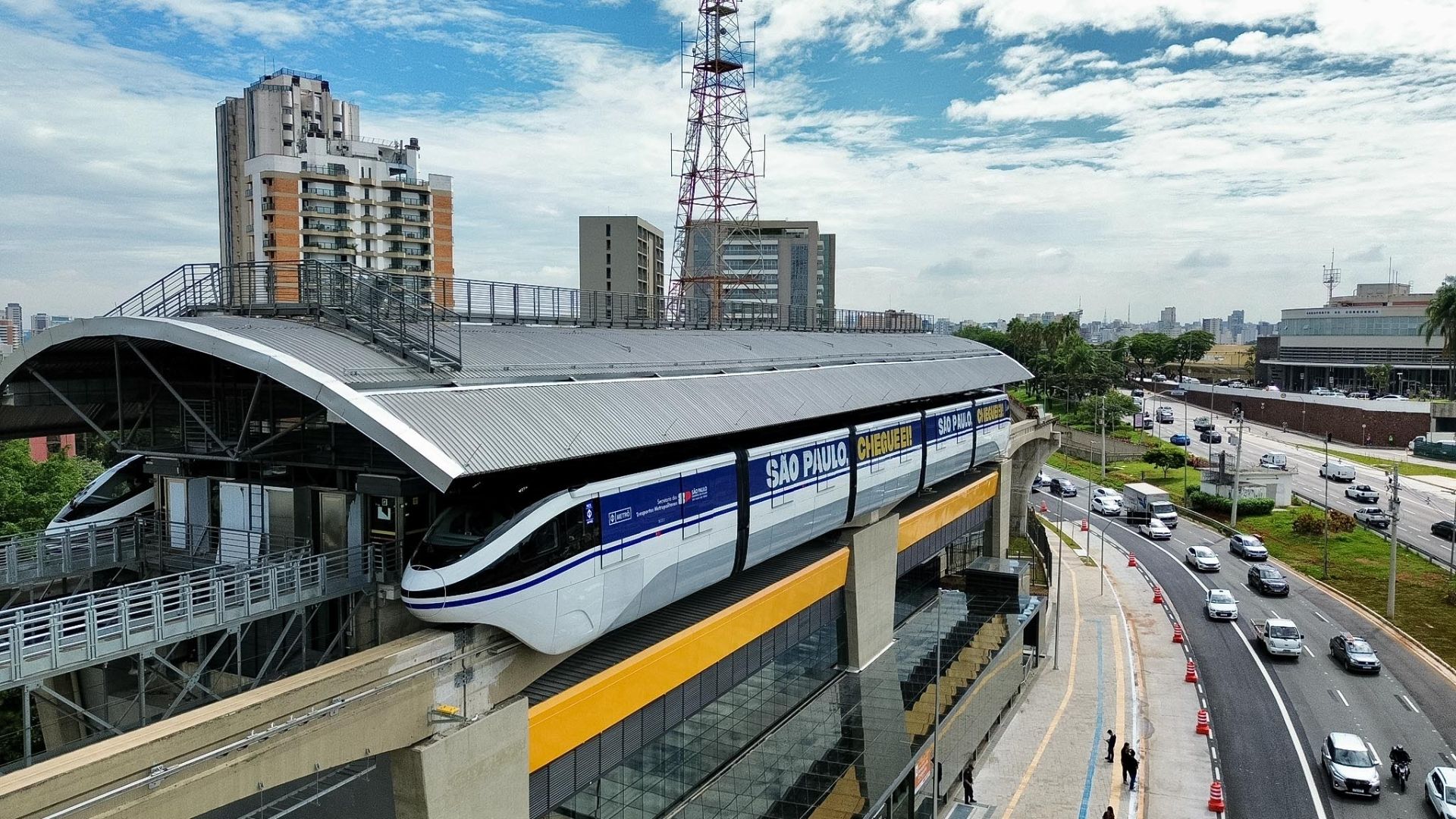
The full operation of the 17-Gold Line is expected for October 2026, when the monorail should have the capacity to transport around 100 thousand passengers per day.
Each train of the 17-Gold Line has five cars, is 60.8 meters long, and has a capacity for 616 passengers, a smaller dimension compared to other rail transport compositions in the São Paulo capital.
Governor Tarcísio de Freitas, who resumed the project in September 2023, has already announced the expansion of the 17-Gold Line with more than 4.6 kilometers and four new stations.
The history of the 17-Gold Line: from the promise of the 2014 World Cup to 12 years of delay

The 17-Gold Line was designed as one of the urban mobility projects for the 2014 World Cup in Brazil.
The idea was for the monorail to be ready before the event, connecting important regions of São Paulo and facilitating the movement of fans and residents during the World Cup.
But the project was not completed for the Cup. It was not completed in the following years. And in 2019, during João Doria’s administration, the 17-Gold Line was completely paralyzed.
For four years, the structure was abandoned, consuming resources without delivering any results for the population.
The resumption occurred in September 2023, under Tarcísio de Freitas’s administration, and the inauguration came on March 31, 2026, exactly 12 years after the original deadline for the 17-Gold Line.
At the ceremony, Tarcísio declared that a stalled project has no present value and does not help the citizen, and that it was necessary to take the lead and resolve it.
How much did the 17-Gold Line cost and what do passengers get for R$ 5.97 billion

The total investment in the 17-Gold Line was R$ 5.97 billion, according to the São Paulo government.
For this amount, passengers receive a monorail with trains of five cars, 60.8 meters long, and a capacity for 616 passengers per composition.
The dimension is smaller than other rail transport compositions in São Paulo, which reflects the characteristic of the monorail, which is more compact and aimed at complementary segments.
In the current phase, the 17-Gold Line operates with reduced schedules and lower frequency, because the system is still under technical monitoring.
The full operation of the 17-Gold Line is expected for October 2026, when the monorail should reach a capacity of 100 thousand passengers per day.
Until October, passengers will use the 17-Gold Line with the limitations of an assisted operation, which means fewer trains, longer waits, and lower frequency.
The promised expansion for the 17-Gold Line: more 4.6 km and four new stations
At the inauguration ceremony, the governor announced that the 17-Gold Line will gain more than 4.6 kilometers of extension and four new stations.
The announced stations are Américo Maurano, Vila Paulista, Panamby, and Paraisópolis, with the latter being responsible for integrating one of the largest communities in São Paulo into the rail transport system.
The connection with Paraisópolis is especially relevant because the community has over 100 thousand residents and historically faces difficulties in accessing high-capacity public transport.
No schedule or values for the expansion of the 17-Gold Line have been disclosed.
Considering that the first phase took 12 years and nearly R$ 6 billion to complete, the inevitable question is how much time and money the expansion of the 17-Gold Line will require to come to fruition.
The promise has been made. The history of delays is also recorded.
What the 17-Gold Line represents for public transport in São Paulo
The 17-Gold Line is the first monorail to enter operation in São Paulo’s transport system.
The monorail is a lighter and more compact system than conventional subways, designed to complement the existing network in areas where building an underground subway would be more expensive or unfeasible.
For passengers, the 17-Gold Line adds a travel option that did not exist, connecting points that previously relied exclusively on buses and traffic.
When it reaches full operation in October with 100 thousand passengers per day, the 17-Gold Line should relieve some of the pressure on bus lines and congested roads in the region.
But the cost of R$ 5.97 billion, the 12-year delay, and the operation that starts reduced fuel the distrust that mobility projects in São Paulo continue to follow the Brazilian standard: they cost more, take longer, and deliver less than promised.
The 17-Gold Line is open. The question is whether it will function as promised or if the pattern of delays and limitations will continue to mark its operation.
12 years of delay, R$ 6 billion spent, and a monorail that still does not operate fully
The 17-Gold Line of the São Paulo monorail opened to the public with 12 years of delay in relation to the original promise made for the 2014 World Cup.
It cost R$ 5.97 billion, was paralyzed for four years, and debuted with a reduced operation. Full operation with 100 thousand passengers per day is only expected for October 2026.
The 17-Gold Line is both an achievement for those who depend on public transport and a reflection of what happens with large mobility projects in Brazil. It finally exists. It just needs to function properly.
Did you know that the 17-Gold Line was for the 2014 World Cup? Have you used the monorail? Do you think the expansion to Paraisópolis will come to fruition on time? Leave your comments and share this article with those who live in São Paulo and depend on public transport.








Seja o primeiro a reagir!