





 Portuguese
  English
  Spanish
  5 min of reading
  0 comments


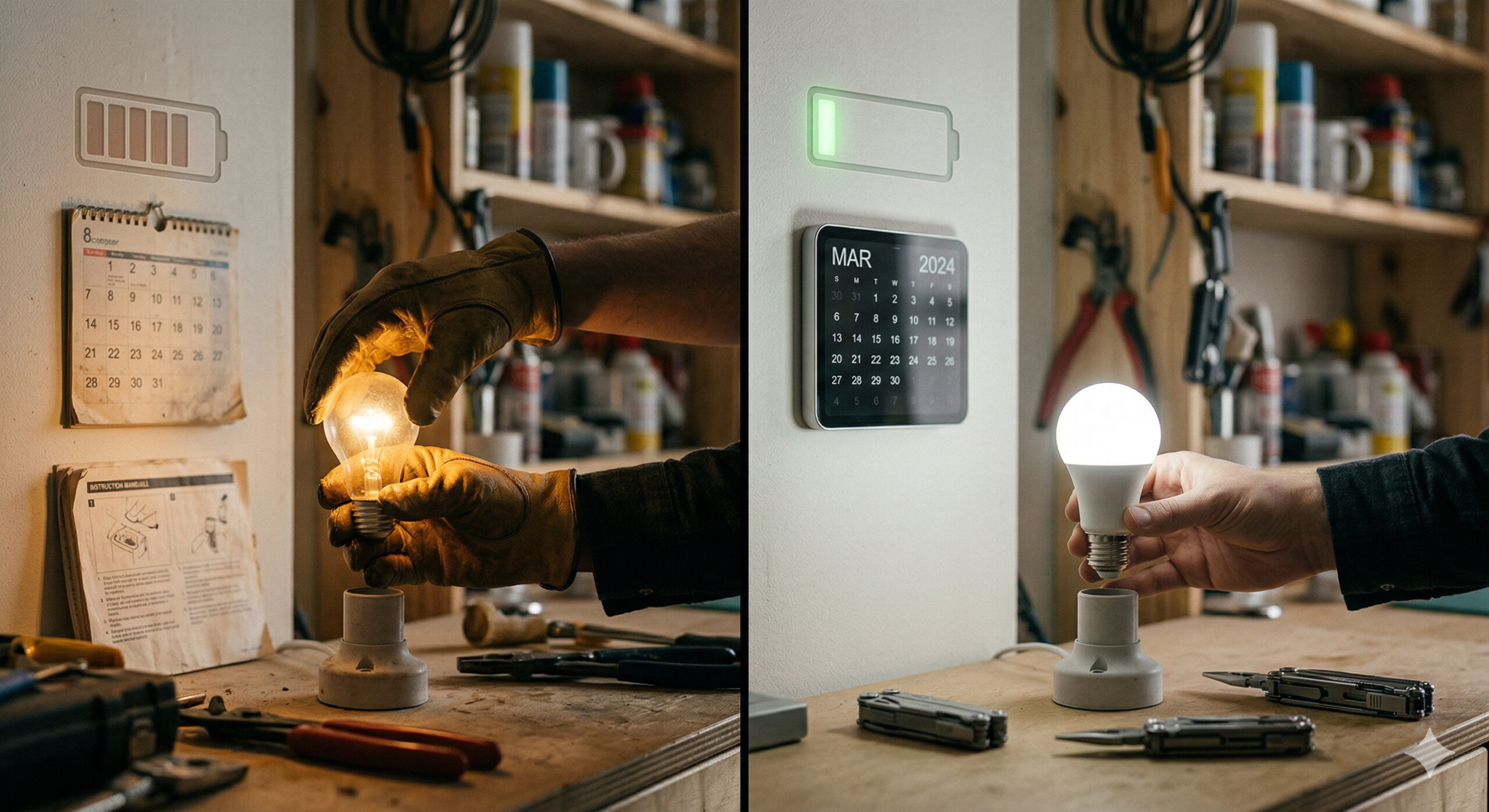
Replacing lightbulbs with LEDs can reduce energy consumption by up to 90% and last 25 times longer, according to the U.S. Department of Energy.
According to updated data from the U.S. Department of Energy, LED lighting has been classified as one of the most efficient ways to reduce electricity consumption in residential and commercial settings. According to the U.S. Department of Energy itself, replacing incandescent and fluorescent bulbs with LEDs is one of the most direct measures to decrease energy expenditure without changing user behavior, and is widely recommended in energy efficiency programs.
The most relevant data is that LED bulbs can consume significantly less energy while maintaining the same level of illumination. According to the U.S. Department of Energy, LEDs use at least 75% less energy and last up to 25 times longer than traditional incandescent bulbs. This characteristic makes the technology one of the most accessible and effective solutions for reducing electricity costs, both in homes and commercial environments.
How LED technology works and why it consumes less
The acronym LED stands for Light Emitting Diode. Unlike incandescent bulbs, which produce light by heating a metal filament, LEDs generate illumination through the flow of electric current in a semiconductor.
-
With over 14 million baskets of earth moved, an ancient North American metropolis built a monumental pyramid of 30 meters and established a city with 20,000 inhabitants nearly a thousand years ago.

-
A 1,900-year-old treasure emerges from a Roman house destroyed by fire and sealed since antiquity in Romania, with coins and metals fused among the ashes.

-
The Brazilian colonial city that stopped in time and shares territory with a rocket launch base.

-
79-year-old woman challenges limits, visits 193 countries in the world after 56 years of planning and reveals the behind-the-scenes of a global journey that few have managed to accomplish.


This process is significantly more efficient, as it converts a larger portion of energy into light, reducing losses in the form of heat.


While incandescent bulbs waste a large portion of energy as heat, LEDs direct most of the energy towards effective lighting. This energy efficiency is the main factor explaining the reduction in consumption.
Direct comparison shows consumption difference between technologies
The difference in consumption between traditional bulbs and LEDs can be observed in simple equivalences. A 60-watt incandescent bulb, for example, can be replaced by an approximately 10-watt LED to produce the same amount of light.
This reduction represents significant savings over time, especially in homes with multiple lighting points.
Replacing a single bulb may seem small, but on a residential scale, the accumulated impact is significant. This effect is amplified in commercial environments, where the number of fixtures is greater.
Lifespan up to 25 times longer reduces replacement need
In addition to energy efficiency, LED bulbs have a significantly longer lifespan than traditional technologies. According to the U.S. Department of Energy, an LED can last up to 25 times longer than an incandescent bulb. This means fewer replacements over time, reducing additional costs and waste generation.
The long lifespan is one of the factors that make LEDs economically advantageous even with a higher initial cost. This characteristic also contributes to the sustainability of the lighting system.

One of the main advantages of LED technology is that its adoption does not require changes in user behavior. The replacement can be done directly, maintaining the same lighting usage pattern.
This means that consumption is automatically reduced, without the need for adjustments in routine. The savings occur passively, simply by replacing the technology used. This factor facilitates large-scale adoption.
Impact on total energy consumption in homes
Lighting represents a significant portion of energy consumption in homes. Replacing with LEDs can considerably reduce this impact.
Although the percentage varies according to consumption profile, the savings can represent a relevant reduction in the electricity bill.
The combination of energy efficiency and durability makes LEDs one of the most effective solutions for reducing household consumption. This effect is even more noticeable in homes with intensive lighting use.
LED technology also reduces heat emission
Another important aspect of LED technology is the lower heat emission during operation. Incandescent bulbs convert a large part of the energy into heat, which can influence the temperature of environments.
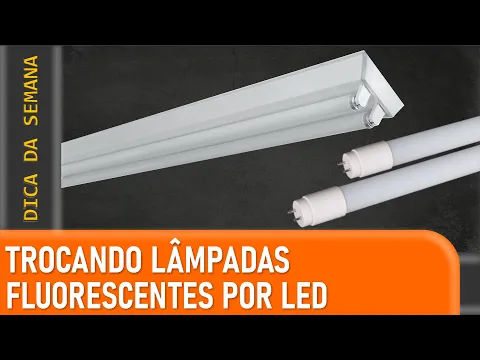
LEDs, on the other hand, operate with lower heat generation, contributing to more stable environments. This characteristic can have an indirect impact on energy consumption, especially in places with air conditioning use. Lower heat generation reduces the thermal load of the environment.
Technology evolution made LEDs more accessible
In the early years of adoption, LED bulbs had a high cost, which limited their dissemination. With technological advancements and increased production, prices have become more accessible. Currently, LEDs are widely available in the market, with different formats and applications.
The reduction in cost over time has facilitated large-scale replacement. This process has contributed to the popularization of the technology.
Although widely used in homes, LED bulbs are also applied in various sectors, including public, industrial, and commercial lighting. Energy efficiency makes this technology suitable for environments that require continuous lighting use.
Large-scale adoption in cities and companies amplifies the impact of energy savings. The use contributes to reducing consumption on broader levels.
Sustainability and energy efficiency drive global adoption
The search for more efficient and sustainable solutions has driven the adoption of LEDs worldwide. Governments and organizations encourage the replacement of old technologies with more efficient alternatives. Reducing energy consumption is directly linked to decreasing emissions associated with electricity generation.
LED technology fits into a global context of energy transition and more efficient resource use. This movement is expected to intensify in the coming years.
Replacing traditional bulbs with LEDs represents one of the simplest and most effective changes to reduce energy consumption. Based on data from the U.S. Department of Energy, the technology can reduce spending by up to 90%, without requiring changes in user behavior.
The combination of energy efficiency, durability, and ease of adoption makes LEDs a high-impact solution for homes and businesses.
Even though it is an apparently simple change, its accumulated effects can significantly transform energy consumption over time.







Seja o primeiro a reagir!