





 Portuguese
  English
  Spanish
  6 min of reading
  0 comments


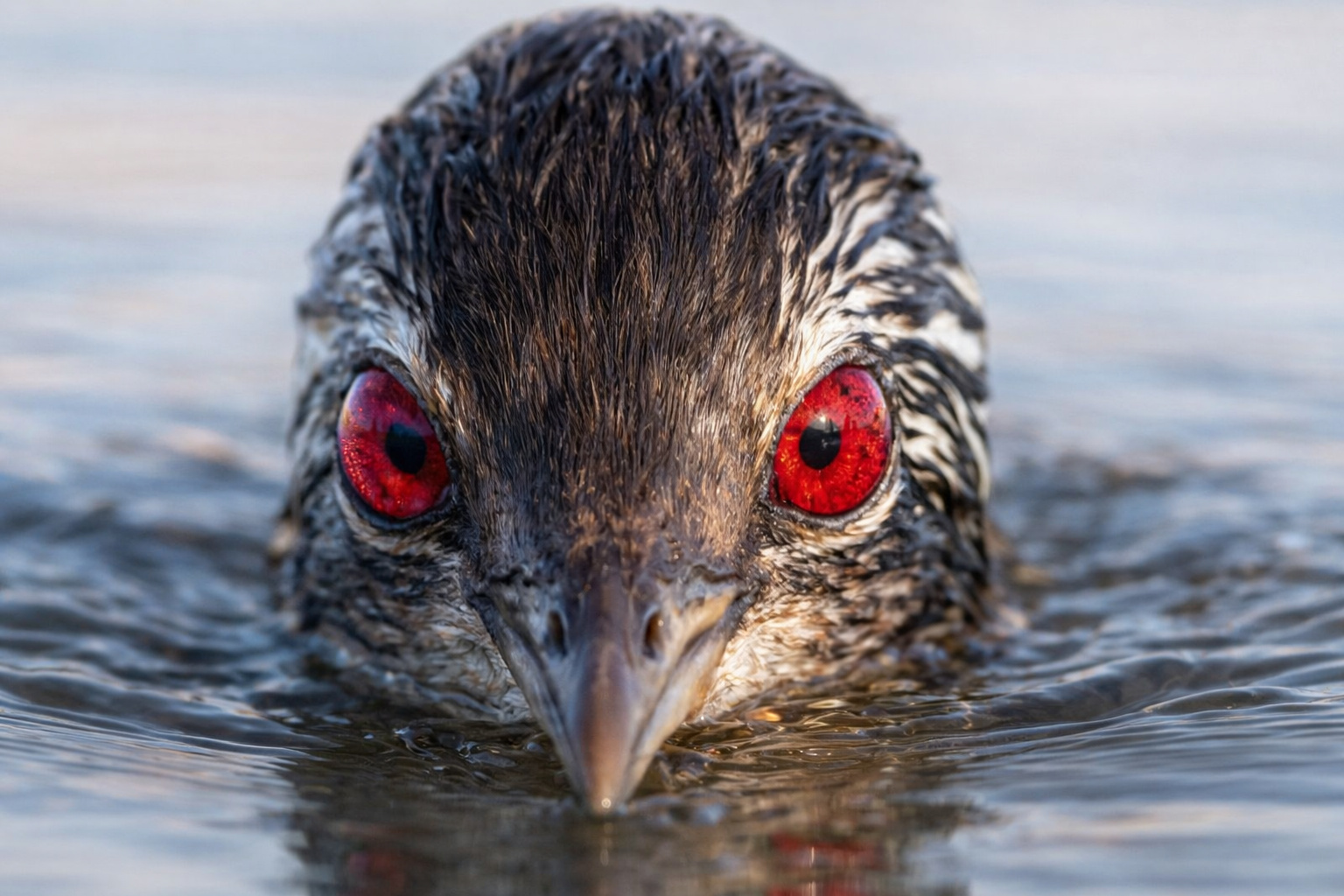
Get to know the pimpollo, or Rollandia rolland, a South American bird with intense red eyes and vision adapted to hunt underwater in dark and murky environments.
In 2026, updated records from BirdLife International once again highlighted the Rollandia rolland, popularly known as pimpollo or white-eared grebe, as a small aquatic bird distributed across vast areas of South America, with documented occurrences in Brazil, Argentina, Chile, and Uruguay. Among the most striking features of the species is the intense red iris, recorded in ornithological identification profiles used by observers and researchers of South American avifauna.
This coloration, however, should not be automatically treated as a proven visual adaptation for hunting in murky waters. According to a scientific review on eye color in birds, the evolutionary importance of iris color variation is still little studied, and the functions attributed to this trait may involve different biological and behavioral factors, with no specific and consolidated demonstration linking the red iris to greater hunting efficiency in low visibility environments for the pimpollo.
What is well documented is that the pimpollo belongs to the group of small South American grebes and lives associated with lakes, marshes, ponds, flooded ditches, and slow-moving watercourses, where it seeks food through short dives and discreet movements on the surface. Thus, the safest formulation is that its red eyes are one of the most striking identification traits of the species, within a set of anatomical and behavioral characteristics typical of a bird adapted to aquatic life.
-
NASA chief says in an interview with CNN that the chance of finding alien life in the universe is quite high and reveals that this search is at the heart of all the agency’s missions, including the Artemis program that has just taken humans around the Moon.

-
From the light bulb to the ENIAC: the Edison effect paved the way for diodes and triodes, amplified radio and telephony, turned into Boolean logic with relays, and created giant computers, leading to the leap towards modern silicon.

-
With more expensive oil and the risk of shortages, China is expanding the use of technology developed in Germany during World War II that transforms coal into plastics, fuels, and chemical products.

-
Toxic plant of 4 meters, banned in Spain, is already taking over gardens and parks in Thuringia, Germany: volunteers say that pulling it out is not enough, roots sprout again and seeds last for years; residents are asking for glyphosate to eradicate it.
Red eyes of the pimpollo function as adaptation to dark and murky aquatic environments
In the case of the pimpollo, this characteristic is linked to its ability to see in environments where light is limited, such as murky waters, shallow lakes with sediments, and areas with dense vegetation.
Freshwater, especially in natural environments, is rarely completely transparent. Suspended particles, organic matter, and algae reduce visibility, requiring specific visual adaptations.
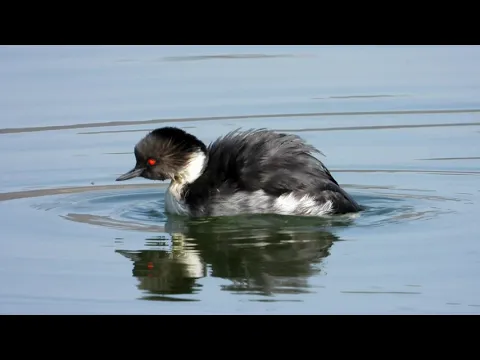

The eyes of the pimpollo help maximize contrast and motion perception, allowing it to locate prey even in low light conditions.
Additionally, the intense coloration may be related to filtering certain wavelengths of light, improving visual efficiency underwater.
Underwater vision of Rollandia rolland allows efficient hunting in quick dives
The pimpollo belongs to the group of grebes, birds specialized in diving and underwater hunting. Unlike birds that only capture prey at the surface, it dives completely to catch small fish, aquatic insects, and crustaceans. During these dives, vision plays an essential role.
Upon entering the water, a significant change occurs in the behavior of light. Refraction alters how objects are perceived, requiring adjustments in focusing.
The pimpollo has ocular adaptations that allow it to correct this distortion, ensuring precise focus during hunting. This includes changes in the shape of the lens and the ability to quickly adjust vision between air and water.
Eye structure of aquatic birds favors contrast and motion detection
The visual efficiency of the pimpollo depends not only on eye color but also on the internal structure of the ocular system.
The retina of these birds is adapted to detect rapid movements, which is crucial for capturing prey that moves in the water.
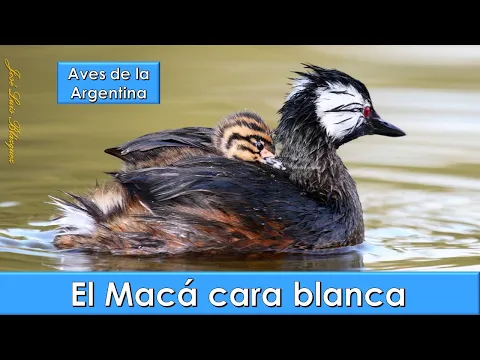
Moreover, there is greater sensitivity to contrasts, allowing them to distinguish shapes even in visually complex environments.
This combination of sensitivity and speed of visual processing makes the pimpollo a highly efficient hunter in its habitat. The ability to react quickly to visual stimuli is essential for success in capturing food.
Intense reflection of the eyes creates a visual effect reminiscent of mirrored surfaces
Another striking aspect of the pimpollo’s eyes is the reflection of light. Under certain conditions, especially under direct sunlight, the eyes can appear bright, almost like glass or polished metal.
This effect occurs due to the way light interacts with the ocular surface and the pigments present in the iris.
The result is an intense shine that reinforces the bird’s unusual appearance and contributes to popular visual comparisons, such as the resemblance to fictional luminous effects. Although this association is cultural, the physical phenomenon behind the shine is real and well documented.
Distribution of the pimpollo in South America includes varied freshwater environments
The pimpollo is widely distributed across South America, occupying a variety of aquatic environments such as ponds, reservoirs, swamps, and flooded areas. Its presence is recorded in different countries, with regional habitat variations.
These environments share common characteristics, such as shallow waters and aquatic vegetation, which favor underwater hunting.
The visual adaptation of the species is directly related to this type of environment, where visibility is limited and competition for food is high. The ability to efficiently explore these habitats ensures ecological advantage.
Discreet behavior and quick dives make the bird hard to observe
Despite its striking appearance, the pimpollo is a relatively discreet bird. Its behavior includes frequent diving and staying in areas with vegetation, which makes observation difficult.
When threatened, the animal can quickly disappear underwater, emerging at a certain distance.
This behavior, combined with its diving efficiency, makes the pimpollo an example of integrated behavioral and physiological adaptation. The strategy helps both in hunting and in evading predators.
Visual comparisons with cultural elements highlight the impact of red eyes
The appearance of the pimpollo’s eyes often draws the attention of observers and nature photographers. The intensity of the coloration and the shine reflect a characteristic that is uncommon among aquatic birds.
This has led to comparisons with visual elements from popular culture, especially those associated with luminous eyes or striking patterns.
These comparisons, although symbolic, help highlight a real and relevant biological characteristic.
The human visual perception tends to associate intense colors with unusual elements, reinforcing the impact of observation.
Adaptations of the pimpollo show how evolution shapes species for specific environments
The case of the pimpollo illustrates how evolution can shape physical and behavioral characteristics to meet the demands of a specific environment.
The combination of adapted vision, diving behavior, and habitat choice results in a highly efficient set.
Every detail, including eye coloration, plays a functional role in the survival of the species. These adaptations are the result of evolutionary processes that have occurred over thousands of years.
What the eyes of the pimpollo reveal about the relationship between biology and environment
The analysis of the pimpollo’s characteristics allows for a better understanding of the relationship between organisms and their environments.
The need to see in adverse conditions led to the development of specific biological solutions.
This type of adaptation shows how nature solves complex problems efficiently, using simple yet highly specialized structures. The study of these species contributes to a broader understanding of evolutionary biology.
Did you already know of a bird with such a specific visual adaptation?
The presence of intense red eyes in an aquatic bird may seem just an aesthetic detail, but it reveals a sophisticated survival strategy.
When observing characteristics like this, an interesting question arises: how many other seemingly simple adaptations hide complex functions essential for life in extreme environments?








Seja o primeiro a reagir!