






 Portuguese
  Spanish


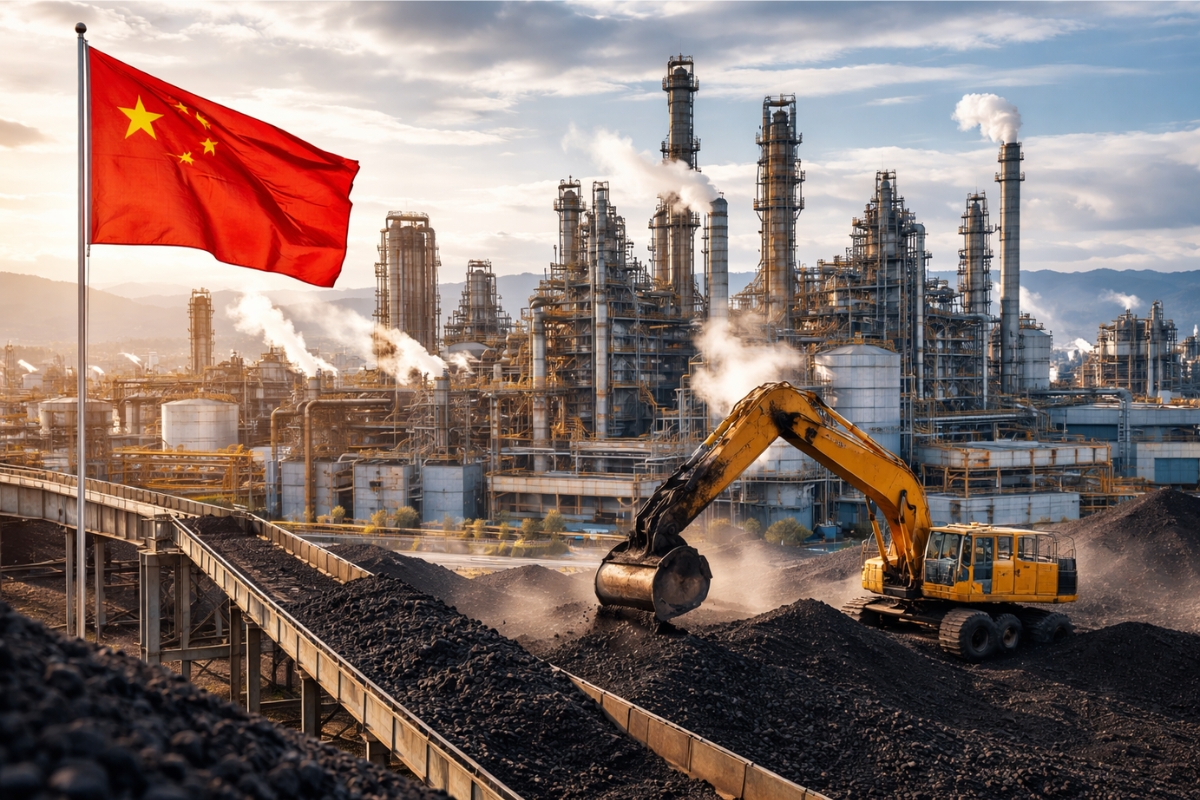

China accelerates a coal-based industrial strategy to produce essential inputs, gain energy autonomy, and reduce the effects of rising oil prices on its chemical and manufacturing supply chain.
China has been expanding an industrial route that transforms coal into inputs used in the production of plastics, fertilizers, and other chemicals. The movement gained momentum due to pressure on oil and the country’s pursuit of more control over its own supply chain.
In practice, this strategy reduces Chinese exposure to external crises, especially during times of tension in the international energy market. At the same time, it increases the weight of coal within the chemical industry and expands large-scale production capacity.
Old technology returns with a new industrial function
The process used by China originated with the Fischer Tropsch method, created in Germany in the 1920s by chemists Franz Fischer and Hans Tropsch. Decades later, this technology gained significance during World War II, when it began to be used to produce fuels and industrial inputs without relying on imported oil.
-
Nigeria Dumps 120 Million Tons of Sand into Atlantic to Build Massive City with 8.4 km Sea Wall for Protection Against Ocean Waves and Erosion

-
German Engineer Developed Diesel Engine Running on Vegetable Oil Decades Before Electric Cars Became Popular; Can This Forgotten Idea Work in 2026?

-
James Webb Telescope Uncovers Unexpected Clues on Mysterious Moon, Potentially Redefining Planetary Origins

-
$1.5 Billion Sleipnir Vessel Transforms Ocean into Floating Construction Site with 12 Hybrid Engines and Capacity to Lift 20,000 Tons


The logic behind this system is to transform coal into an intermediate gaseous base and then convert this material into high-value compounds for the industry. Instead of using coal solely as an energy source, the technique allows for the manufacture of raw materials for plastics, fertilizers, and other strategic chemicals.
It is precisely this versatility that explains China’s current interest. By adapting an old technology for modern scale, the country strengthens its industrial production, reduces external vulnerabilities, and increases control over sectors that are currently significant in the global competition for energy, chemicals, and manufacturing.
Advancement promises to cut emissions from the process
Chinese researchers have also made progress in trying to reduce one of the main problems of this route, which has always been the high level of pollution. The reported change involves a drastic reduction in the formation of carbon dioxide during the conversion of syngas into olefins, the basis for various plastics.
The proposal is to make the process more efficient and less polluting, without abandoning industrial scale. This helps sustain the expansion of the petrochemical sector even under increasing climate pressure.
Xinjiang concentrates giant project to increase production
The new phase of this strategy is strongly emerging in Xinjiang, where the construction of a coal-to-ethylene glycol project with a capacity of 2.4 million tons per year has begun. This compound is used in plastics and also in antifreezes, highlighting the industrial reach of the initiative.
According to the state agency Xinhua, the appreciation of Chinese companies linked to the production of chemicals from coal shows how this strategy has gained strength amid rising oil prices in the international scenario.
Coal gains space in chemicals and fertilizers
The advancement has not been limited to a single industrial plant. The use of coal to manufacture chemicals jumped from 155 million tons in 2020 to 276 million tons in 2024, with further growth of 15 percent in 2025.
The significance of this change is also evident in fertilizers. China already produces about 80 percent of its nitrogen fertilizer from coal, which helps keep prices well below international levels and strengthens the competitiveness of its industry.
New plan protects expansion until 2030
The new Chinese planning for the period from 2026 to 2030 adopts climate goals considered cautious and preserves space for the continuity of coal in the chemical industry. In practice, this creates political protection for the expansion of already designed projects.
This path reinforces a clear strategic reading. China wants to replace oil as the dominant base in parts of its economy while using its own industrial structure to seek 85 percent self-sufficiency in advanced materials and chemicals by 2030.
Overproduction pressures global market
The expansion of internal capacity also brings a significant external effect. With domestic demand weakened, part of this production tends to seek the international market at much lower prices, increasing pressure on competitors in other regions.
This movement is already seen as a risk for the industry in other countries, especially where manufacturers have less state support and lower margins to compete with large volumes exported at reduced prices.
The Chinese strategy combines energy security, industrial scale, and cost control at a time of strong international instability. The country transforms coal into a productive base to keep its manufacturing machine running even with shocks in oil.
By doing this, China increases its autonomy and changes the competitive balance of the global chemical industry. The impact goes beyond energy, pressures markets, reorganizes production chains, and alters strategic readings.


