





 Portuguese
  English
  Spanish
  6 min of reading
  0 comments


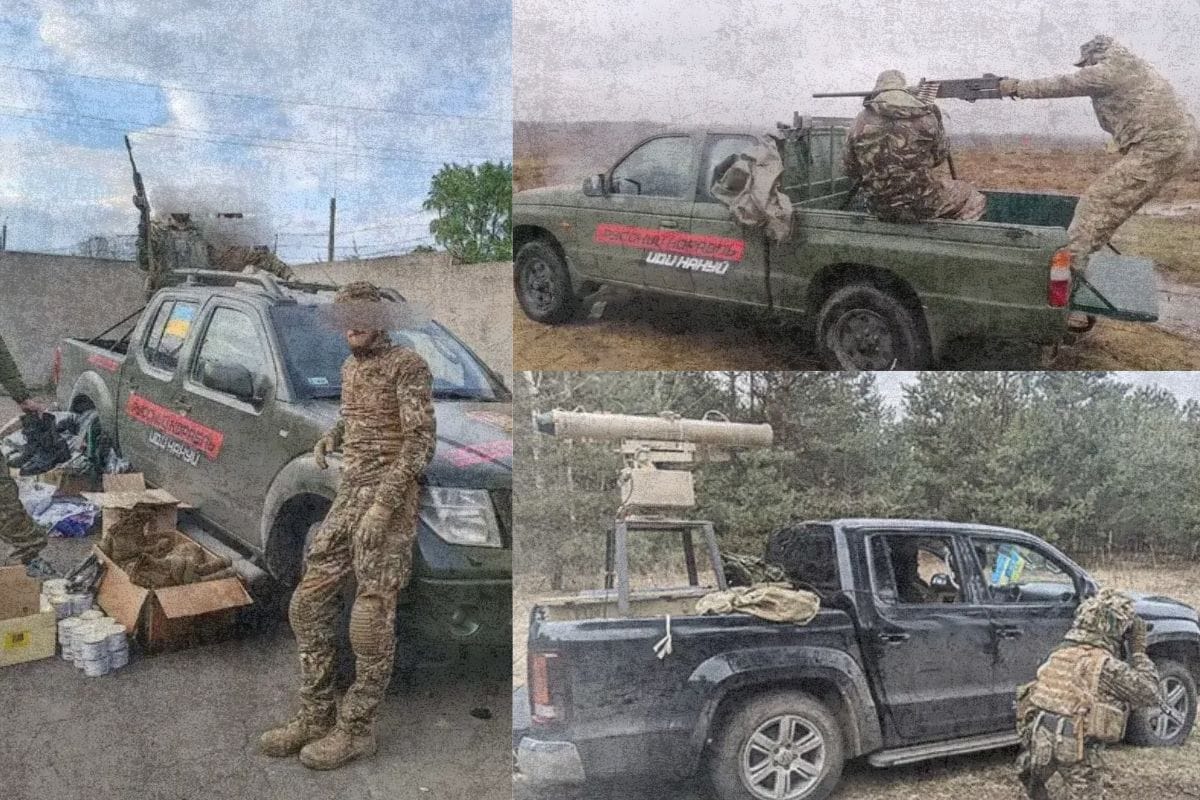
The logistical offensive of Ukraine gained new momentum with the delivery of 25 Volkswagen Amarok pickup trucks in the first half financed by the European Union to the National Police. The vehicles, already sent to the provinces of Donetsk, Kharkiv, and Zaporizhzhia, reinforce evacuation, patrol, and mine removal missions in areas under constant fire.
The shipment adds to the batch of 14 Amaroks donated by the German government last September, with another 16 units on the way, which equip mobile anti-aircraft defense groups of the National Guard. Armored in field workshops, these vehicles act as .50 caliber machine gun platforms and portable missile launchers, responsible for dozens of Shahed drones shot down since January.
-
Less than a Tera TSI, up to 710 km of range and charging in 9 minutes: the new BYD Song Ultra expands the Chinese brand’s bet on increasingly faster, more technological, and competitively priced electric SUVs.

-
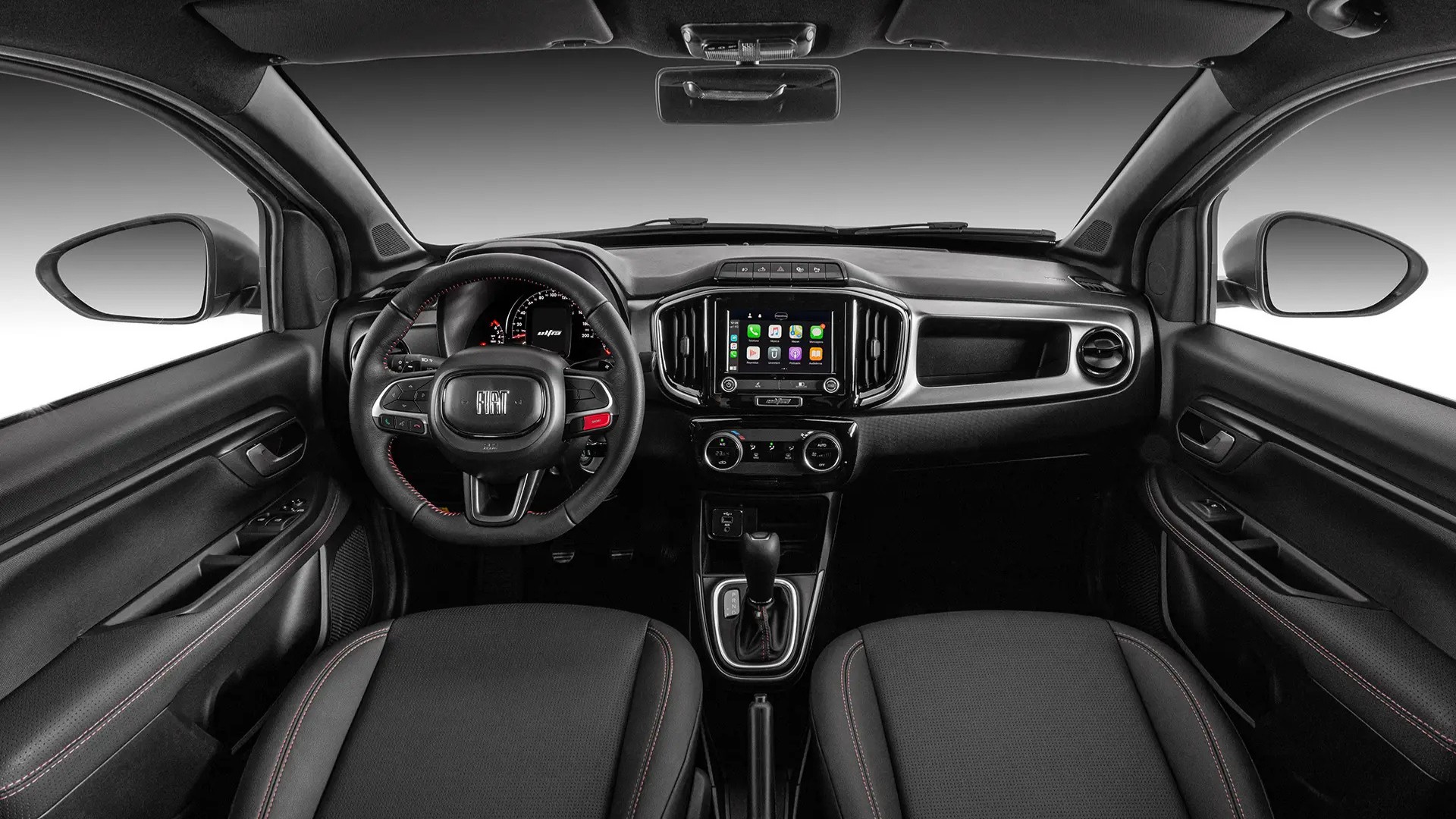
With a 1.0 engine producing 75 hp and costing less than R$ 70,000, Fiat’s car returns to the podium as the cheapest in the country; a temporary promotion for the 2026 Like version reduces the price of the Fiat Mobi.
-
With a mild hybrid system of 48 V, 176 hp and a price of R$ 175,990 in the Sahara version, the new Jeep Renegade changes mostly on the inside, improves slightly in fuel consumption, and remains almost the same car.
-
With a 293.5 cm³ engine and a range of up to 400 km with a 14.1-liter tank, the Honda CB 300F Twister 2026 has up to 24.7 hp, an initial price of R$ 25,150, and already exceeds R$ 29,000 in the Fipe Table.
Outside the official routes, the civil collective Cars4Ukraine has maintained, since June 2022, a parallel flow: it has already transformed more than 60 used Ford, Toyota, and Mitsubishi pickup trucks into “battle-trucks” capable of transporting anti-tank weapons. Together, the initiatives reveal how modest 4×4 vehicles have become a central piece of Ukrainian tactical mobility, ensuring speed, flexibility, and low cost in a war of attrition.



“25 Amaroks for the Line of Fire”: The New Batch from the European Union for the National Police
On February 25, 2025, the European Union delegation delivered twenty-five brand new Volkswagen Amarok to the National Police of Ukraine. The batch went directly to Donetsk, Kharkiv, and Zaporizhzhia, where the patrol officers now need vehicles capable of crossing craters and muddy terrain without losing speed. Factory equipped with 4Motion all-wheel drive and V6 TDI engines of 258 hp, the pickup trucks maintain 80 km/h on dirt roads and preserve a range of over 800 km thanks to the 80-liter tank.
The police plan to install removable stretcher modules and supports for observation drones, transforming each Amarok into an improvised ambulance or mobile command post. Deputy Chief Hennadii Fedoriuk explains that, since the beginning of the invasion, the patrols have taken on typical line unit functions: “we evacuate civilians, deliver medicine, conduct mine sweeps – all of this requires traction, space, and reliability.”
To reduce downtime, the EU included kits of parts and filters for two years, along with official training at the Lviv maintenance center. Each vehicle received encrypted Motorola radios and pre-wiring for Starlink terminals, ensuring stable communication even when cellular towers are down.
The initial reports from the field are positive: in the Kupiansk region, one of the Amaroks transported fifteen civilians in three trips under artillery fire without any mechanical failures. The expectation is that the fleet will remain operational throughout the winter, when deep mud often immobilizes lighter vehicles.

German Armor: How More Than 30 Pickups Strengthen the National Guard’s Anti-Air Defense
Months earlier, on September 22, 2024, the portal Militarnyi reported the arrival of fourteen Amaroks financed by the German Foreign Ministry, accompanied by the promise of another sixteen. Unlike the police vehicles, these pickups were immediately sent to the 3rd Anti-Air Regiment of the National Guard, responsible for protecting power plants and railroad depots.
In field workshops, mechanics installed B6 steel armor on the doors and fenders. In the bed, a rotating pedestal accommodates Browning M2 machine guns or FN-6 missile launchers. The ensemble adds only 480 kg to the total weight, preserving mobility on dirt roads. According to Lieutenant General Volodymyr Hordiychuk, the mobile patrols have downed more than a hundred Shahed drones between January and March 2025.
The choice of the Amarok is due to its reinforced chassis, which withstands the recoil of weapons without structural cracks. Additionally, the V6 engine maintains high torque even when the alternator powers portable IRIS-T radars. During tests in Mykolaiv, the ensemble detected and engaged a drone at 1.8 kilometers, firing sixteen .50 BMG projectiles that destroyed it in mid-air.
Berlin also funds preventive maintenance packages: filters, tires, and oils sufficient for two years. The goal is for each pickup to remain in mobile groups for 20 hours a day, only rotating for refueling and crew rest.
Inside the Volkswagen Amarok: Engine, Traction, and Why It Can Handle the Front
The 2025 Amarok sold in Brazil, similar to the version sent to Ukraine, weighs 2,313 kg, measures 5.35 m in length, and features a 3.0 TDI V6 engine with 258 hp and 59.1 kgfm. The reinforced longbeam architecture allows a payload of 1,028 kg, while the double wishbone suspension at the front and semi-elliptical leaf springs at the rear absorb shocks of up to 3 g, common in nearby explosions.
Its permanent 4Motion system distributes torque between the axles via a Torsen differential, ensuring traction even when one wheel loses contact with the ground. On the front, this means crossing plowed fields or driving over debris without getting stuck. The ZF eight-speed automatic transmission keeps the rpm low – crucial for fuel efficiency on long patrols.
Another differential is the 365 mm ventilated disc on all four wheels, capable of dissipating enough heat for repeated braking on steep descents while carrying additional armor. The onboard electronics include stability control with an off-road mode, useful for preventing rollovers when veering away from craters at high speed.
The cabin supports the installation of tactical radios, military GPS, and observation monitors without invading the driver’s space. Two anchoring points on the roof allow for the attachment of anti-IED cages made of tubular steel, a solution already used by the National Police to deflect shrapnel. In summary, the Amarok delivers the robustness of a light truck with the agility of an SUV, a rare and coveted combination in any combat zone.
Cars4Ukraine: The Collective That Converts Civilian Fords and Toyotas into Armed Battle-Trucks
On June 12, 2022, Business Insider described how the Cars4Ukraine project transformed civilian pickup trucks into attack platforms for rapid maneuver battalions. Ivan Oleksii and thirty volunteers buy used 4×4 vehicles for about €5,500 each, preferring Toyota Hilux, Ford Ranger, and Mitsubishi L200 at auctions from Berlin to Warsaw.
Upon arriving in Lviv, each car receives additional steel plates on the doors, armored cradles for the oil pan, and rear mounts for machine guns or Javelin launchers. The reinforcement adds 600 kg, but maintains a top speed above 120 km/h. On average, the conversion costs €9,000 and takes nine days, funded 100% by crowdfunding.
By July 2022, sixty vehicles were already at the front, with fifteen awaiting finishing. Reports from mechanized brigades show that five pickups withstood artillery explosions and managed to return to base by their own means. All leave the workshop with the phrase “Russian warship, go f*** yourself” painted on the body and, according to Oleksii, serve as “anti-tank missiles on wheels.”
The project has expanded with the War-Stop website, where donors can directly purchase vests, radios, or medical kits for the same units that receive the pickups. Oleksii, unable to enlist for medical reasons, says that each delivered vehicle is “a step towards reclaiming Kherson, where my parents still live under occupation.”
Light Logistics, Heavy Impact: Why 4×4 Pickups Have Become the Tactical Wild Card of War
From government donations to volunteer workshops, 4×4 pickups have proven to be the missing link in mobility between heavy tanks and foot soldiers. Light enough to cross improvised bridges, but strong enough to transport .50 caliber machine guns, these vehicles operate as ambulances, anti-air platforms, and munitions transport in the same mission.
The cost is decisive: a brand new Amarok donated by the EU costs about US$ 45,000, while the artisanal armor adds another US$ 10,000. Even so, the total price is less than 5% of a standard NATO MRAP. Additionally, the delivery time is measured in weeks, not years of bidding.
On the flat terrain of southern Ukraine, the speed of pickups allows for “shoot-and-scoot” against targets of opportunity. Mobile air defense units report they can reposition in less than five minutes, frustrating Russian artillery guided by drones. When logistics holes arise, the bed carries pallets of 120 mm ammunition or 40 kVA generators, functions impossible for an armored Humvee.
Finally, mechanical simplicity is gold in zones without specialized workshops. Diesel engines common among European fleets accept replacement parts found in civilian dealerships. This “democratization” of technical support keeps the fleet running even under a military parts embargo. In summary, pickups have become the tactical wild card of modern warfare: cheap, versatile, and always ready for the next mission.









Seja o primeiro a reagir!