





 Portuguese
  English
  Spanish
 5 min of reading
  0 comments


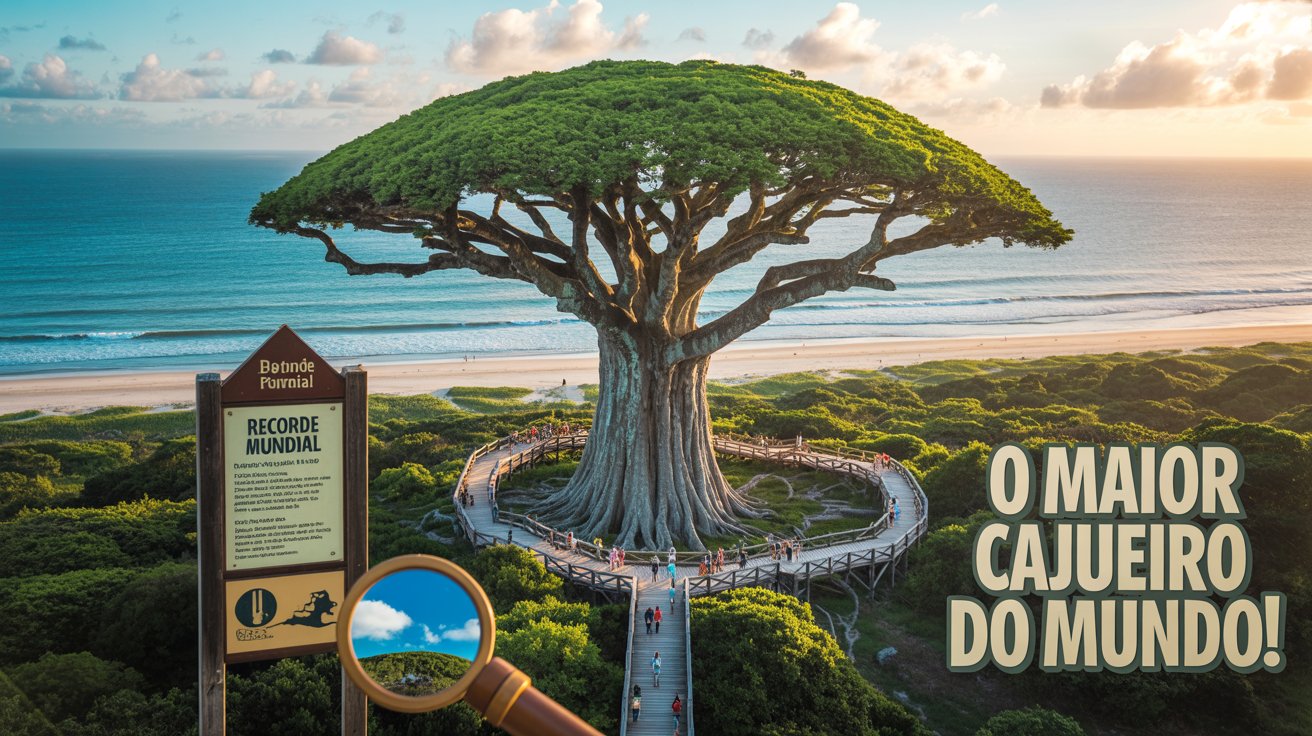
On The Coast Of Rio Grande Do Norte, An Extraordinary Tree Challenges Science And Attracts Thousands Of Visitors Each Year, Forming A True Forest Over The Sand And Transforming The Local Landscape Into An Unmatched Natural Spectacle.
The Cajueiro de Pirangi, on the shores of Pirangi do Norte Beach in Parnamirim (RN), has held the title of Largest Cashew Tree In The World for over 130 years.
Recognized by the Guinness World Records since 1994, the specimen covers an impressive 9,000 m² — an area larger than one and a half football fields — and has about 500 m of perimeter, forming a canopy equivalent to 70 common cashew trees.
According to oral records, fisherman Luiz Inácio Oliveira planted the original seedling on December 20, 1888.
-
Church from 1888 becomes a mansion of over 330 m² in Canada after a renovation of R$ 3.4 million and is eventually sold for nearly R$ 4.3 million.

-
How an innovative city combines high technology, well-being, and sustainability to become the largest reference in clean energy on the planet.

-
Couple buys 1846 church in ruins for R$ 660,000, invests R$ 3.2 million in renovations, transforms it into a millionaire mansion, and even preserved a historic cemetery with over 300 graves.

-
He started running at 66 years old, broke records at 82, and is now a subject of study for having a metabolic age comparable to that of a 20-year-old, in a case that is intriguing scientists and inspiring the world.

Since then, the tree has been “walking” slowly along the beach: as old branches die, new branches take root in the opposite direction, shifting the vital center of the plant.
Thus, a single canopy creates the sensation of a mini–forest — a phenomenon that intrigues botanists and delights tourists.
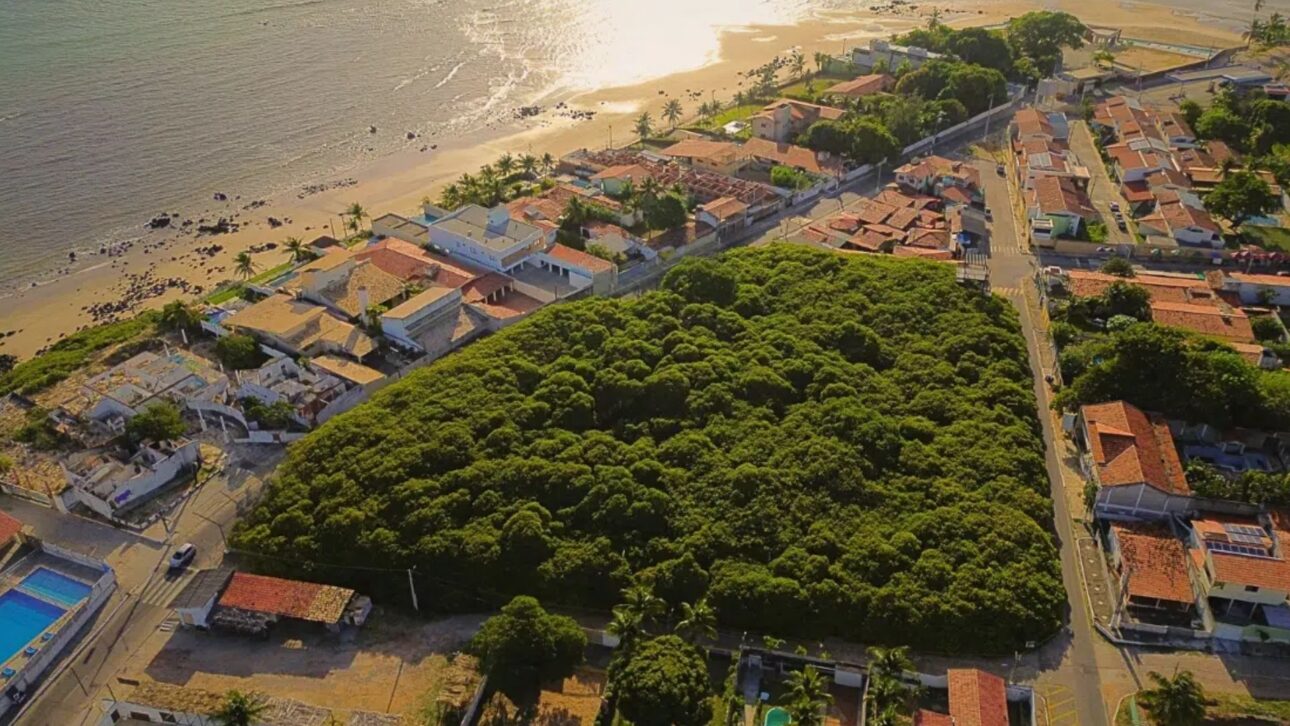
Origin And Recognition Of The Largest Cashew Tree In The World
In 1994, a team from Guinness measured the canopy area and confirmed the record.
Since then, the largest cashew tree in the world has continued to expand, forcing the Institute of Sustainable Development and Environment of Rio Grande do Norte (Idema) to install suspended walkways to protect the roots and organize visitor flow.
Every December 20, a symbolic planting date, the site hosts special celebrations.
In 2024, the 136th anniversary included cultural performances and the distribution of cashew seedlings.
Genetic Mutation And Formation Of The Cashew Tree Forest
Why does this tree multiply?
Researchers point to a rare mutation in two points of the DNA of the common cashew tree (Anacardium occidentale).
First, the branches grow laterally instead of upward.
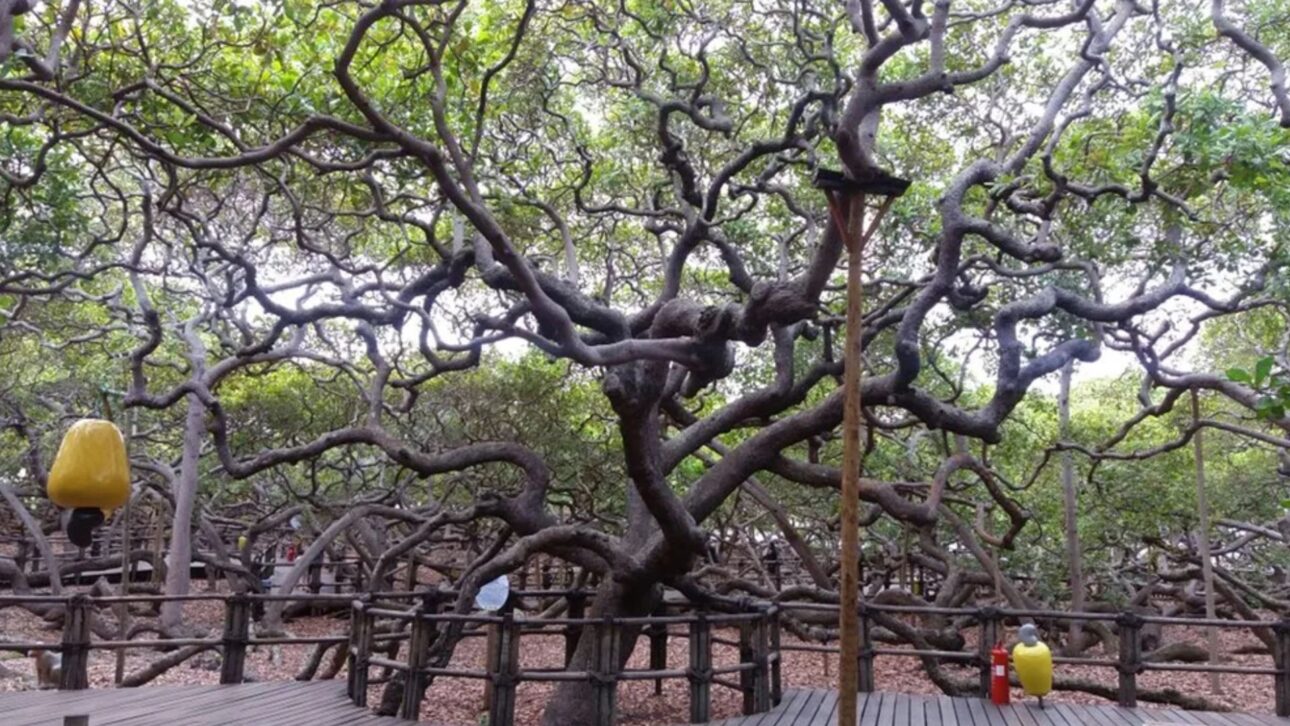
Then, upon touching the sandy ground, they develop adventitious roots and originate new trunks, but all remain connected to the “mother trunk.”
The process repeats, creating a living network that occupies nearly the entire block.
The hypothesis of genetic anomaly gained strength after analyses of plant tissue published by federal universities in the Northeast.
The studies ruled out human practices of layering or grafting.
However, there is still no consensus on the exact genetic markers involved.
Cashew Harvest And Impact On The Local Economy
From November to January, the Cajueiro de Pirangi enters its harvest season.
During its peak production, the tree yielded 70,000 to 80,000 fruits, equivalent to 2.5 tons of cashew, used in juices, candies, and artisanal liqueurs sold nearby.
In recent years, researchers have recorded a natural decline in fruiting — only 15,000 cashews were harvested in 2021.
The reduction is attributed to the aging of century-old branches and the typical water stress of the Potiguar coastline.
Still, the aromatic pulp continues to perfume the entire area, and the nut retains significant commercial value for local families.
The revenue from ticket sales (R$ 10, price as of July 2025) and from sales of by-products funds a program managed by Idema.
A portion of the resources supports environmental education projects and maintenance actions, such as controlled pruning, low-impact lighting, and monitoring against vandalism.
Visitation To Cajueiro de Pirangi And Environmental Education
The largest cashew tree in the world receives over 300,000 annual visitors, according to the Rio Grande do Norte Tourism Secretariat.
The flow grew by 12% between 2022 and 2024 with the resumption of post-pandemic tourism.
To prevent soil compaction, wooden walkways run through the canopy.
A central viewpoint, about 8 meters high, offers a panoramic view of the “one-legged forest” and the stretch of sand.
Local guides explain the life cycle of the cashew, demonstrate nut extraction, and invite the public to participate in soil management workshops.
These activities were reinforced in 2025 during the State Week of the Environment.
How To Get To The Largest Cashew Tree In The World
From the hotel zone in Natal, the shortest route follows the Sun Route (RN-063) and takes about 25 minutes by car.
Those preferring public transport can take the intermunicipal line to Pirangi do Norte.
Tourist shuttle vans also include the Cajueiro de Pirangi in routes that pass by the Barreira do Inferno Complex and beaches of the southern coast.
Signage reinforced by the city hall guides drivers to park in paid lots just after the access portal.
Service: Information For Visiting
Address
Av. Dep. Márcio Marinho, s/nº, Pirangi do Norte, Parnamirim-RN
Hours
Daily, from 7:30 AM to 5:30 PM
Entrance Fee
R$ 10 (price as of July 2025; half-price according to legislation)
Contact
(84) 3232-3207 — idema.rn.gov.br
Curiosities About The Cajueiro de Pirangi
- The green canopy has already invaded sections of pavement.
- In 2012, Idema erected a pergola to support branches that advanced over the public road.
- Studies indicate an average height of 7 to 8 meters, lower than many conventional cashew trees, as the plant’s energy focuses on horizontal expansion.
- There is another candidate for the record — the “Cajueiro Rei,” in Cajueiro da Praia (PI) — but it does not have official measurement from Guinness and measures about 8,800 m². Nonetheless, local communities advocate for new periodic measurements.
And you, have you walked through the shadowy maze of this cashew tree that “walks” through the sand, or are you still planning to feel the sweet aroma of the next harvest?




-

Uma pessoa reagiu a isso.