





 Portuguese
  English
  Spanish
  4 min of reading
  0 comments


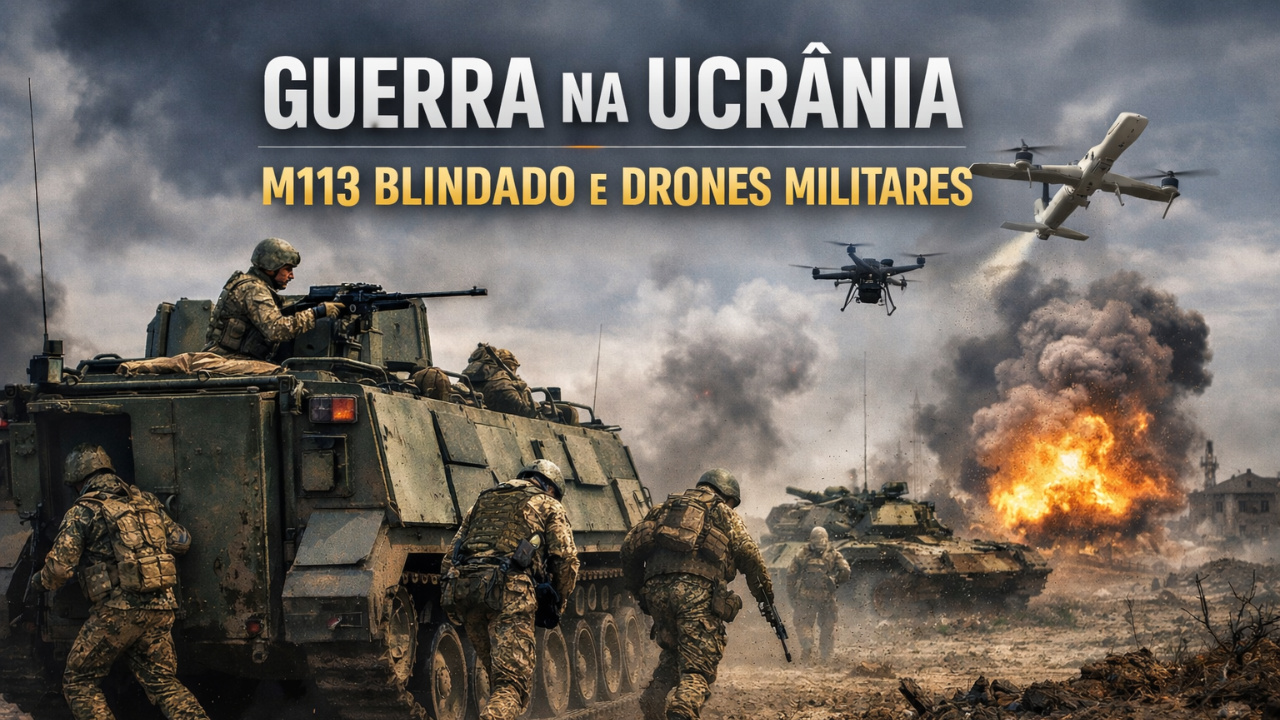
Ukraine War shows how the M113 armored vehicle gains strength in modern warfare with military drones and a war of attrition scenario.
The Ukraine War has revealed a surprising scenario: a military vehicle from the 1950s, the M113 armored vehicle, has returned to the center of operations in the midst of a modern war dominated by military drones.
Used mainly by Ukrainian forces in recent months, the equipment stands out not for its advanced technology, but for its practical efficiency in a war of attrition.
What happens, therefore, is an inversion of expectations.
-
Maritime geopolitics: China and the USA compete for strategic ports in Peru.
-
Iran shoots down two US aircraft: F-15 fighter crashes in mountainous area, one crew member is rescued and another is still missing; second crash in the Persian Gulf exposes still active air defense, says US intelligence.
-
USA and China compete for Brazil over resources that could be worth trillions — rare earths put the country at the center of a global dispute

-
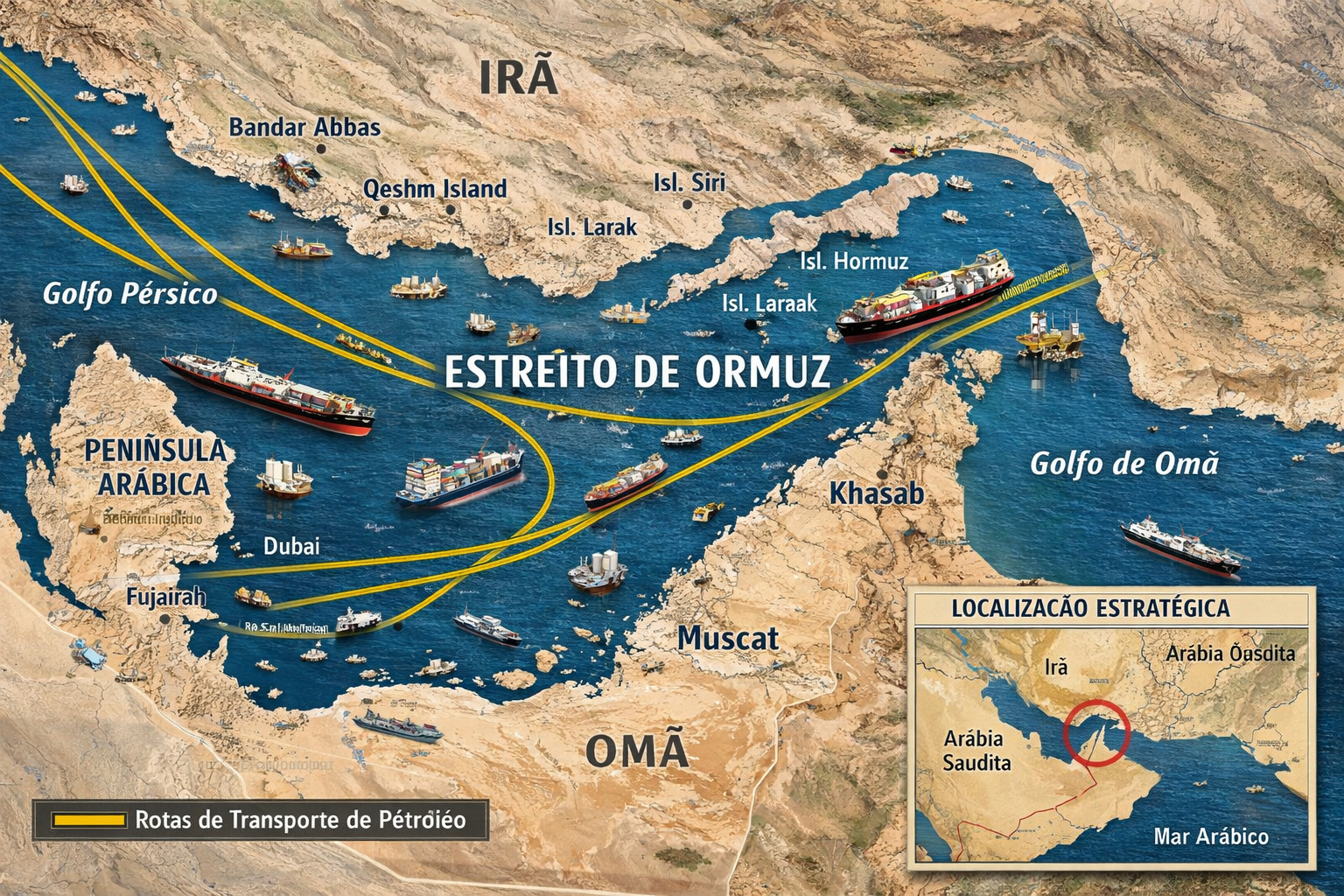
Global summit with over 40 countries pressures Iran for a blockade in the Strait of Hormuz and warns of direct impact on oil, food, and the global economy.

Instead of sophisticated systems leading the battlefield, what gains ground is a simple, functional, and highly adaptable vehicle.
This occurs mainly in areas of intense combat in Ukraine, where the need for mobility and rapid replenishment outweighs the use of complex technologies.
Furthermore, the resurgence of the M113 helps explain how the war has evolved.
Rather than relying solely on technological innovation, the current conflict values resilient, accessible, and easy-to-maintain solutions.
Modern war redefines the value of military technology
Although modern war is often associated with artificial intelligence and cutting-edge weaponry, the reality on the battlefield has shown another logic.
In practice, combat performance is more linked to functionality than sophistication.
“War does not necessarily reward the latest technology, but rather what is most useful in extreme contexts.” This statement summarizes the current scenario well.
In this context, the M113 armored vehicle stands out for essential characteristics: mobility, simple maintenance, and mass production.
In environments where vehicles can be quickly destroyed by military drones, the ability for rapid repair becomes a decisive differential.
In other words, surviving does not mean avoiding damage, but rather being able to return to operation quickly.
M113 armored adapts to the war of attrition
Another determining factor is the type of conflict underway. The Ukraine War has evolved into a typical war of attrition, characterized by prolonged fighting and high resource depletion.
In this scenario, the M113 armored vehicle plays a strategic role.
It is mainly used for transporting troops, equipment, and even drones, ensuring mobility in dangerous areas.
Moreover, its structure allows for quick adaptations, such as improvised armor.
Meanwhile, more modern vehicles, although more powerful, face limitations.
They are more expensive, harder to repair, and less available in large numbers.
Therefore, the balance of war does not depend solely on brute force, but on the ability to maintain continuous operations.
Military drones change the rules of the battlefield
The massive presence of military drones has completely transformed the dynamics of modern warfare. Today, practically every movement in the field can be monitored from the air, reducing the effectiveness of traditional strategies.
As a result, even heavy tanks have lost some of their relevance. They have become easier targets, especially in open areas.
In this new scenario, the M113 armored vehicle gains an advantage precisely due to its logistical function. Instead of attacking directly, it allows for the movement of resources with more flexibility and speed.
Thus, war is defined not only by who has more firepower, but by who can position themselves better under constant aerial surveillance.
Russia bets on opposite solutions in the Ukraine War
While Ukraine uses the M113 armored vehicle strategically, Russia has taken a different path.
In recent months, reports have emerged of the use of so-called “giant turtles,” heavily armored tank versions adapted to withstand drone attacks.
However, these machines have clear limitations. By prioritizing protection, they end up sacrificing mobility, becoming predictable targets.
Still, this approach reinforces an important point: both sides recognize that ground vehicles remain essential, but they need to adapt to the constant threat of military drones.
Quantity and resilience define the war of attrition
One of the main advantages of the M113 armored vehicle is its availability. With over 80,000 units produced throughout history, the vehicle remains in use in various countries.
This means that, in the Ukraine War, it is possible to quickly replace losses. In a war of attrition, this capability is fundamental.
In other words, the conflict is not won solely with superior technology, but with resilience and operational continuity. Modern systems, although efficient, are limited by cost and scarcity.
On the other hand, the M113 offers something essential: volume and persistence.
Ukraine War reveals deep strategic change
Finally, the prominence of the M113 armored vehicle highlights a conceptual transformation in modern warfare. The traditional logic, based on technological superiority, gives way to a more pragmatic approach.
This means that old solutions still have a place, as long as they meet the real demands of the battlefield.
In an environment dominated by sensors, drones, and constant attacks, adaptation becomes more important than pure innovation.
Thus, the Ukraine War shows that winning does not depend solely on having the most advanced equipment, but on knowing how to use it in the most efficient way possible over time.
See more at: Neither drones, nor missiles, nor artificial intelligence: the war in Ukraine transformed the M113, a vehicle from the 1950s, into a key piece and Neither drones, nor missiles, nor artificial intelligence: the war in Ukraine transformed the M113, a vehicle from the 1950s, into a key piece





Seja o primeiro a reagir!