





 Portuguese
  English
  Spanish
  3 min of reading
  0 comments


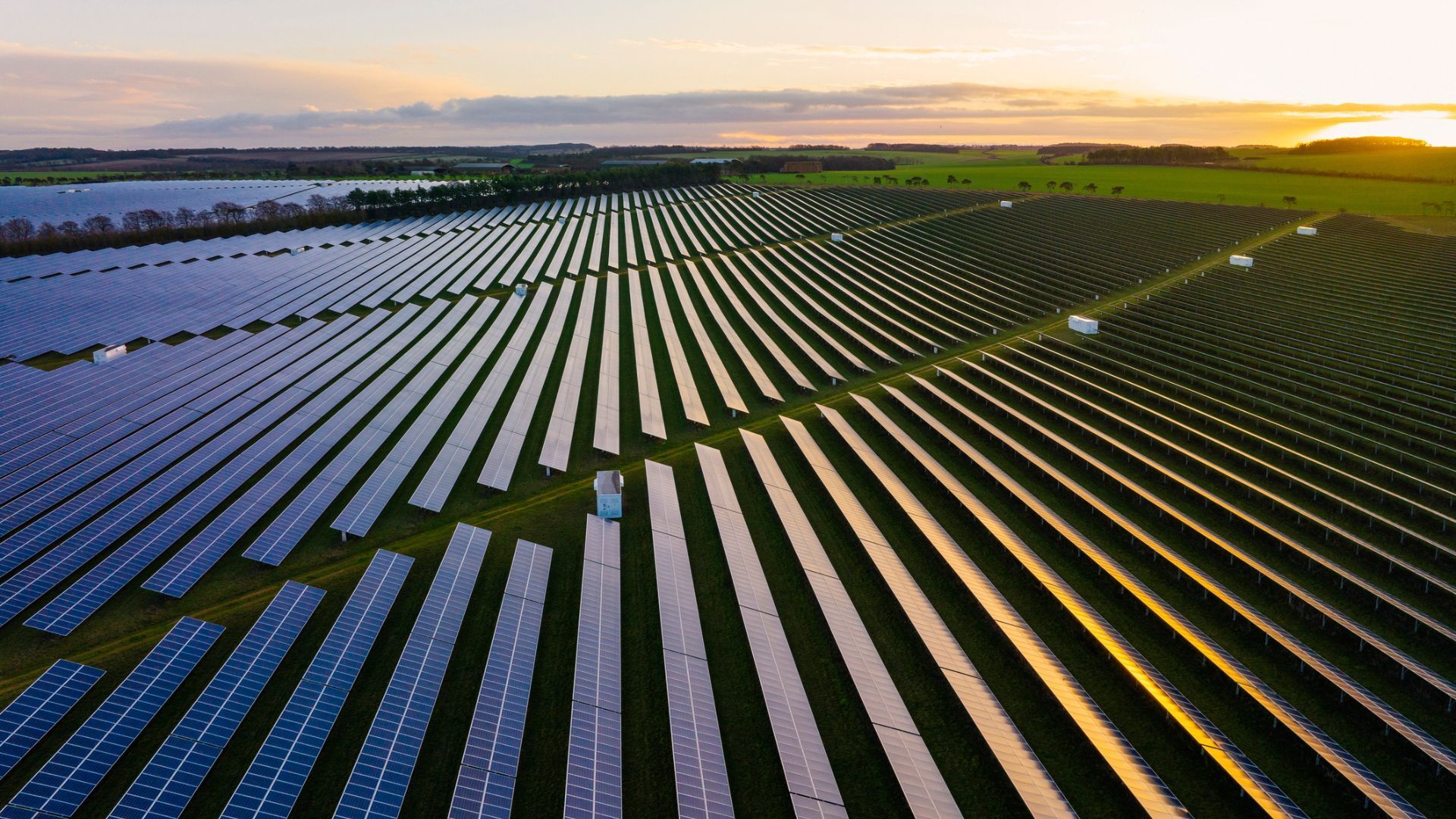
The largest photovoltaic complex in the country will have a capacity of 600 MW and will use battery storage systems to stabilize the national grid.
The government of the United Kingdom has officially authorized the construction of the Cottam solar farm, an energy infrastructure project that will become the largest solar energy complex in the country.
Located in the regions of Lincolnshire and Nottinghamshire, the facility will occupy an area equivalent to 1,700 football fields. When fully operational, the project will have the capacity to provide renewable energy to approximately 180,000 British households.
Dimensions and generation capacity
The Cottam solar farm has been designed to generate 600 megawatts of electricity, significantly surpassing the largest photovoltaic plants currently operating in British territory. The complex will consist of four distinct interconnected sites, which will use ground-mounted solar panels to capture solar radiation.
-
Scientists unveil magnetism at the atomic scale to revolutionize next-generation electronics and computing.

-
In Australia, the Red Centre became so green in 2026 that the region most famous for its red landscape looks like another view from space, after weeks of rain transformed desert and arid mountains into a continuous strip of vegetation in the heart of the country.

-
Colossal arch of 36 thousand tons in Chernobyl marks historic advancement — unprecedented technology was able to contain historic nuclear leak.

-
The oldest known ear surgery was found in Spain on a 5,300-year-old skull with two perforations behind the ears and clear signs that the patient survived the operations.

The infrastructure also includes battery energy storage systems, allowing the generated electricity to be injected into the national grid consistently.
The project utilizes land that was previously designated for agricultural activities, which has sparked local debates about the balance between food security and the energy transition. However, the government decision prioritized the scale of the solar farm Cottam as an essential pillar for the UK’s decarbonization goals. The extent of 1,700 football fields reflects the ambition to expand solar generation capacity to 50 gigawatts by 2030.
Contribution to climate goals
The approval of this solar farm is part of a set of measures to reduce dependence on fossil fuels and mitigate the effects of climate change.
By powering 180,000 households, the plant will avoid the emission of hundreds of thousands of tons of carbon dioxide annually into the atmosphere. This move is seen as a decisive step for the United Kingdom to achieve carbon neutrality by mid-century.
The Secretary of Energy Security and Net Zero emphasized that large-scale projects are crucial to ensure energy independence and reduce electricity bills for consumers in the long term. The Cottam solar farm will operate for an estimated period of 40 years, after which the land is expected to be returned to its original state. During operation, biodiversity plans will be implemented to protect local flora and fauna in the areas surrounding the panels.
Economic impact and grid infrastructure
The construction of the solar complex is expected to generate hundreds of skilled jobs during the installation phase and dozens of permanent positions for operational maintenance.
The proximity to the former infrastructure of the Cottam power station, which was coal-fired, facilitates direct connection to the national electricity grid. This reuse of existing connection points optimizes integration costs and accelerates the availability of clean energy to the system.
In addition to direct generation, the battery system attached to the Cottam solar farm will help stabilize the electricity grid during periods of fluctuation in supply and demand. Private investment in the solar energy sector has been growing in the United Kingdom, driven by government decisions favoring nationally relevant infrastructure projects.
With the authorization granted, the expectation is that fieldwork will begin soon, consolidating the role of solar energy in the British energy matrix.
Click here to access the study.









Seja o primeiro a reagir!