





 Portuguese
  English
  Spanish
  6 min of reading
  0 comments


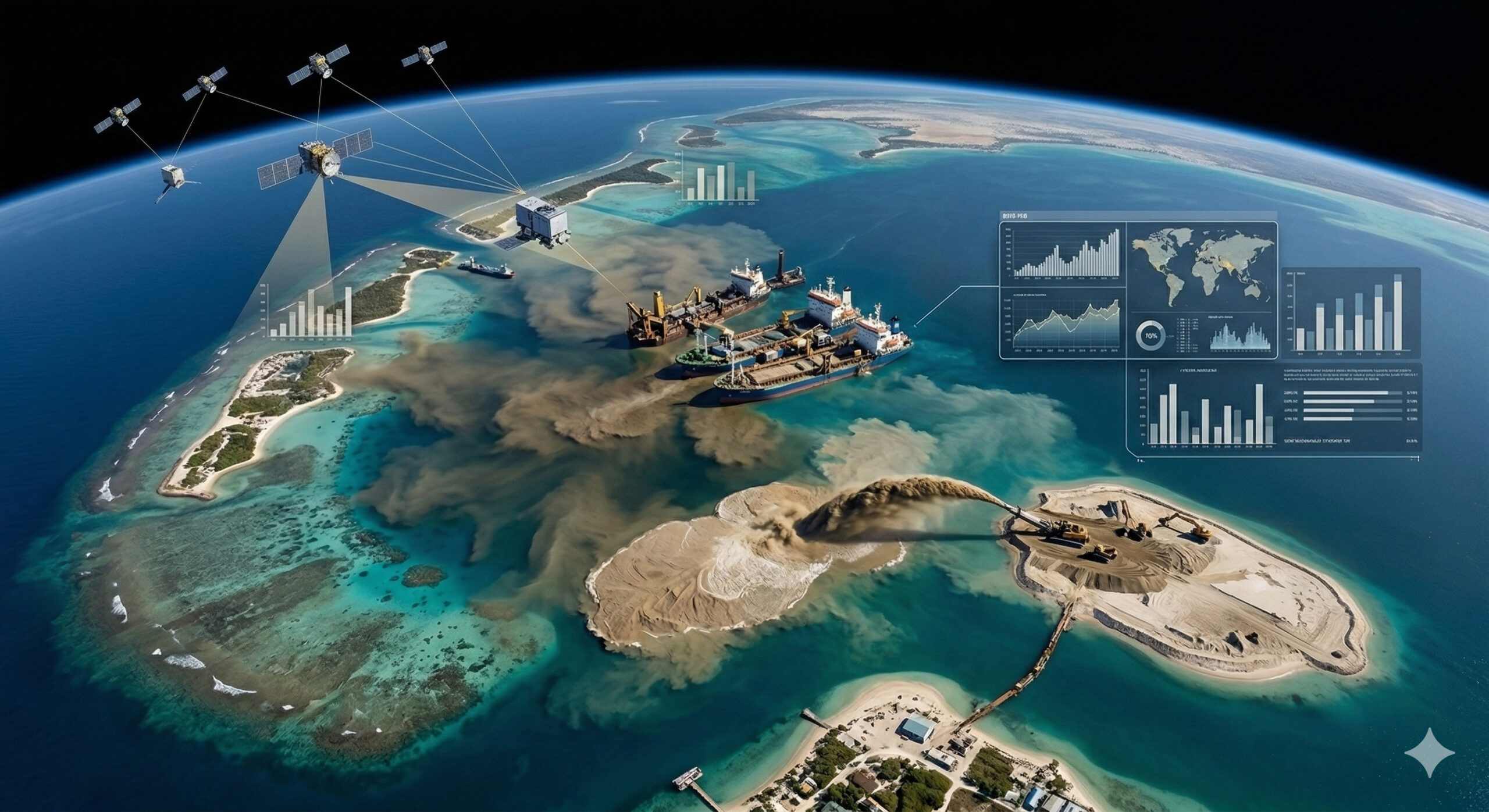
Extraction of 6 billion tons of marine sand per year led the UN to create a satellite system to monitor global environmental impacts.
In 2023, the United Nations Environment Programme launched the Marine Sand Watch after consolidating analyses that exposed a scale rarely discussed outside the technical field: dredging removes, on average, about 6 billion tons of sand and other sediments per year from the global marine environment. This data was released in an official UNEP statement and later echoed in international forums on sustainability, including an analysis published by the World Economic Forum. The magnitude of this volume helps explain why sand has come to be treated as a strategic resource, even though it is rarely associated, outside technical discussions, with severe environmental impacts.
In a previous report, UNEP itself had already warned that sand and gravel account for about 50 billion tons used per year and form the most extracted solid material on the planet. In the scientific literature on the subject, these aggregates are also responsible for up to 85% of the weight of minerals extracted globally, which helps to illustrate why they far exceed coal, oil, and metallic ores when the comparison is made in physical volume.
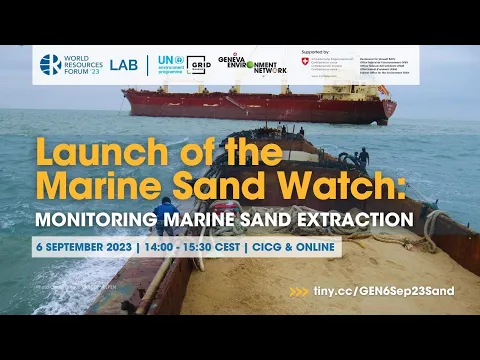
Marine Sand Watch platform uses satellites to track dredging in real time

The creation of Marine Sand Watch marks an unprecedented attempt to globally monitor sand extraction in the ocean. The system uses vessel tracking data, artificial intelligence, and satellite imagery to identify dredging activities.
-
NASA chief says in an interview with CNN that the chance of finding alien life in the universe is quite high and reveals that this search is at the heart of all the agency’s missions, including the Artemis program that has just taken humans around the Moon.

-
From the light bulb to the ENIAC: the Edison effect paved the way for diodes and triodes, amplified radio and telephony, turned into Boolean logic with relays, and created giant computers, leading to the leap towards modern silicon.

-
With more expensive oil and the risk of shortages, China is expanding the use of technology developed in Germany during World War II that transforms coal into plastics, fuels, and chemical products.
-
Toxic plant of 4 meters, banned in Spain, is already taking over gardens and parks in Thuringia, Germany: volunteers say that pulling it out is not enough, roots sprout again and seeds last for years; residents are asking for glyphosate to eradicate it.

These operations are carried out by specialized ships that suck sediments from the seabed, often at relatively shallow depths, where sand is more abundant and easily accessible.
The innovation of the platform lies in its ability to detect vessel behavior patterns and estimate extracted volumes, even in areas without direct oversight.

This type of monitoring has become necessary because much of the activity occurs without transparency or adequate control.
Submarine dredging destroys ecosystems and alters the ocean floor irreversibly
The extraction of marine sand is not just a removal of inert material. The dredging process directly affects the ecosystems of the ocean floor.
During the operation, sediment is sucked up along with benthic organisms, such as mollusks, crustaceans, and other forms of life that inhabit the seabed.
Moreover, the removal of the surface layer alters the physical structure of the bottom, making natural regeneration difficult.
This type of impact can lead to the destruction of entire habitats, including breeding and feeding areas for various marine species.
The recovery of these environments can take decades or, in some cases, may not occur completely.

Sand extraction removes natural barriers and increases coastal vulnerability
One of the most critical effects of sand mining occurs in coastal regions. Sand plays a fundamental role in natural protection against extreme events, such as storms and rising sea levels.
By removing large volumes of sediment, dredging weakens these natural barriers, making coastal communities more vulnerable.
This can result in:

- accelerated beach erosion
- invasion of the sea over inhabited areas
- increased impact of storms
- loss of coastal infrastructure
The removal of sand alters the sediment balance, affecting the dynamics of currents and the stability of the coastline. This effect is cumulative and can intensify over time.
Alteration of ocean currents and impact on complex environmental systems
The extraction of sand also interferes with local ocean currents. The modification of the seabed alters the flow of water, influencing natural processes such as sediment transport and nutrient distribution.

These changes can affect not only the directly explored area but also adjacent regions. The hydrodynamic impact can trigger chain effects that affect entire ecosystems. The complexity of these systems makes it difficult to predict all the consequences of the activity.
Despite the scale and impacts, the regulation of sand mining is still considered insufficient at a global level. Many countries lack specific legislation or effective oversight mechanisms.
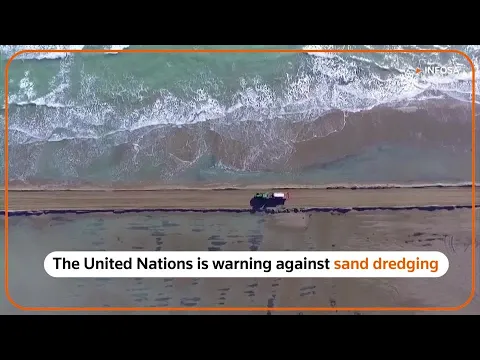

This creates a scenario where the activity can occur uncontrollably, especially in international waters or regions with limited governance.
The absence of clear rules facilitates the expansion of illegal operations and hinders effective monitoring. UNEP has already warned of the urgent need for stricter regulation.
Illegal networks exploit sand mining as a highly profitable activity
The combination of high demand and low oversight has opened the door for criminal networks involved in sand extraction.
These operations, often described as “sand mafias,” operate in various countries, exploiting resources illegally.
Sand is widely used in construction, especially in concrete production, ensuring constant demand.
This underground market can generate financial volumes comparable to other illegal industries, such as trafficking in natural resources. The difficulty of tracking contributes to the expansion of these activities.
Global demand for construction boosts intensive exploitation of the resource
The main driving force behind sand mining is the demand from the construction industry. Sand is an essential component of concrete, the most widely used material in the world after water.
With urban growth and infrastructure expansion, the need for sand has increased significantly.
This massive consumption transforms sand into a strategic resource, despite its apparent abundance. Not all sand is suitable for construction, which intensifies the pressure on specific deposits.
UNEP advocates restrictions and warns of the need for change in the current model
In light of the observed impacts, UNEP recommended measures to reduce sand extraction, including restrictions on extraction in sensitive areas, such as beaches.
The organization also advocates for greater transparency, monitoring, and the development of alternatives to the intensive use of the material.
The recommendation to ban extraction on beaches reflects the severity of the impacts already identified. Without changes, the trend is towards worsening environmental problems.
Monitoring technology can change the way the activity is monitored
The use of satellites and artificial intelligence represents a new approach to controlling sand mining. With more accurate data, governments and organizations can identify critical areas and direct oversight actions.
The technology can reduce the opacity of the sector and increase accountability of operations. However, its effectiveness depends on international cooperation and the implementation of public policies.
Sand is often seen as an abundant and low-value resource, but its industrial-scale extraction reveals a paradox.
While it supports urban development, the activity compromises ecosystems and increases environmental risks. This contrast highlights the need to rethink the use of seemingly common natural resources.
Sustainable management of sand may become one of the most relevant environmental challenges of the coming decades.
Is the world prepared to deal with a silent crisis that is already happening in the oceans?
Sand mining occurs largely off the public radar, despite its significant impacts. With increasing demand and lack of regulation, the activity tends to expand even further.
The central question becomes whether global society will be able to balance development and conservation before the impacts become irreversible.
In light of this scenario, an inevitable question arises: to what extent can a seemingly common resource become one of the greatest environmental risks on the planet?








Seja o primeiro a reagir!