





 Portuguese
  English
  Spanish
  5 min of reading
  0 comments


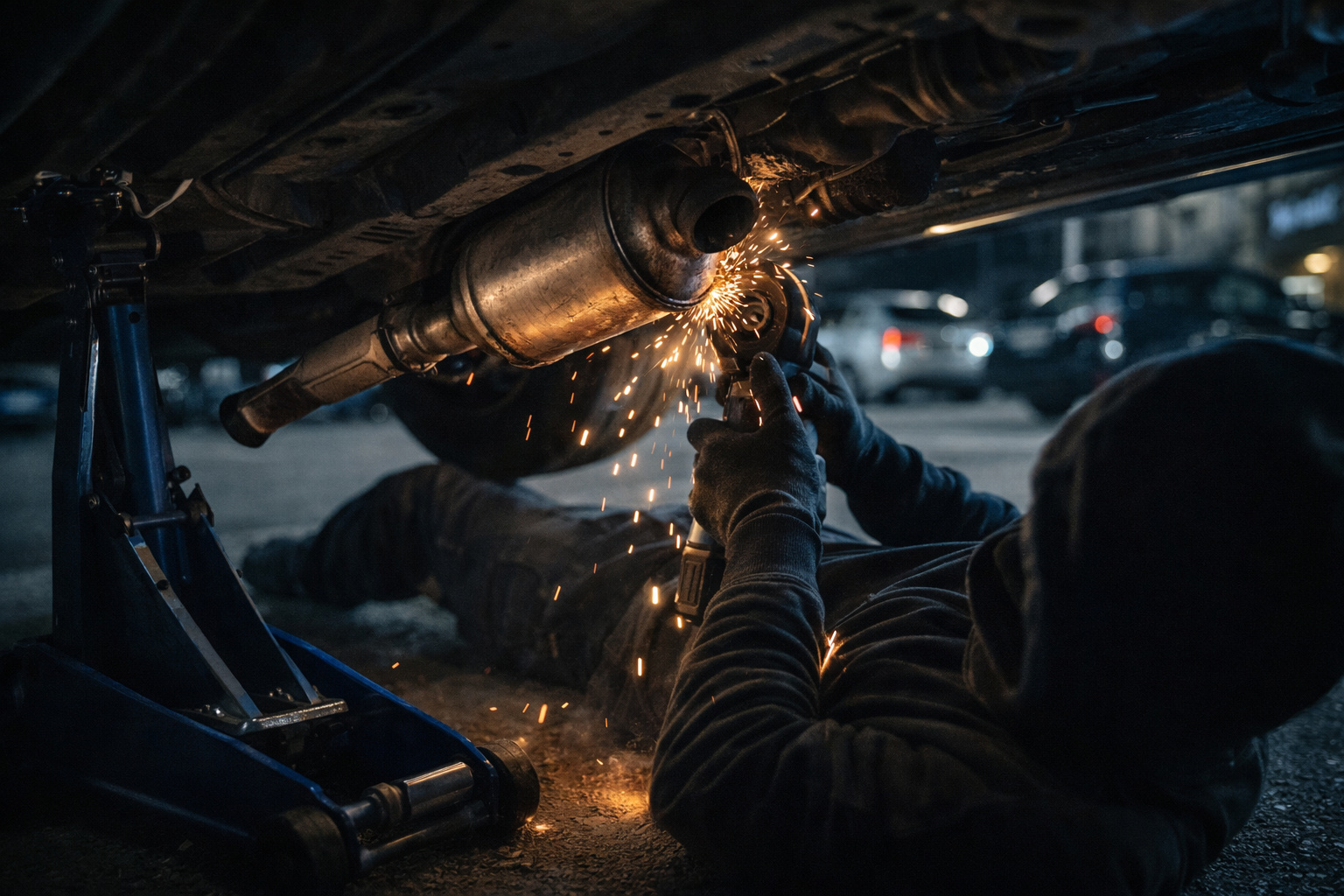
Catalytic converter thefts rise, leaving the USA and starting to grow in Brazil; part can be removed in minutes and costs up to R$ 8 thousand for replacement.
In recent years, local authorities and media outlets have begun to report cases of catalytic converter theft also in Brazilian cities, especially in the state of São Paulo. In 2023, the City Hall of Louveira reported that a vehicle monitored by the Municipal Guard was committing this type of crime against parked cars; in 2024, the City Hall of Bragança Paulista announced the arrest of suspects with two stolen catalytic converters and tools used in the act. These records are not enough to close a national statistical picture, but they show that the crime is already appearing in a concrete and documented way in Brazil.
The observed dynamics follow the pattern already widely documented abroad. In an official statement, the U.S. Department of Justice states that catalytic converters can be stolen in less than a minute and are a recurring target because they contain palladium, platinum, and rhodium, high-value metals in the market; the National Insurance Crime Bureau recorded a 1,215% increase in this type of theft in the United States between 2019 and 2022. In Europe, similar cases had already been reported by Reuters and Europol, reinforcing that the value of precious metals has turned the part installed at the bottom of the vehicle into a highly attractive item for illegal resale.
Catalytic converter contains precious metals used to reduce emissions
The automotive catalytic converter is one of the main elements of a vehicle’s emissions control system. It works by converting toxic gases into less polluting substances before they are released into the atmosphere.
-
Changan launches Nevo Q06 with 800V architecture and 6C ultra-fast charging, AWD option with two rear motors, EV and EREV versions, LiDAR on the roof, and up to 14 different wheels now.
-
Losses that can exceed R$ 15,000 affect owners of Jeep Renegade and Compass after a failure in the heat exchanger mixes oil with coolant, generating emulsion in the system and causing overheating that can destroy the transmission.
-
Car starting from R$ 29 thousand with Fiat’s unbreakable engine: 4 used options with up to 167 hp, 23 kgfm, and 0 to 100 km/h in 7.4 s; turbo with overboost and surprising performance.

-
The Royal Enfield Classic 650 arrives in Brazil with a 648cc twin-cylinder engine, a look that seems straight out of the 1950s, Showa suspension, and a price starting at 34 thousand reais that challenges all mid-displacement competitors in the national market.

To carry out this process, the component uses noble metals such as Platinum, Palladium, and Rhodium. These materials have chemical properties that allow them to accelerate reactions without being consumed, making the catalytic converter extremely efficient and at the same time valuable.
The highlight is rhodium, which reached around US$ 29 thousand per ounce in 2021, surpassing the value of gold at certain times. This appreciation is directly linked to the demand from the automotive industry and the natural scarcity of these elements.
Removal can be done in a few minutes with simple tools
One of the factors driving this type of crime is the ease of execution. Unlike other automotive thefts, there is no need to access the interior of the vehicle.
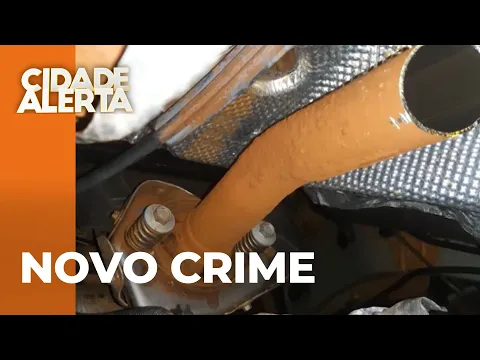

Criminals use tools such as portable electric saws to cut the ends of the exhaust and remove the catalytic converter. In many cases, the entire process can be completed in less than two minutes, especially in vehicles with greater ground clearance.
This speed reduces the risk of being caught in the act and increases the frequency of crimes, especially in places with little movement or lighting.
SUVs and pickups are among the main targets
Utility vehicles, such as SUVs and pickups, appear more frequently among the targets. This is because these models have greater ground clearance, facilitating access to the exhaust system.
Additionally, the size of the catalytic converter in these vehicles may be larger, increasing the amount of precious metals present in the part.

This combination of easy access and higher potential value makes these models especially vulnerable. After the theft, the financial impact on the owner can be significant. The replacement of the catalytic converter can vary between R$ 3 thousand and R$ 8 thousand, depending on the vehicle model and the availability of the part.
In some cases, the cost can be even higher, especially when it comes to imported vehicles or higher-end categories. In addition to the direct cost, there is also the time the vehicle is immobilized and possible additional damage to the exhaust system caused during the removal.
The most common sign of theft is the sudden increase in noise
In most cases, the driver only realizes the crime when starting the vehicle. Without the catalytic converter, the exhaust system is open, resulting in an extremely loud sound, often described as a “roar.”
This noise is one of the clearest signs that the component has been removed, as it completely alters the acoustic behavior of the vehicle.
The growth of this type of crime has been particularly intense in the United States. Data from the National Insurance Crime Bureau indicates that catalytic converter thefts increased by more than 1,200% between 2019 and 2022.
This increase was primarily driven by the appreciation of precious metals in the international market and the ease of reselling the parts in parallel markets. The American experience serves as a reference to understand the possible evolution of the phenomenon in other countries.
Illegal market feeds the resale chain of metals
After the theft, the catalytic converters are sold to intermediaries who extract the precious metals. These materials can then be reintegrated into the market, often without traceability.
The difficulty in controlling the origin of the metals contributes to the continuity of this type of crime, creating a chain that connects local theft to the global commodity market.
Growth in Brazil is still localized, but follows international trend
Although Brazil has not yet recorded numbers as high as those in the United States, cases have been increasing in certain regions, especially in large urban centers.
This growth accompanies the international appreciation of metals and the dissemination of methods used in other countries.

The trend is that, without stricter control and enforcement measures, the phenomenon will continue to expand.
With the increase in reports, the attention of authorities and insurers to this type of crime is also growing. Monitoring occurrences and identifying patterns become essential to understand the evolution of the problem.
At the same time, the topic is gaining space in discussions about urban security and the illegal metal market.
The advancement of this type of crime raises a central question about the balance between technology, market value, and vehicle vulnerability
The presence of valuable metals in automotive components creates a situation where the technology that reduces emissions also becomes a financial target.
This scenario raises an important debate: to what extent can the increase in the value of these materials continue to drive quick, hard-to-track crimes that are increasingly present in urban daily life?
The answer to this question may define the next steps for both the automotive industry and public safety strategies in the face of a crime that grows silently but is highly profitable.








Seja o primeiro a reagir!