





 Portuguese
  English
  Spanish
  3 min of reading
  2 comments


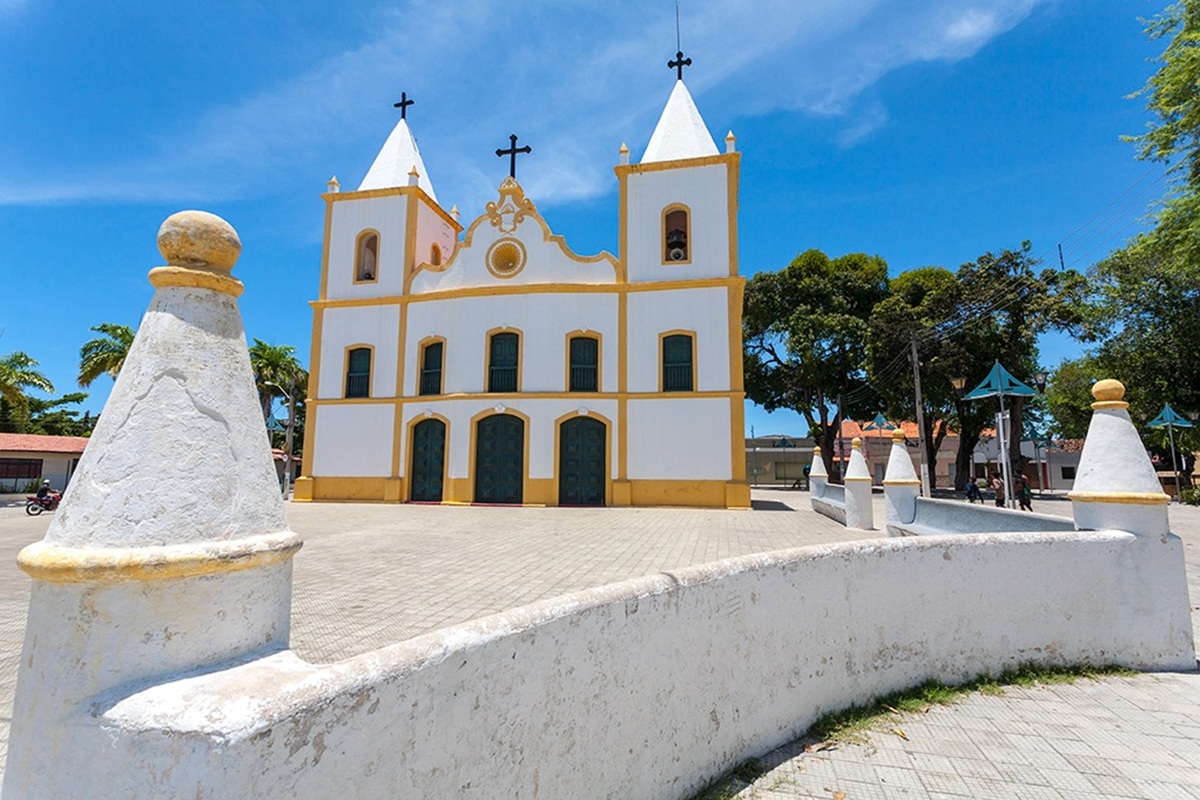


6Four Former Northeastern Capitals Lost Space to New Political and Economic Centers, but Still Hold a Remarkable Past That Explains Profound Changes in Territorial Organization and the Emergence of the Current State Capital Cities.
The administrative transformations in the Brazilian Northeast have left deep marks on several cities that, despite having been capitals, lost this status over the centuries.
Four major Northeastern cities share this trajectory: they were born as administrative and political hubs but saw centrality migrate to other municipalities chosen for strategic, economic, and logistical reasons.
Aquiraz: The First Administrative Center of Ceará
Aquiraz established itself as the first capital of the captaincy of Ceará at the end of the 17th century. Officially a village since 1699 and installed as the administrative headquarters from 1713, the city concentrated the Portuguese colonial structure in the region.
-
After Brazil, modules manufactured in China will form a city for 5,000 people in mining in Argentina, while the Vicuña project places the Andes at the center of the global copper dispute and increases environmental pressure in San Juan.

-
“Zombie” sea cucumber tissue survives for more than 3 years outside the body, heals itself, and intrigues scientists about the boundaries between life and death.

-
Archaeologists were excavating ancient neighborhoods of Cairo and discovered a water network from the Mamluk era hidden near the Citadel of Saladin with deep wells, water wheels, stone channels, a buried mosque, and tombs that reveal how the medieval city functioned.
-
T-Rex had tiny arms for a surprising reason, and new research reveals how a devastating bite may have changed the evolution of carnivorous dinosaurs.



However, in 1726, the capital was transferred to Fortaleza, which had better military positioning, ease of defense, and greater economic potential.
The historical legacy remains evident in the old town, marked by colonial buildings that preserve Aquiraz’s role in the formation of the state.
Marechal Deodoro: Cradle of the Province and the First President of the Republic
In Alagoas, the former Vila Madalena – later called Alagoas da Lagoa do Sul and now known as Marechal Deodoro – was the provincial capital from 1817 to 1839.
The government’s relocation to Maceió was motivated by the dynamism of the port, essential for the flow of local production.
The former capital maintains historical significance not only for its architecture and urban preservation but for being the birthplace of Manuel Deodoro da Fonseca, who would proclaim the Republic decades later.
Oeiras: The First Capital of Piauí and the Shift to River Navigation
In Piauí, Oeiras held the title of capital since its elevation to city in the mid-18th century, remaining the main political center until 1852. That year, the administration was transferred to Teresina, planned on the banks of the Parnaíba River.
The strategic location and the possibility of river navigation propelled the change, making Teresina more suitable for economic growth.
Oeiras, in turn, preserved its symbolic and cultural role, reflected in the historical urban ensemble recognized nationally.
São Cristóvão: From Political Center to Sergipe Heritage
Founded in the 16th century, São Cristóvão was the capital of Sergipe until 1855, when the administrative seat moved to Aracaju. The choice of the new capital resulted from a need for modernization: Aracaju was designed with wider streets, better access to the sea, and capacity to accommodate the province’s growth.
With the loss of capital status, São Cristóvão transformed its identity. Today, its architectural ensembles – including Praça São Francisco, a UNESCO World Heritage Site – reinforce its position as a historical city essential for understanding the formation of Sergipe.
The Legacy of the Former Northeastern Capitals
The stories of Aquiraz, Marechal Deodoro, Oeiras, and São Cristóvão reveal a common pattern in regional development. The changes were not merely administrative details: they redefined economic flows, reorganized populations, and created new urban hubs.
Although no longer capitals, these cities continue to play a fundamental role in the cultural and historical memory of their states, serving as living testimonies of the Brazilian colonial and imperial period.




Muito bom conhecer essas primeiras capitais, mas esqueceram de Campina Grande na Paraná, sucedida por João Pessoas. Cidades litorâneas tiveram maior evidência.
Esqueceram de Olinda?