





 Portuguese
  English
  Spanish
  7 min of reading
  0 comments



Ceramic bricks that store extreme heat could replace fossil fuels in industry and accelerate the global energy transition.
In 2024, the American company Electrified Thermal Solutions (ETS) gained international attention after presenting a technology capable of tackling one of the biggest challenges of the global energy transition: replacing the use of fossil fuels in industrial processes that rely on extreme heat. The innovation, known as the Joule Hive Thermal Battery, uses conductive ceramic blocks to store thermal energy at temperatures exceeding 1,500 °C and release it on demand, with potential applications in sectors such as cement, steel, glass, and chemicals. According to Popular Science, which included the system among the best innovations of 2024 and awarded it the highest engineering prize, the technology can maintain temperatures of up to 3,270°F within an industrial-scale system.
The recognition came with practical advancement. In official material from Electrified Thermal Solutions, the company reported that its first commercial pilot at scale would be built and operated in collaboration with the Southwest Research Institute in Texas. Popular Science itself noted that this first commercial-scale installation would be deployed in San Antonio in 2025, marking the transition of the technology from the lab to demonstrative industrial use.
What is at stake is not just an incremental improvement, but a possible structural change in how the global industry generates heat. In a more recent statement, the Southwest Research Institute confirmed that the system demonstrated by ETS is a purely electric solution, capable of generating and storing heat of up to 1,800 °C on a megawatt-hour scale, specifically to replace coal, natural gas, and fuel oil in high-temperature industrial applications.
-
What is behind the “Cicada” subvariant of Covid-19? With 75 mutations and presence in 23 countries, it reveals a curious behavior of the virus in the face of herd immunity.

-
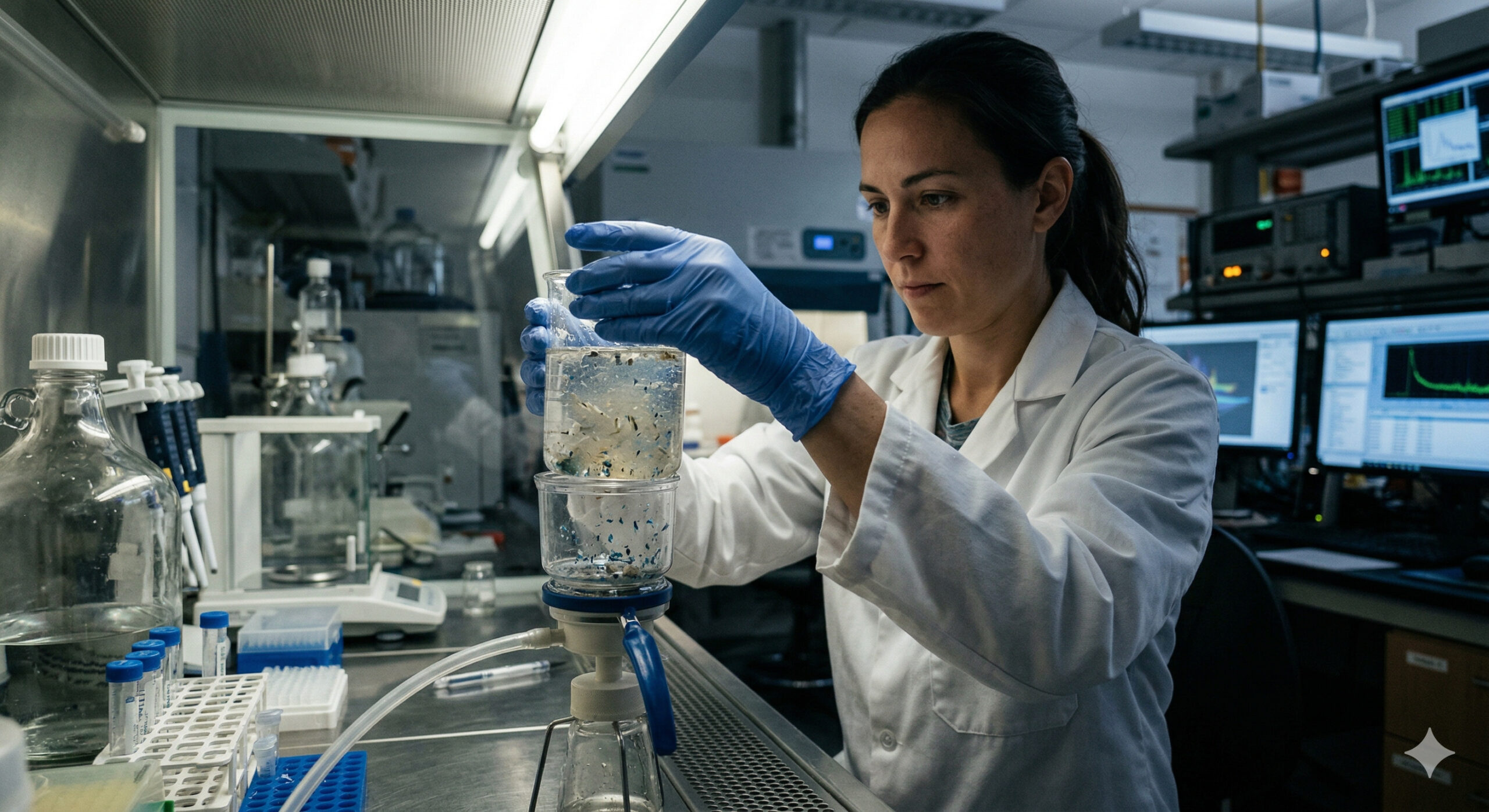
Scientists may have overestimated microplastic pollution for decades, a study from the University of Michigan indicates that nitrile and latex gloves used in laboratories release particles that contaminate samples and inflate results that have informed public policies and environmental regulations worldwide.
-
NASA reveals unprecedented image of the far side of the moon during the Artemis II mission, captures a rare solar eclipse, and takes humans to the farthest point ever reached in space.

-
Chinese AI satellite images are helping Iran target US bases in the Middle East, and reports indicate that the technology is already accelerating missile and drone attacks.

How the Joule Hive Thermal Battery works and why it represents a “heat battery” for industry
The principle behind the Joule Hive is based on the Joule effect, the same physical phenomenon used in electric resistors. When electricity passes through a conductive material, part of the energy is converted into heat. In the case of ETS technology, this heat is accumulated in ceramic blocks specially designed to withstand intense heating and cooling cycles.


These bricks are made from already oxidized materials, which prevents chemical degradation even at extremely high temperatures. This allows the system to operate repeatedly without significant loss of performance, an essential requirement for continuous industrial applications.
The system functions as a high-density thermal storage, capable of receiving electricity — preferably from renewable sources like solar and wind — and converting it into usable heat when needed. This capability addresses one of the main problems of renewable energy: intermittency.
Industrial heat represents up to 25% of global emissions and is one of the biggest climate challenges
The relevance of this technology becomes even more evident when observing the weight of industrial heat in global emissions. According to data from the International Energy Agency (IEA), about 20% to 25% of CO₂ emissions worldwide are associated with heat generation for industrial processes.
Sectors such as steelmaking, cement, oil refining, and chemical production rely on extremely high temperatures, often above 1,000 °C. Historically, these processes have been fueled by fossil fuels due to their energy density and reliability.

Replacing these sources with electricity has always been a technical and economic challenge, especially in applications that require continuous supply and high thermal power. It is precisely at this point that technologies like the Joule Hive come in as a viable alternative.
Direct applications in steel, cement, glass, and chemical industry expand potential impact of the Joule Hive Thermal Battery
The ETS proposal is not limited to a specific niche. The system is designed to serve multiple industrial sectors that depend on high-intensity heat.
In steel production, for example, processes such as furnace heating and heat treatment could be powered by electrically stored heat. In the cement sector, where kilns operate continuously at temperatures above 1,400 °C, replacing fossil fuels represents a significant advancement in terms of emission reduction.
The glass industry, which requires precise temperature control for material melting, also appears as a natural candidate for adopting the technology. In the chemical sector, where reactions depend on constant and predictable heat, thermal storage can ensure operational stability.
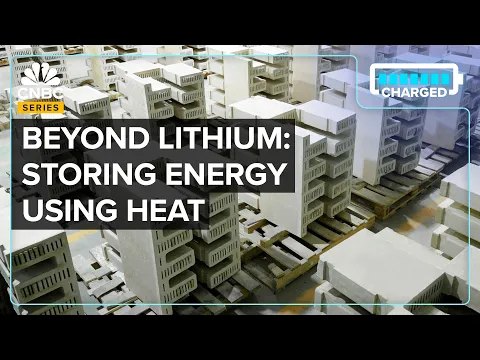
The range of applications transforms this technology into a potentially central piece in the decarbonization of heavy industry, one of the most challenging sectors to electrify.
Installation in Texas marks transition from theory to commercial application
The partnership with the Southwest Research Institute in Texas represents an important milestone for the technology. It is an institution recognized for testing and validating industrial solutions at scale.
The installation scheduled for 2025 will be one of the first commercial applications of the Joule Hive, allowing for the evaluation of performance, efficiency, and economic viability under real operational conditions. This type of validation is essential for the technology to advance beyond the experimental stage and gain global adoption.
The operation of this system also indicates that the market is beginning to consider thermal storage solutions as concrete alternatives, and not just theoretical concepts.
Renewable electricity as the foundation of the system redefines industrial energy logic
One of the most strategic aspects of the Joule Hive is the ability to operate with electricity from renewable sources. By converting solar or wind energy into storable heat, the system creates a bridge between intermittent generation and continuous consumption.
This logic allows the industry to utilize clean energy even when the sun is not shining or the wind is not blowing. Thermal storage acts as an energy buffer, ensuring stable supply without relying on fossil fuels.

Additionally, using electricity during low demand times or excess renewable generation can reduce operational costs, increasing the competitiveness of the solution.
Current limitations show that total replacement is not immediate
Despite the potential, the technology still faces challenges. The complete replacement of fossil fuels in industry does not depend solely on the availability of thermal solutions, but also on factors such as electrical infrastructure, energy costs, and adaptation of existing industrial processes.
Academic studies, including analyses associated with the University of Stanford, indicate that a significant portion of industrial heat can be electrified, but not necessarily all of it. More conservative estimates point to a replacement between 50% and 70% in the long term, depending on the sector.
This does not diminish the relevance of the technology, but positions its impact within a realistic scenario of gradual transition.
Thermal storage emerges as a strategic alternative to traditional batteries
While chemical batteries dominate electricity storage, thermal systems like the Joule Hive present specific advantages for industrial applications. The cost per unit of stored energy tends to be lower, and the efficiency is suitable for processes that require heat, not direct electricity.
Instead of converting electricity back into electricity, the system retains energy in thermal form, reducing losses associated with multiple conversions. This makes the technology particularly efficient for industrial applications.
Furthermore, the materials used — such as ceramics — are more abundant and less dependent on critical supply chains, such as those associated with lithium and cobalt.
Heavy industry can enter a new phase of decarbonization with thermal solutions
The introduction of technologies like the Joule Hive indicates a paradigm shift in heavy industry. Historically reliant on fossil fuels, this sector is beginning to explore alternatives based on electrification and energy storage.
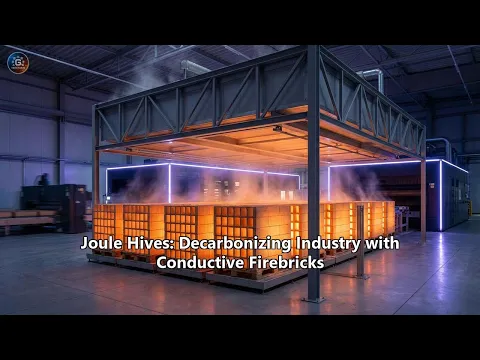
The ability to generate extreme heat without burning fuels represents a break from the traditional model of industrial production, paving the way for cleaner operations aligned with global climate goals.
Governments and companies have intensified investments in such solutions, driven by environmental regulations and the need to reduce emissions.
The future of industry may depend on how heat is produced
The debate on decarbonization often focuses on electricity, transportation, and energy generation. However, industrial heat is a critical and often overlooked component.
Technologies like the Joule Hive bring this topic to the forefront of discussions, showing that the energy transition also involves how heat is generated and utilized.
If thermal storage solutions solidify, the industry could significantly reduce its dependence on fossil fuels, profoundly altering the global energy matrix.
Do you believe heavy industry will be able to abandon coal and gas in the coming decades?
Leave your opinion in the comments and tell us if technologies like this can truly transform sectors that today seem impossible to decarbonize.









Seja o primeiro a reagir!